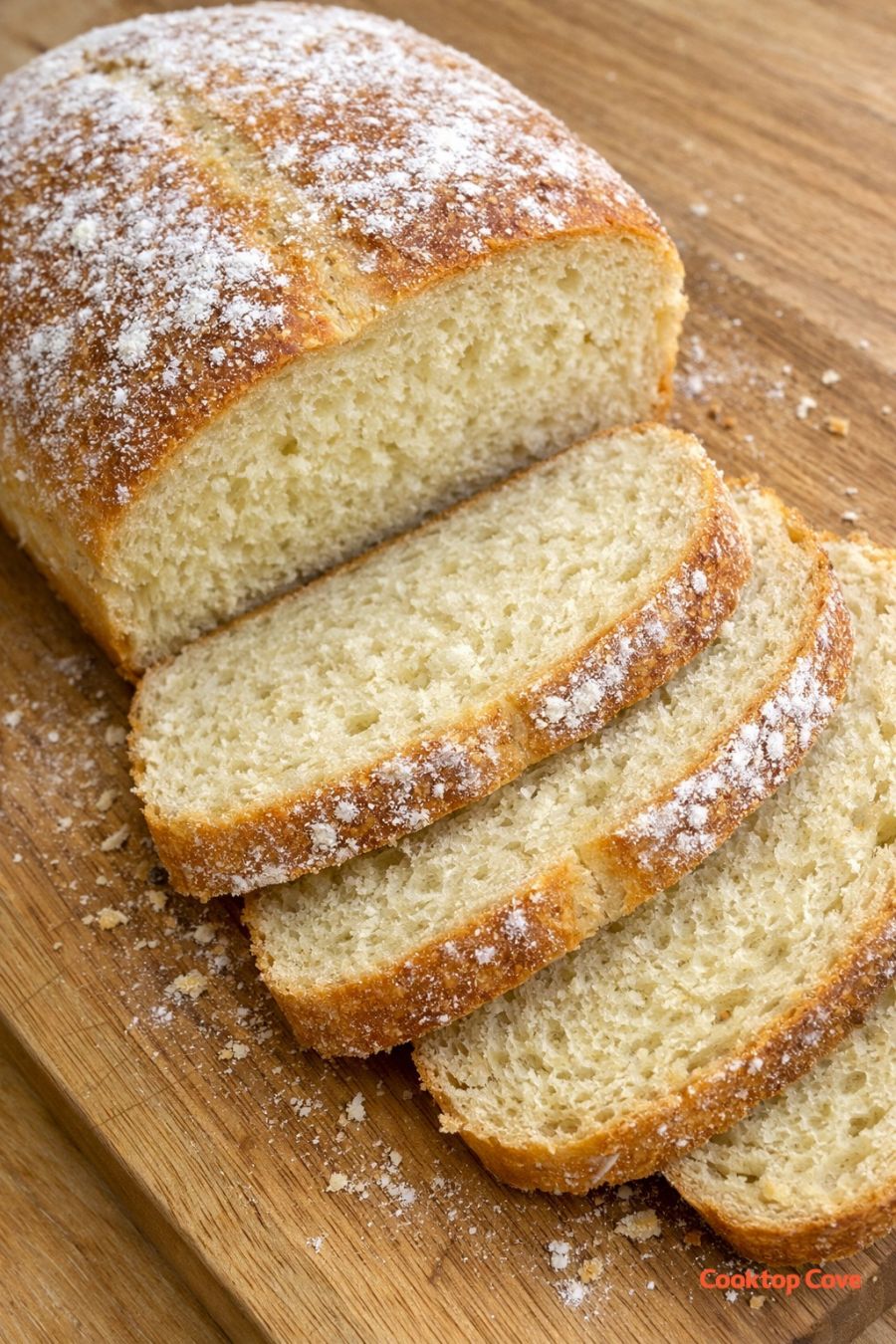
This oven baked 5-ingredients Amish potato bread is the kind of simple, sturdy loaf that quietly becomes part of your weekly rhythm. My aunt learned it years ago from her Pennsylvania Dutch neighbors, who believed in stretching every potato and every cup of flour into something nourishing. She passed it down to me, and now my husband asks for it nearly every week. The mashed potatoes make the bread incredibly soft and tender, with a golden brown crust that looks right at home on a wooden cutting board. It’s a no-fuss, practical recipe that feels old-fashioned in the best way—perfect for anyone who wants a reliable, comforting loaf without a lot of fancy ingredients.
This bread is wonderful still slightly warm, sliced thick and spread with salted butter or apple butter. It makes hearty sandwich bread for ham, turkey, or leftover roast, and it’s especially good toasted in a cast-iron skillet with a little butter for breakfast. Serve it alongside soups, stews, or a big pot of chili, or use it to mop up gravy from a Sunday roast. It also makes lovely French toast the next morning, once it’s had a chance to firm up overnight.
Oven Baked 5-Ingredients Amish Potato BreadServings: 1 loaf (about 10–12 slices)
Ingredients
1 cup mashed potatoes, plain and cooled (from about 2 medium potatoes)
1 1/4 cups warm water (about 105–110°F)
2 1/4 teaspoons active dry yeast (1 standard packet)
3 1/2 to 4 cups all-purpose flour, plus extra for dusting
2 teaspoons kosher salt
Directions
Prepare the mashed potatoes: Peel and cut about 2 medium potatoes into chunks. Simmer in lightly salted water until very tender, 12–15 minutes. Drain well, then mash without adding butter or milk. Measure out 1 cup of mashed potatoes, let it cool to just warm or room temperature. You can do this step earlier in the day or use leftover plain mashed potatoes as long as they are not heavily seasoned.
Proof the yeast: In a large mixing bowl, stir together the warm water (about 105–110°F) and the active dry yeast. Let it stand for about 5–10 minutes until the surface looks foamy and creamy. If the yeast does not foam, discard and start over with fresh yeast to ensure the bread rises properly.
Make the dough: Stir the cooled mashed potatoes into the foamy yeast mixture until mostly smooth. Add the salt and 2 1/2 cups of the flour, stirring with a sturdy spoon or your hand until a shaggy dough forms. Gradually add more flour, a small handful at a time, until the dough comes together and is soft and slightly tacky but not overly sticky. You may not need all of the flour, or you may need just a bit more depending on the moisture in your potatoes.
Knead the dough: Turn the dough out onto a lightly floured countertop or board. Knead by hand for about 8–10 minutes, adding just enough flour to keep it from sticking. The dough should become smooth, elastic, and still feel a little soft. When you press it with a finger, it should slowly spring back.
First rise: Shape the dough into a ball and place it in a lightly oiled or very lightly floured bowl. Turn the dough once so the top is coated and won’t dry out. Cover the bowl with a clean kitchen towel or plastic wrap. Let it rise in a warm, draft-free spot until doubled in size, about 1 to 1 1/2 hours, depending on the temperature of your kitchen.
Shape the loaf: Gently punch down the risen dough to release excess air. Turn it out onto a lightly floured surface and pat it into a rectangle roughly the length of your loaf pan. Roll it up tightly from the short end into a log, pinching the seam and tucking the ends under so it’s neat. Place the loaf seam-side down into a greased 9x5-inch loaf pan.
Second rise: Lightly dust the top of the loaf with flour to give it that soft, rustic look. Cover the pan loosely with a towel and let the dough rise again in a warm place until the loaf has crowned about 1 inch over the rim of the pan, 30–45 minutes. Toward the end of this rise, preheat your oven to 375°F (190°C).
Bake the bread: Once the loaf is nicely risen and your oven is fully preheated, place the pan on the middle rack. Bake for 30–35 minutes, until the top is a deep golden brown and the loaf sounds hollow when tapped on the bottom. If you have an instant-read thermometer, the internal temperature should be around 190–195°F in the center.
Cool and slice: Remove the pan from the oven and let the bread cool in the pan for about 10 minutes. Carefully turn the loaf out onto a wooden cutting board and let it cool at least another 30 minutes before slicing. This rest helps the crumb set so the slices are soft but not gummy. Slice with a serrated knife and enjoy that tender, potato-rich texture and flour-dusted golden crust.
Variations & Tips
For a slightly richer loaf, you can replace 1/4 cup of the warm water with 1/4 cup warm milk, or stir 1–2 tablespoons of neutral oil or melted butter into the dough along with the mashed potatoes (this will still keep you very close to the traditional 5-ingredient spirit, though technically it adds an ingredient). If you like a chewier, more rustic texture, replace up to 1 cup of the all-purpose flour with bread flour or whole wheat flour; if using whole wheat, you may need a tablespoon or two of extra water. For a bit of sweetness like some Pennsylvania Dutch families prefer, add 1–2 teaspoons of sugar or honey to the yeast and water at the beginning to help feed the yeast and give the loaf a slightly softer crumb. You can also shape this dough into rolls: form 10–12 balls, place in a greased 9x13-inch pan, let rise, and bake at 375°F for about 18–22 minutes until golden. Food safety tips: Always use yeast that is within its expiration date so the dough rises properly. Make sure the mashed potatoes are cooled to just warm or room temperature before mixing with the yeast so the heat doesn’t kill the yeast. When boiling potatoes, handle the hot water and pot carefully to avoid burns, and drain away from yourself. Allow the loaf to cool fully before storing; putting it away while very warm can cause condensation and encourage mold. Store leftovers at room temperature in a bread box or wrapped in a clean towel for 2–3 days, or freeze slices well-wrapped for longer keeping.