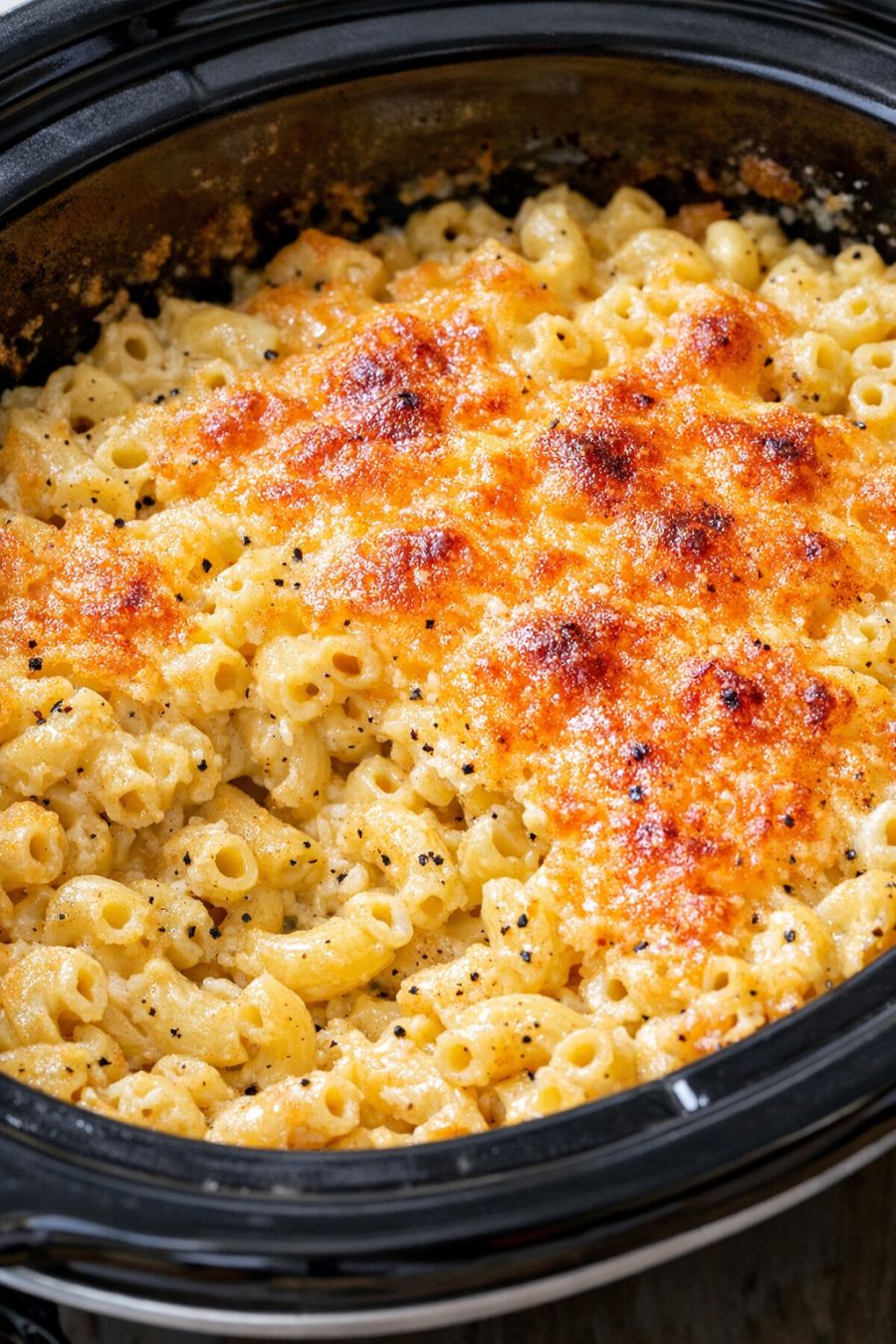
This slow cooker 5-ingredient Amish-style baked macaroni is the kind of humble, set-it-and-forget-it dish that has fed farm families around here for generations. It’s based on the old church-supper custard macaroni, where eggs, milk, and cheese bake right into the noodles, but here we lean on the slow cooker to do the work while you enjoy your weekend. Everything goes straight into the crock—dry macaroni first, then raw eggs cracked right over the top, plus just three more pantry ingredients. A few hours later you’ve got a cozy, custardy, stick-to-your-ribs macaroni that feels like it came out of Grandma’s oven, even though you never turned it on.
Serve this Amish-style slow cooker macaroni with simple, homespun sides: stewed green beans, sliced garden tomatoes with a little salt and pepper, or a crisp coleslaw. It’s also lovely with a pan of cornbread or soft dinner rolls to soak up the rich, eggy custard around the noodles. For a heartier plate, add sliced ham, meatloaf, or roast chicken on the side, and finish the meal with something old-fashioned and easy, like applesauce or a dish of canned peaches.
Slow Cooker Amish Baked MacaroniServings: 6
Ingredients
2 cups dry elbow macaroni (uncooked)
4 large eggs
3 cups whole milk
2 cups shredded mild cheddar cheese, loosely packed
1 teaspoon kosher salt (or 3/4 teaspoon table salt)
Directions
Lightly grease a 4- to 6-quart slow cooker with butter or cooking spray to keep the macaroni from sticking and to help the custard release easily.
Pour the dry elbow macaroni evenly into the bottom of the slow cooker, spreading it into a fairly level layer so the eggs and milk can reach all the noodles.
Crack the raw eggs directly over the dry macaroni noodles in the slow cooker. Space the eggs around the pot so they’re not all in one spot; you’ll be stirring them in, but this helps them distribute more easily.
Add the salt, then pour the milk over the eggs and macaroni. Use a wooden spoon or spatula to gently stir everything together until the eggs are well broken up and the noodles are coated in the milk mixture.
Sprinkle the shredded cheddar cheese evenly over the top, then stir again so the cheese is worked down into the milk, egg, and macaroni. Make sure most of the noodles are submerged in the liquid so they cook evenly.
Smooth the top lightly with the back of the spoon, then cover the slow cooker with its lid. Set the slow cooker to LOW.
Cook on LOW for 2 1/2 to 3 1/2 hours, without lifting the lid for at least the first 2 hours. The macaroni is done when the noodles are tender, most of the liquid is absorbed, and the egg-and-milk mixture has set into a soft custard around the pasta.
Once cooked, turn the slow cooker to WARM and let the macaroni rest, covered, for about 10 to 15 minutes. This helps the custard finish setting so it scoops neatly.
Gently stir just once to loosen the edges, then serve the macaroni by the spoonful, making sure to scoop from the bottom so everyone gets plenty of the creamy custard and cheese.
Variations & Tips
For a little more richness, you can swap 1 cup of the whole milk for evaporated milk or light cream, though keep in mind that will technically add another ingredient beyond the original five. A pinch of black pepper or a light dusting of paprika on top before cooking gives a more old-fashioned flavor, as many Amish cooks do, but again that would be extra beyond the base recipe. If you prefer a firmer, more sliceable macaroni (like a true baked custard), let it cook closer to the 3 1/2-hour mark and rest a bit longer before serving. For families who like a stretchier cheese pull, you can stir in up to 1 cup of shredded mozzarella along with the cheddar. If your slow cooker tends to run hot, check the macaroni at the 2 1/2-hour point so it doesn’t overcook or dry out; you can always splash in a few tablespoons of warm milk and gently stir if it seems too tight. Food safety tips: Always use fresh, clean eggs with intact shells when cracking them directly over the dry noodles. Wash your hands and any surfaces that touched the raw eggs before moving on to other tasks. Make sure the dish cooks until the eggs are fully set and the center is no longer liquid; the internal temperature of the custard should reach at least 160°F if you’re checking with a thermometer. Refrigerate leftovers within 2 hours of cooking, and reheat thoroughly before serving again.