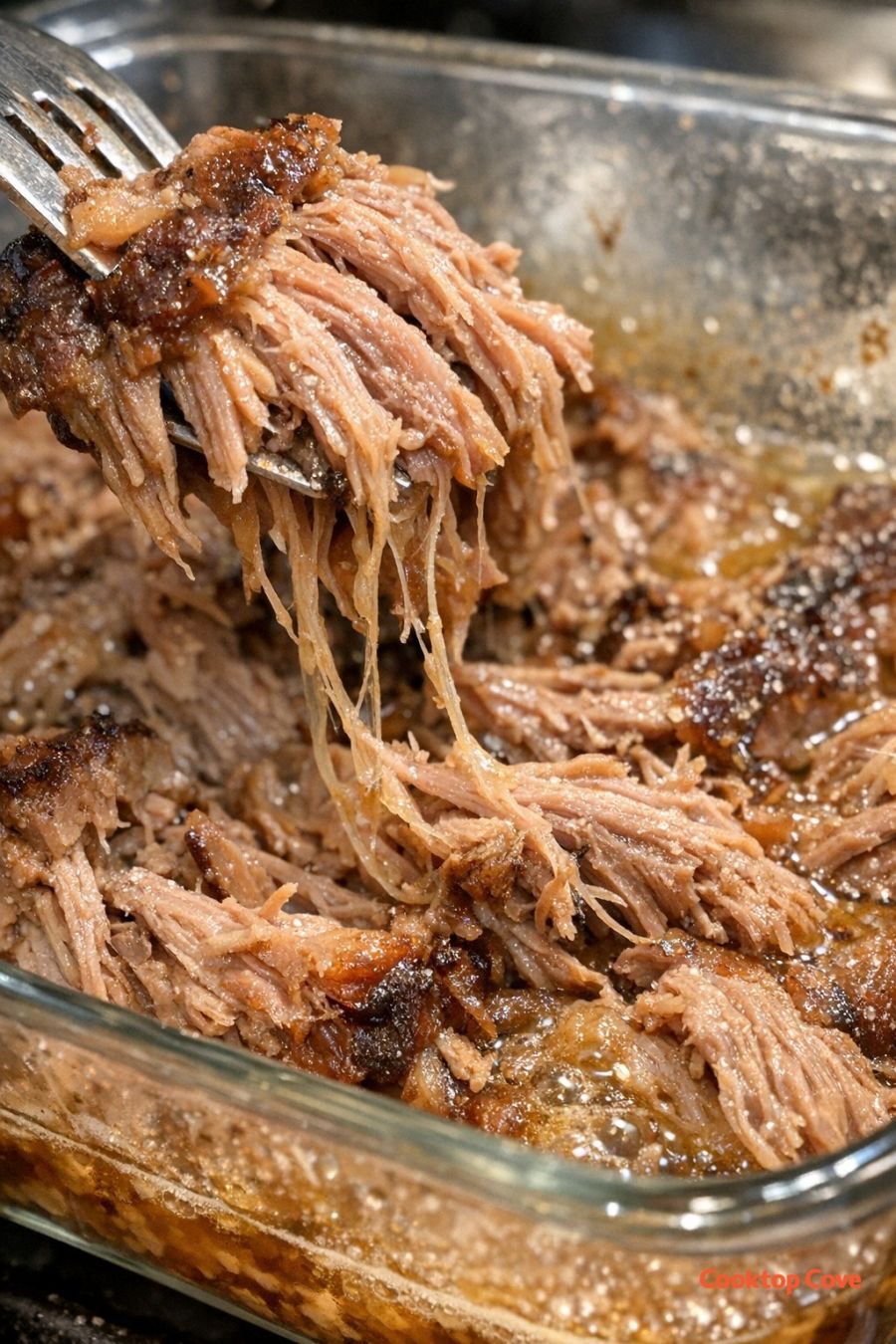
This 4-ingredient oven beef using raw beef bottom round roast is the kind of set-it-and-forget-it meal I lean on for a May long weekend or any busy day when I want dinner completely handled hours ahead of time. Bottom round is a lean, budget-friendly cut from the hind leg of the cow; it’s traditionally used for roasts and pot roasts across the Midwest because it responds beautifully to long, slow oven time. With just salt, an oniony seasoning, and a splash of broth, the meat slowly relaxes into tender, pull-apart strands and the rendered fat mingles with the pan juices—exactly the kind of comforting, hearty dinner that feels like it cooked itself while you were off doing other things.
Serve this tender oven beef piled into shallow bowls with its juices spooned over the top. I like it alongside buttery mashed potatoes or egg noodles, with something green for balance—simple roasted green beans, a crisp salad with a sharp vinaigrette, or sautéed cabbage. It’s also excellent tucked into crusty rolls with a slice of provolone for sandwiches, or served over polenta with a spoonful of the cooking liquid acting as a rustic gravy. A bold red wine or a malty beer pairs nicely with the deep, beefy flavor.
4-Ingredient Oven Beef (Bottom Round Roast)Servings: 6
Ingredients
3 to 3 1/2 pounds beef bottom round roast, raw
2 teaspoons kosher salt (or 1 1/2 teaspoons fine sea salt)
2 tablespoons onion soup mix or onion powder blend
1 1/2 cups low-sodium beef broth
Directions
Preheat your oven to 300°F (150°C). Choose a glass casserole dish or baking dish just large enough to hold the roast with a little space around it; this helps the juices pool and baste the meat as it cooks.
Pat the raw beef bottom round roast dry with paper towels. Drying the surface helps the seasoning adhere and encourages better browning along the edges.
Sprinkle the kosher salt evenly over all sides of the roast, then coat it with the onion soup mix or onion powder blend, pressing gently so it sticks. Place the seasoned roast in the center of the glass casserole dish, fat side up if there is a visible fat cap.
Pour the beef broth into the dish around the roast, avoiding rinsing the seasoning off the top. The liquid should come up the sides by about 1/4 to 1/3 of the roast; this creates a moist environment that slowly tenderizes the meat while letting the top develop color.
Cover the dish tightly with a double layer of foil or a snug-fitting lid. A tight seal is important—it traps steam, keeps the roast moist, and encourages the connective tissue in this lean cut to break down over several hours.
Place the covered dish on the middle rack of the preheated oven and bake for 3 to 3 1/2 hours without opening the oven if you can help it. The roast is ready when it is fork-tender and pulls apart easily; an internal temperature in the 200°F range is common for this style of braised, shreddable beef.
Carefully remove the dish from the oven and uncover, watching for hot steam. Let the roast rest in its juices for 15 to 20 minutes; this brief rest allows the fibers to relax further so the meat shreds cleanly and stays juicy.
Using two forks, pull the beef apart directly in the glass casserole dish, turning and shredding it into the rendered fat and pan juices until everything is well-coated and glistening. Taste and adjust seasoning with a pinch more salt if needed before serving hot.
Variations & Tips
You can swap the onion soup mix for 1 tablespoon onion powder plus 1 teaspoon garlic powder and 1/2 teaspoon black pepper if you prefer a lower-sodium, more controlled seasoning blend. For a slightly richer flavor without adding more ingredients, use a well-marbled bottom round roast and make sure the fat side is facing up so it bastes the meat as it melts. If you want a darker, more caramelized edge, uncover the roast for the last 20 minutes of baking or briefly broil the top while watching closely. Leftovers reheat beautifully in their juices, and the shredded beef can be repurposed into tacos, grain bowls, or sandwiches. For food safety, keep the raw beef refrigerated until you’re ready to cook, and avoid leaving it at room temperature for more than 2 hours total (1 hour if your kitchen is very warm). Use clean utensils and a clean cutting board dedicated to raw meat, and wash hands and surfaces thoroughly after handling the uncooked roast. Ensure the beef cooks to a safe internal temperature (at least 145°F, though this style is typically taken much higher for tenderness), and refrigerate leftovers within 2 hours in shallow containers; consume refrigerated leftovers within 3 to 4 days or freeze for longer storage.