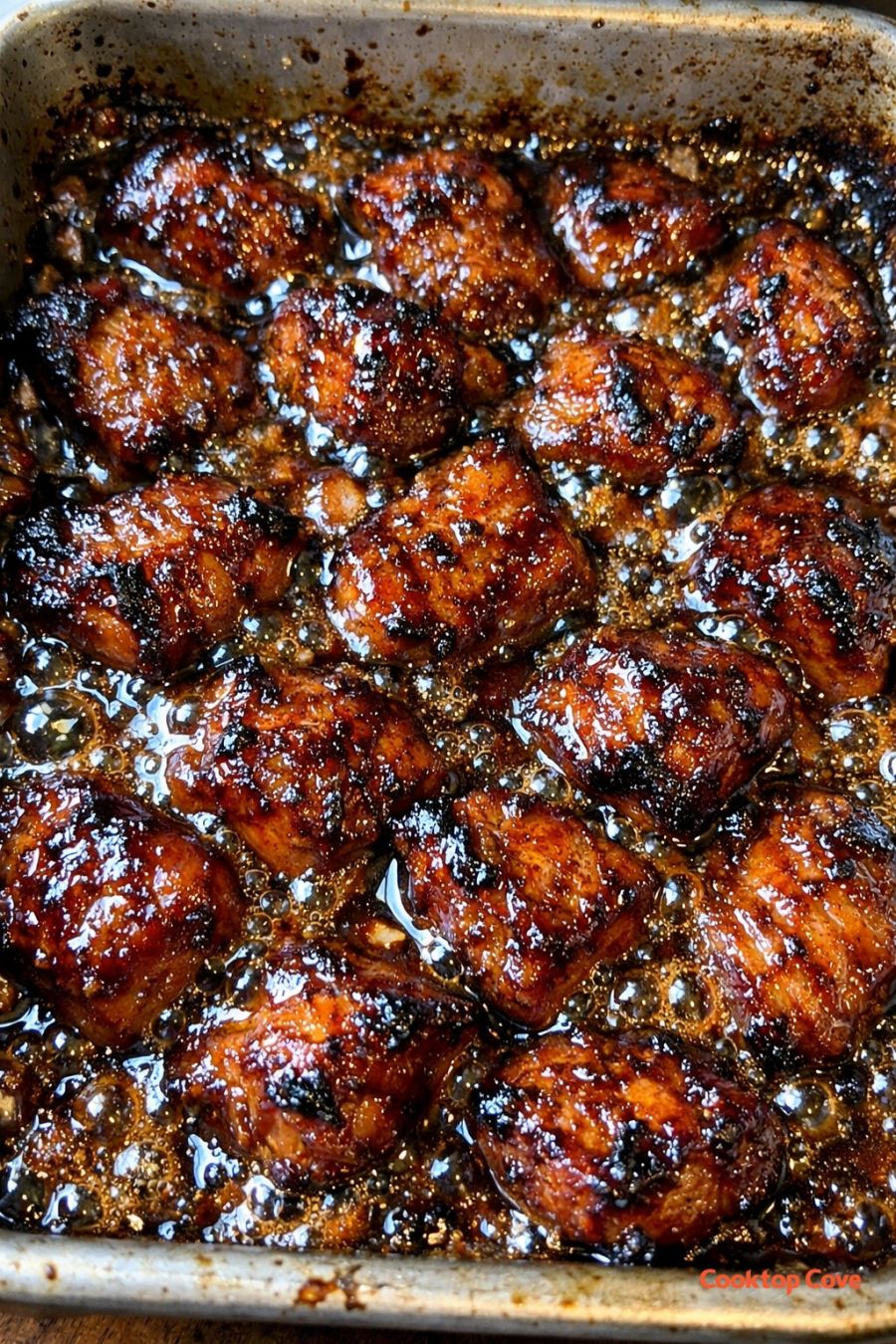
This is my Memorial Day workaround for those years when I want all the flavor of sticky, caramelized pork chops without babysitting a grill. Thin-cut chops go into the oven with just two pantry staples: a salty-sweet soy sauce base and dark brown sugar. As they roast, the sugars and natural proteins on the surface of the meat caramelize into a glossy, umami-rich glaze that looks like you’ve been tending a grill all afternoon. It’s a very Midwestern, practical approach: hearty, make-ahead friendly, and built on simple ingredients you probably already have on hand.
These chops are rich and saucy, so I like to serve them with something that soaks up the glaze: buttered mashed potatoes, steamed rice, or a crusty baguette. A crisp salad with a sharp vinaigrette or some simply roasted green beans helps cut through the sweetness and fat. If you’re leaning into a cookout vibe, pair them with classic picnic sides—potato salad, coleslaw, or grilled corn done ahead and served at room temperature. A dry rosé, a light lager, or iced tea with lemon all play nicely with the sweet-savory caramelized edges.
3-Ingredient Oven Thin-Cut Pork ChopsServings: 4
Ingredients
2 lb thin-cut bone-in pork chops (about 8–10 chops, 1/2-inch thick)
1/2 cup soy sauce (regular or low-sodium)
1/2 cup packed dark brown sugar
Directions
Preheat your oven to 375°F (190°C). Choose a metal 9x13-inch baking pan or similar metal roasting pan; metal helps the glaze caramelize and brown more deeply than glass.
Pat the thin-cut pork chops very dry on both sides with paper towels. This step is important: excess surface moisture will steam instead of allowing the proteins on the outside of the meat to caramelize into that glossy, umami crust.
In a small bowl, whisk together the soy sauce and dark brown sugar until the sugar is mostly dissolved and you have a thick, syrupy mixture. This simple blend is your all-in-one seasoning and glaze, giving you salt, sweetness, and savory depth without extra ingredients.
Lay the pork chops in a single, snug layer in the metal baking pan. It’s fine if they touch a bit, but avoid stacking them; good contact with the hot pan helps the glaze bubble and caramelize around the edges.
Pour the soy–brown sugar mixture evenly over the pork chops, turning each chop once with tongs or clean hands to coat both sides. Arrange them back in a single layer, making sure each chop has some of the liquid mixture underneath and on top.
Slide the pan into the preheated oven and bake, uncovered, for 20 minutes. During this time, the mixture will thin out, then start to reduce as it simmers, picking up the dissolved browned bits and proteins from the chops.
After 20 minutes, carefully remove the pan and flip each chop. Spoon some of the darkening sauce from the pan over the tops. Return the pan to the oven and continue baking another 10–15 minutes, or until the chops are cooked through (an instant-read thermometer inserted into the thickest part should read 145°F/63°C) and the sauce has thickened to a dark amber, glossy glaze that’s bubbling around the edges.
If you want deeper caramelization like you’d see from a grill, move the oven rack up one level and switch the oven to broil on high for 1–3 minutes at the end. Keep the pan on the rack and watch very closely: the sugars can go from beautifully caramelized to burnt quickly. Pull the pan as soon as the glaze looks deeply browned and lightly sticky.
Remove the pan from the oven and let the pork chops rest in the hot glaze for 5–10 minutes. As they sit, the bubbling will subside and the sauce will thicken further into a clingy, dark amber coating over the meat.
Before serving, spoon the thickened glaze from the pan over the chops so they glisten. For a make-ahead Memorial Day dinner, you can bake the chops earlier in the day, let them cool to room temperature in the pan, then rewarm them, covered with foil, at 300°F (150°C) for 10–15 minutes just until heated through and the glaze is loosened and bubbling again.
Variations & Tips
You can adjust this basic three-ingredient framework to fit your table without losing its simplicity. For a slightly less sweet version, reduce the brown sugar to 1/3 cup and add 2–3 tablespoons of water to keep the glaze from tightening too quickly. If you prefer a more pronounced savory note, use low-sodium soy sauce and add a pinch of black pepper or a few dashes of Worcestershire sauce—this still keeps the spirit of a 3-ingredient recipe if you treat the soy mixture as your main flavor base. To lean into a teriyaki-style profile, swap half the soy sauce for mirin and decrease the brown sugar slightly; the natural sugars in mirin will still caramelize beautifully. For a smokier, more “grilled” impression without a grill, use a darker, more robust soy sauce and finish the chops under the broiler a bit longer, again watching closely to prevent scorching. Thin boneless chops can be used, but they’ll cook faster; start checking for doneness after 20 minutes total and rely on an instant-read thermometer. If your chops are thicker than 1/2 inch, expect to add 5–10 minutes to the bake time and check that the internal temperature reaches 145°F/63°C before resting. Food safety tips: Always keep raw pork refrigerated until you’re ready to cook, and avoid letting it sit out at room temperature for more than 2 hours (or 1 hour if it’s very warm in your kitchen). Use separate cutting boards and utensils for raw meat, and wash hands, tools, and surfaces with hot, soapy water after contact. Never reuse the raw marinade; in this recipe, the sauce in the pan is fully cooked and reduced in the oven, which makes it safe to spoon over the finished chops. Leftovers should be cooled promptly, stored in a shallow covered container in the refrigerator, and eaten within 3–4 days, reheated until hot and steaming throughout.