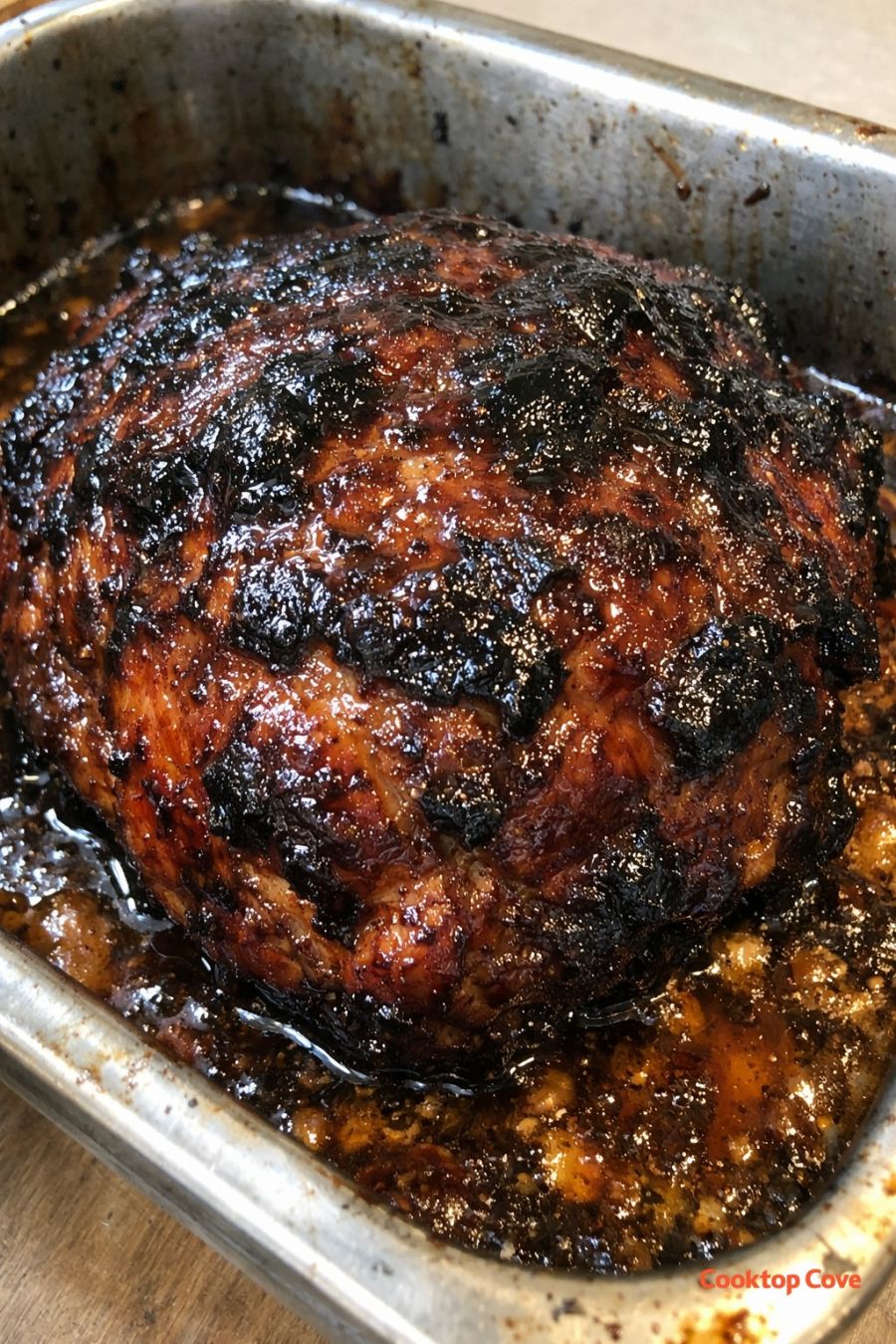
This 4-ingredient long weekend feast is my go-to when I want all the hard work done early in the day and dinner to basically take care of itself. It’s a big, succulent roasted pork shoulder that slow-bakes into a glossy, caramelized mass of tender meat with charred edges and deep, savory flavor. It’s the kind of dish you pop in the oven after breakfast, then spend the rest of the day with family while the house fills with that cozy, roasty smell. By dinnertime, you’ve got a beautiful, umami-rich roast ready to shred or slice right out of the deep roasting pan.
This roast is wonderfully flexible. Serve it family-style right in the roasting dish with simple sides like mashed potatoes, roasted carrots, or a green salad. It’s perfect piled onto soft rolls for sandwiches with coleslaw, or tucked into tortillas with a quick slaw and some lime. Leftovers make great rice bowls the next day with a little broth and steamed veggies. Put the dish in the center of the table and let everyone pull off their favorite bits of crispy edges and tender meat.
4-Ingredient Long Weekend RoastServings: 8-10
Ingredients
5–7 lb bone-in pork shoulder (pork butt), skin or fat cap on
3 tbsp kosher salt
3 tbsp brown sugar (light or dark)
2 cups beef or chicken stock (or broth), low sodium
Directions
Pat the pork shoulder very dry with paper towels and place it, fat side up, in a deep roasting dish or Dutch oven. The dish should be large enough that the meat sits comfortably but snugly, with a few inches of height to catch the juices.
In a small bowl, mix the kosher salt and brown sugar until evenly combined. Rub this mixture all over the pork shoulder, making sure to coat the top, sides, and any crevices. Most of the mixture should sit on the surface of the meat, especially on the top fat layer.
Pour the stock into the roasting dish around the pork, being careful not to rinse off the seasoning on top. The liquid should come up the sides of the meat by about 1–2 inches, depending on the size of your roast and pan.
Cover the roasting dish tightly with a lid or a double layer of heavy-duty foil, crimping the edges well so steam can’t escape easily. This helps the pork stay moist and tender as it cooks for hours.
Place the covered dish in a cold oven. Set the oven to 300°F (150°C) and let the pork roast undisturbed for 5–6 hours for a 5–7 lb shoulder. You’re looking for the meat to be very tender and easily pulled apart with a fork. Avoid opening the oven during this time so you don’t lose heat and moisture.
After 5 hours, carefully remove the dish from the oven and peel back the lid or foil away from you to avoid steam burns. Check the meat by inserting a fork into the thickest part; it should twist easily and the internal temperature should be at least 190°F for pull-apart tenderness.
Increase the oven temperature to 425°F (220°C). Spoon some of the pan juices over the top of the pork, then return the uncovered dish to the oven for 20–30 minutes. This high-heat blast will create those glossy, charred, caramelized edges while the meat stays juicy inside.
Keep an eye on the roast during this final stage so the top gets deep brown and slightly charred in spots but doesn’t burn. If one area darkens too quickly, rotate the pan or tent just that spot loosely with foil.
Remove the pork from the oven and let it rest in the pan juices for at least 20–30 minutes. This rest time helps the juices settle back into the meat and makes it easier to handle.
To serve, use tongs and a couple of forks to pull the pork into large, rustic chunks right in the roasting dish, mixing it gently with the rich juices. Skim off extra fat from the surface of the liquid if you like, then spoon the glossy, umami-rich juices over the meat before bringing the whole dish to the table.
Variations & Tips
For a smokier flavor, you can rub 1–2 teaspoons of smoked paprika into the salt and brown sugar mixture (this technically adds an ingredient but doesn’t change the base recipe). For a slightly tangy finish, splash a tablespoon or two of apple cider vinegar into the pan juices after cooking and stir it in before serving. If you prefer a milder flavor for picky eaters, cut the salt back to 2 tablespoons and shred some of the meat from the center, where the seasoning is gentler, then mix it with a bit of the juices. You can use chicken stock instead of beef for a lighter flavor, or even water in a pinch—the long, slow roast will still create its own rich broth. Leftovers freeze very well; cool completely, portion into freezer bags with some of the juices, and freeze for up to 3 months. Reheat gently on the stovetop or in the oven with a splash of water or stock. Food safety tips: Always thaw pork shoulder in the refrigerator, never on the counter. Use a meat thermometer to ensure the internal temperature reaches at least 190°F for shreddable texture and food safety. Don’t leave the cooked roast at room temperature longer than 2 hours; refrigerate leftovers promptly in shallow containers. When reheating, bring leftovers back up to 165°F before serving.