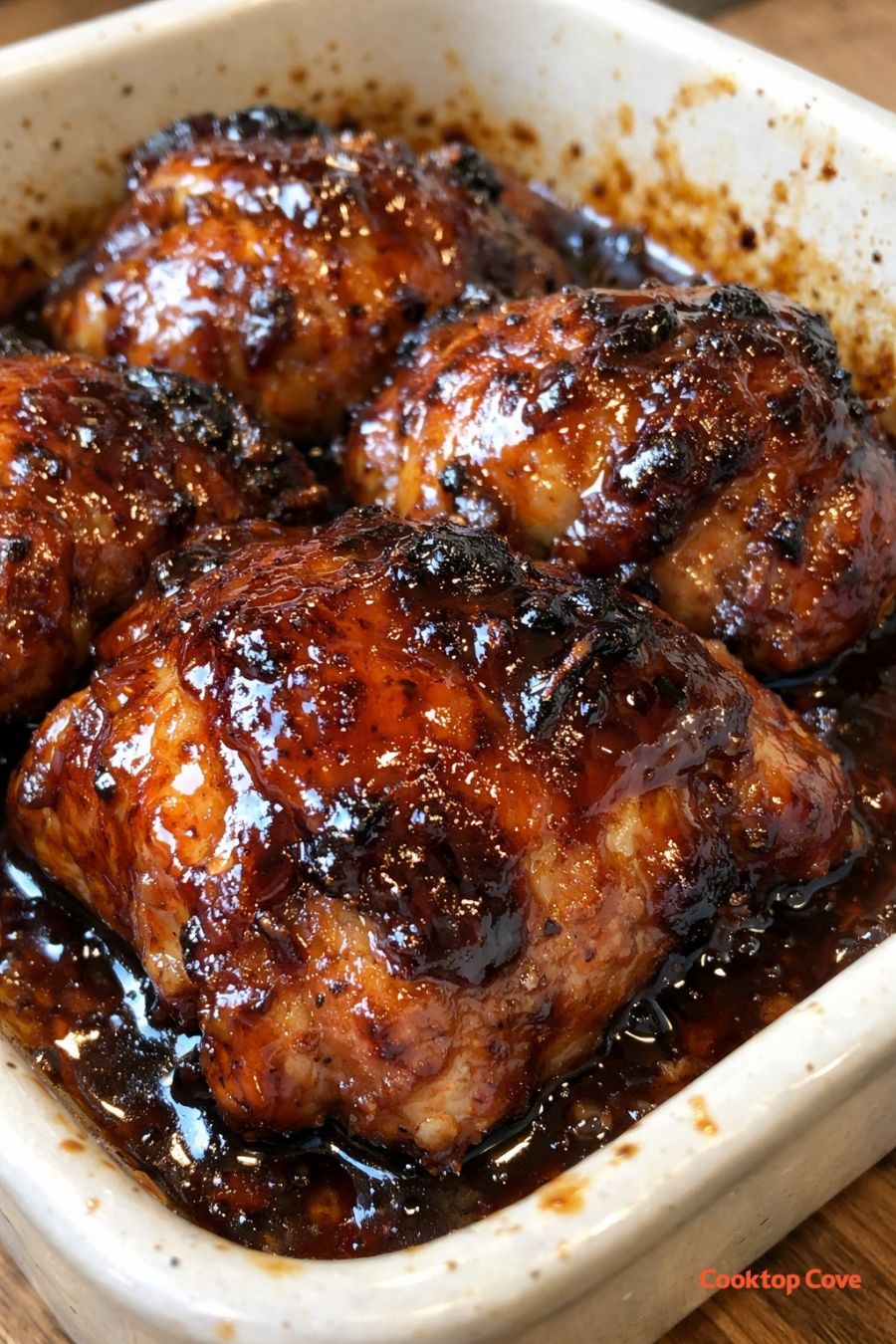
This 3-ingredient Memorial Day main is my answer to, “Can I get the holiday dinner handled before guests arrive?” It uses an intentionally unidentifiable roasted protein—think of it as a blank canvas that could be pork, chicken, turkey, or a plant-based roast—slathered in a dark, sticky glaze that turns lacquered and caramelized in the oven. The method borrows from slow-roasted Midwestern pot roasts and simple barbecue techniques: low effort, long time, and a big payoff. You mix one glaze, pour it over, slide the dish into the oven, and let time do the work while you focus on sides, company, or just putting your feet up.
Serve this glossy roasted protein sliced or shredded, spooning plenty of the dark amber pan sauce over the top. It’s lovely with classic Memorial Day sides: potato salad, coleslaw, grilled corn, or a crisp green salad. Pile it onto soft sandwich rolls with pickles and sliced onions, or serve it over rice, mashed potatoes, or buttered egg noodles to catch every drop of sauce. A bright, acidic side—like a vinegar slaw or simple cucumber salad—helps cut through the richness of the glaze.
3-Ingredient Memorial Day Magic RoastServings: 6
Ingredients
3 to 4 lb unidentifiable roasted protein (any boneless roast-style cut or plant-based roast, thawed if frozen)
1 1/2 cups thick dark amber sauce (such as your favorite barbecue or teriyaki-style glaze)
1/2 cup brown sugar (light or dark), gently packed
Directions
Preheat your oven to 325°F (165°C). Place a rack in the center of the oven so there’s room for your baking dish and good air circulation around it.
Choose a ceramic baking dish just large enough to hold the protein with a little space around the sides (too big and the sauce will spread too thin and may scorch). Lightly grease the dish with a thin film of neutral oil or a quick spritz of cooking spray to minimize sticking.
Pat the unidentifiable roasted protein dry with paper towels. This helps the glaze cling and encourages caramelization instead of steaming. Place it in the center of the baking dish.
In a small bowl, whisk together the thick dark amber sauce and the brown sugar until the sugar is mostly dissolved and the mixture looks glossy and uniform. You’re aiming for a pourable but thick glaze that will cling to the protein and pool slightly in the bottom of the dish.
Pour about half of the glaze evenly over the top and sides of the protein, using the back of a spoon or a pastry brush to coat it thoroughly. Reserve the remaining glaze at room temperature for basting later.
Cover the baking dish tightly with heavy-duty aluminum foil, crimping the edges well so steam is trapped. This covered phase keeps the protein moist and lets the interior gently cook through while the sauce begins to infuse.
Transfer the covered dish to the preheated oven and roast for 1 1/2 to 2 hours, depending on the size and type of protein. If your protein came with cooking guidelines, follow those for timing as a reference, but keep in mind that the foil and glaze will keep it tender even with a bit of extra time.
After the initial covered roast, carefully remove the dish from the oven and peel back the foil away from you to avoid steam. Baste the protein with some of the pan juices, then pour or brush on about half of the remaining glaze, coating the top and exposed sides generously.
Return the dish to the oven, uncovered, and continue roasting for 30 to 45 minutes, basting once or twice with pan juices. The goal is a deeply browned, glossy, dark amber surface with bubbling sauce around the edges. If the top is browning faster than the interior is tender, loosely tent with foil again.
During the last 10 to 15 minutes of roasting, brush on the final portion of glaze, letting it thicken and cling. You should see a thick, sticky coating forming, with the sauce in the dish reducing into a rich, spoonable consistency.
Check for doneness according to the type of protein you’re using. For most meats, an instant-read thermometer inserted into the thickest part (without touching bone, if there is any) should register at least 165°F (74°C) for poultry and 190°F to 200°F (88°C to 93°C) for tougher roasts you plan to shred. Plant-based roasts should be hot throughout and tender when pierced with a knife.
Once done, remove the dish from the oven and let the protein rest in the sauce for at least 15 minutes. Resting allows juices to redistribute and the glaze to thicken further, which helps keep slices moist and makes the sauce cling better.
Transfer the protein to a cutting board and either slice it against the grain into thick slices or shred it with two forks, depending on texture and your preference. Spoon some of the dark amber pan sauce over the top and return the sliced or shredded protein to the baking dish, tossing gently to coat in the glaze.
Serve warm directly from the ceramic baking dish, making sure everyone gets a generous spoonful of the glossy sauce. If you’re making this ahead, cool it slightly, cover, and refrigerate in the same dish. Reheat, covered with foil, at 300°F (150°C) until warmed through and the glaze is bubbling again.
Variations & Tips
Because the protein is intentionally unidentifiable, think of this recipe as a flexible framework:
• Sauce style: Swap the thick dark amber sauce for different flavor profiles while keeping the 3-ingredient promise. Use a smoky barbecue sauce for a classic cookout feel, a teriyaki-style glaze for a sweet-savory twist, or a thick mole-style sauce for something richer and more complex. Just be sure it’s thick enough to cling and reduce without burning.
• Sweetness level: If you prefer a less sweet finish, reduce the brown sugar to 1/4 cup or omit it entirely if your sauce is already quite sweet. Conversely, for a more candied, sticky exterior, increase the brown sugar slightly and keep a close eye on the glaze during the uncovered roasting phase so it doesn’t scorch.
• Protein choices: This method works with many boneless roasts—pork shoulder, beef chuck, turkey breast, or firm plant-based roasts. For leaner cuts (like turkey breast or pork loin), be especially careful not to overcook; pull them as soon as they reach a safe internal temperature to avoid dryness. For tougher cuts you want to shred, cook longer until very tender.
• Make-ahead strategy: To truly have your Memorial Day dinner handled hours ahead, roast the protein completely in the morning, cool briefly, and refrigerate it in its baking dish with all the sauce. About 45 minutes before serving, cover with foil and reheat at 300°F (150°C) until hot and bubbling. The rest time in the sauce actually deepens the flavor.
• Texture tweaks: For extra charred edges, move the dish under the broiler for 2 to 3 minutes at the very end, watching closely. Rotate the dish as needed to prevent hot spots from burning the glaze. If the sauce gets too thick, stir in a splash of water or stock after roasting to loosen it to a spoonable consistency.
Food safety tips: Always fully thaw any frozen protein in the refrigerator (not on the counter) before roasting. Keep raw protein separate from other ingredients and wash hands, cutting boards, and knives thoroughly after handling. Use an instant-read thermometer to verify safe internal temperatures: at least 165°F (74°C) for poultry and plant-based roasts as recommended by the manufacturer, and at least 145°F (63°C) with rest time for whole muscle meats, higher (190°F to 200°F / 88°C to 93°C) if you’re aiming for shreddable texture in tougher cuts. Refrigerate leftovers within 2 hours of cooking in shallow containers and reheat to at least 165°F (74°C) before serving again.