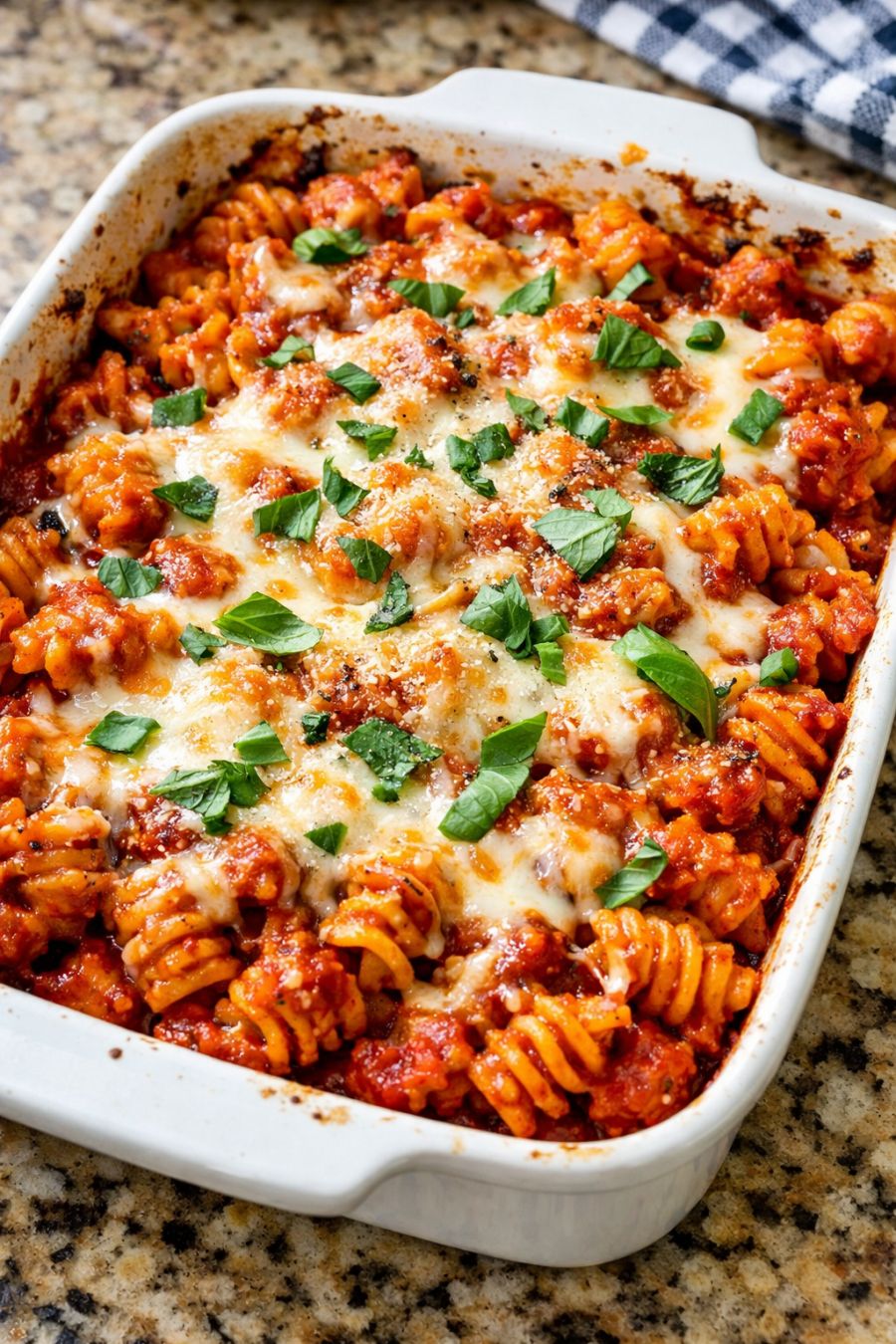
This 5-ingredient oven radiatori is one of those back-pocket meals that feels a little bit like kitchen magic. You start with dry radiatori right in the roasting pan—no boiling—and lean on four everyday fridge staples to create a bubbling, cheesy, tomatoey bake with wonderfully crisp edges and tender centers. Radiatori, named for their resemblance to old-fashioned radiators, are fantastic at trapping sauce in their ridges, which is exactly what makes this hands-off oven method so satisfying for a busy weeknight.
Serve this oven radiatori straight from the baking dish with a simple green salad dressed in a light vinaigrette to balance the richness. Warm crusty bread or garlic toast is great for scooping up any saucy bits from the corners of the pan. A crisp white wine like Pinot Grigio or a light red such as Chianti pairs nicely, and for a non-alcoholic option, sparkling water with a squeeze of lemon keeps the meal feeling fresh and complete.
5-Ingredient Oven RadiatoriServings: 4
Ingredients
12 oz dry radiatori pasta
2 cups marinara sauce (from the fridge, homemade or store-bought)
2 1/2 cups whole milk
1 1/2 cups shredded mozzarella cheese, divided
1/4 cup grated Parmesan cheese
1 1/4 tsp kosher salt
1/2 tsp freshly ground black pepper
1 tbsp olive oil or softened butter (for greasing the baking dish)
Directions
Preheat your oven to 375°F (190°C). Lightly grease a deep 9x13-inch baking dish with olive oil or butter, making sure to coat the corners so the pasta doesn’t stick as it bakes.
Pour the dry radiatori directly into the prepared baking dish and spread it into an even layer. This is your base—no need to boil the pasta first, as it will cook in the seasoned liquid.
In a medium bowl or large measuring cup, whisk together the marinara sauce, whole milk, kosher salt, and black pepper until the mixture is smooth and evenly combined. This creates a creamy, tomato-rich cooking liquid that will soak into the pasta.
Pour the milk–marinara mixture evenly over the dry radiatori, nudging the pasta with a spoon so the liquid seeps down into the corners and underneath. The pasta should be mostly submerged; a few pieces peeking out on top are fine and will get pleasantly toasty.
Sprinkle 1 cup of the shredded mozzarella evenly over the top of the pasta and sauce mixture. Reserve the remaining 1/2 cup of mozzarella for later so you get a fresh, melty layer at the end.
Cover the baking dish tightly with foil, tenting it slightly so the cheese doesn’t stick to the foil. Place the dish on the center rack of the preheated oven and bake for 35–40 minutes, until the pasta is mostly tender when you poke a piece with a fork and the liquid is bubbling around the edges.
Carefully remove the foil (watch for steam), then sprinkle the remaining 1/2 cup mozzarella and the grated Parmesan evenly over the top. Return the uncovered dish to the oven and bake for another 12–15 minutes, until the top is deeply golden in spots and the edges are bubbling vigorously.
Once baked, let the radiatori rest on the counter for 8–10 minutes before serving. This brief rest allows the sauce to thicken slightly and the pasta to finish absorbing the flavorful liquid, giving you that perfect mix of creamy pockets and crisp, caramelized edges.
To serve, scoop the radiatori straight from the baking dish, making sure to dig into the corners where the pasta gets extra toasty. Taste and adjust with a pinch more salt or pepper at the table if needed.
Variations & Tips
For a slightly lighter version, you can swap half of the whole milk for low-fat milk, though the sauce will be a bit less rich. If you prefer a creamier, more indulgent texture, replace 1/2 cup of the milk with heavy cream. For added protein, scatter 1 to 1 1/2 cups of cooked, crumbled Italian sausage or diced cooked chicken over the dry radiatori before adding the sauce mixture. To work more vegetables into the dish, tuck in a layer of thinly sliced mushrooms or a handful of thawed, squeezed-dry spinach over the pasta before pouring on the liquid; just keep the total add-ins modest so the pasta still stays mostly submerged. A pinch of red pepper flakes stirred into the milk–marinara mixture will give the bake a gentle heat, and you can swap mozzarella for a blend of Italian cheeses if that’s what you have on hand. For food safety, always use pasteurized milk and keep dairy refrigerated until you’re ready to cook. If you add cooked meats, ensure they were previously cooked to a safe internal temperature (165°F/74°C for poultry, 160°F/71°C for ground meats) and cooled properly before using. Leftover baked radiatori should be cooled, covered, and refrigerated within 2 hours of baking and eaten within 3–4 days; reheat in a 325°F (165°C) oven until hot in the center or in the microwave until steaming throughout.