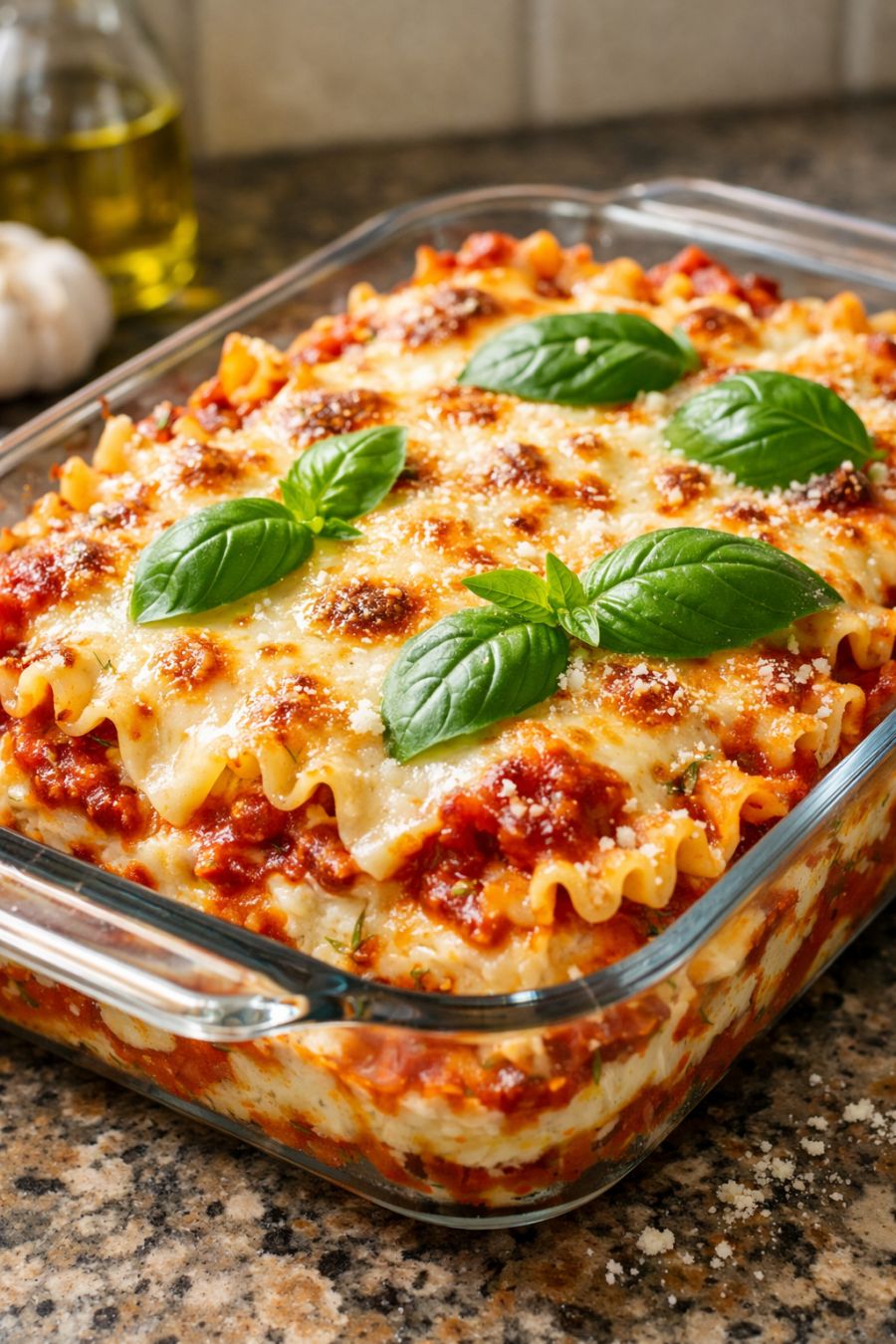
This 5-ingredient oven mafalda is the kind of no-fuss, glass-baker supper I wish I’d had when my kids were little and always underfoot. You scatter the dry mafalda pasta straight into a glass casserole dish, pour on a few pantry staples, and let the oven do the rest. It reminds me of the old Midwestern church suppers where someone always brought a bubbly noodle bake that disappeared before you could blink. Everything cooks together in one pan, the pasta soaking up a rich tomato and cream sauce right in the oven, and it comes out so cozy and satisfying your neighbors really will be sniffing the air and looking for an invitation.
Serve this oven mafalda straight from the glass baker with a big spoon, family-style, at the center of the table. It’s lovely alongside a simple green salad with a tangy vinaigrette to balance the creamy tomato sauce, and some buttered garlic toast or a warm crusty loaf to swipe through the corners of the dish. A dish of pickles or sliced cucumbers in vinegar gives it that old-fashioned Midwestern touch. If you enjoy wine, a light red like a simple table merlot or a chilled glass of white works just fine, but honestly a tall glass of iced tea fits this farmhouse-style meal perfectly.
5-ingredient oven mafalda using dry mafaldaServings: 4
Ingredients
8 ounces dry mafalda pasta
2 cups jarred marinara or other tomato pasta sauce
2 cups water
1 cup shredded mozzarella cheese
1 cup heavy cream
Directions
Preheat your oven to 375°F (190°C). Set out a 9x13-inch glass baking dish; no need to grease it.
Scatter the dry mafalda pasta evenly over the bottom of the glass baking dish, spreading it into an even layer so it cooks uniformly.
In a medium bowl or large measuring cup, whisk together the marinara sauce, water, and heavy cream until the mixture looks smooth and evenly blended.
Pour the sauce mixture slowly and evenly over the dry mafalda in the glass dish, nudging the pasta with a spoon so all the pieces are moistened and mostly submerged. It’s fine if a few edges peek out.
Cover the glass baking dish tightly with aluminum foil, crimping the edges well to keep the steam inside. This helps the dry pasta soften and cook through in the oven.
Bake the covered dish on the center rack for 30 minutes, then carefully remove it from the oven and peel back the foil away from you to avoid the hot steam.
Stir the pasta gently from the corners toward the center to loosen any pieces that might be sticking and to mix the sauce. If it looks a bit dry at the edges, you can splash in 2–4 more tablespoons of water and stir again.
Sprinkle the shredded mozzarella evenly over the top of the pasta. Leave the dish uncovered and return it to the oven.
Bake uncovered for another 10–15 minutes, or until the pasta is tender when you taste a piece, the sauce is bubbly around the edges, and the cheese is melted and lightly golden in spots.
Remove the glass baker from the oven and let the mafalda rest for about 5–10 minutes. This short rest lets the sauce thicken up a bit so it serves neatly. Spoon into bowls and enjoy warm.
Variations & Tips
You can nudge this simple bake in all sorts of directions without losing the spirit of tossing dry mafalda into a glass baker with just a few helpers. If you want more protein but still keep it easy, you can swap half of the water for 1 cup of low-sodium chicken broth for a heartier flavor, or stir in 1 cup of cooked, crumbled Italian sausage or browned ground beef when you add the sauce mixture (this would technically add an ingredient, but it’s a very classic Midwestern twist). For a bit of garden comfort, scatter a teaspoon of dried Italian herbs or a pinch of red pepper flakes over the top before baking. If you prefer a lighter dish, replace the heavy cream with half-and-half and use part-skim mozzarella; just know the sauce will be a little less rich. To make it extra cozy, finish with a dusting of grated Parmesan after baking. Food-safety-wise, be sure the glass baking dish is labeled oven-safe and never place a hot glass dish directly onto a cold or wet surface, as that can cause it to crack; set it on a dry towel or trivet instead. When removing the foil mid-bake, open it away from your face and hands to avoid steam burns. Leftovers should be cooled within 2 hours, then stored covered in the refrigerator and eaten within 3–4 days; reheat thoroughly until steaming hot all the way through. If you experiment with adding raw meats or extra dairy, make sure any meat is fully cooked and the dish reaches 165°F in the center before serving.