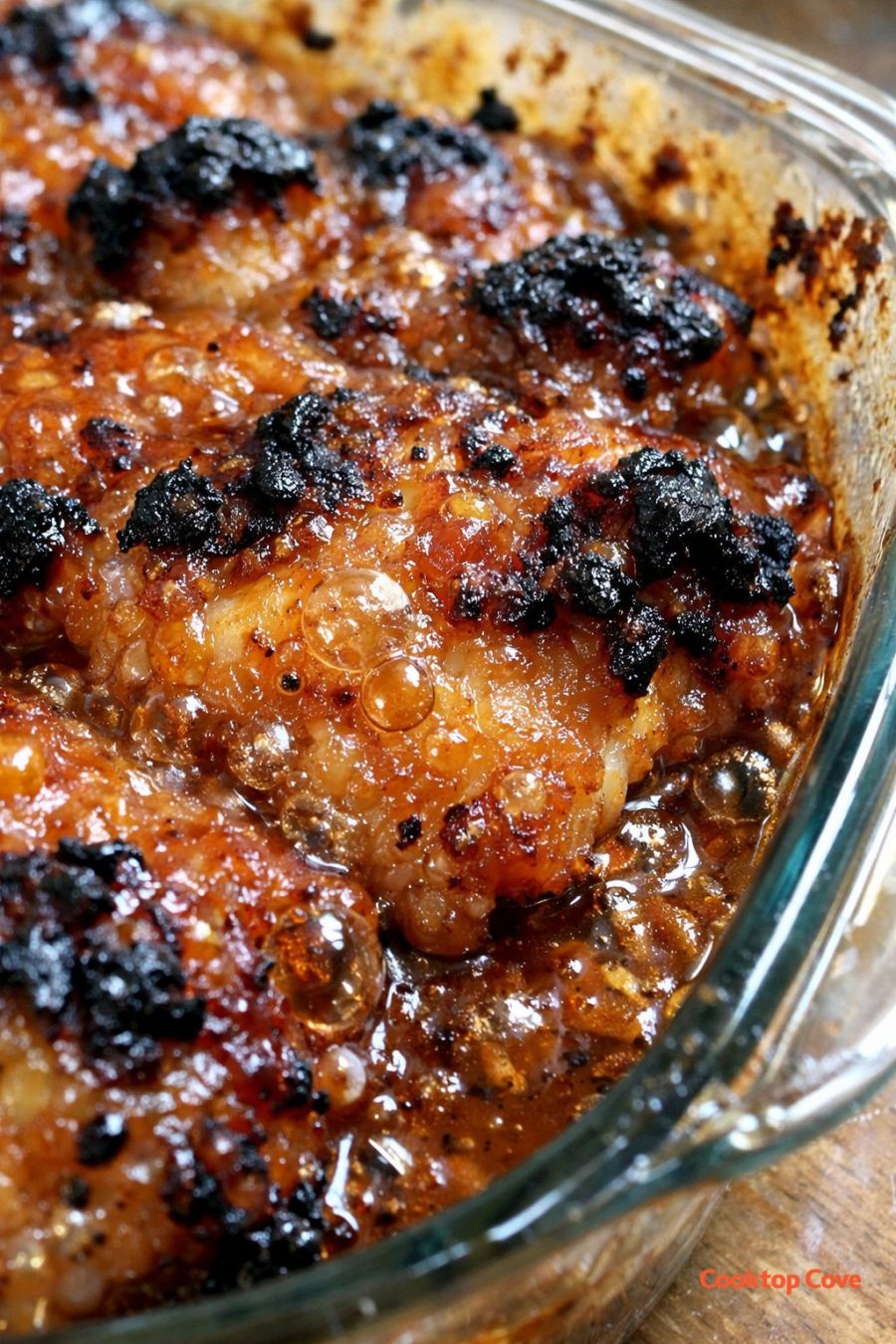
This 4-ingredient oven chicken is my answer to warm-weather entertaining when I want something hearty and satisfying, but I’d rather be chatting on the patio than hovering over the stove. Everything happens in one glass casserole dish: bone-in chicken thighs roast under a simple amber glaze of apricot preserves, soy sauce, and garlic, turning into a bubbling, glistening mass with charred edges. The idea is loosely inspired by Midwestern potluck baked chicken—sweet, salty, and sticky—but streamlined so you can get it into the oven well before guests arrive and let the heat do the rest.
Serve these sticky, amber-glazed chicken thighs straight from the glass baking dish with a big green salad, grilled or roasted vegetables, or simple steamed rice to soak up the extra sauce. In warm weather, I like them with a crisp slaw, sliced tomatoes, and buttered corn on the cob. A dry white wine, light beer, or sparkling water with citrus works well alongside the sweet-savory glaze, and any leftovers are excellent shredded over greens or tucked into sandwiches the next day.
4-Ingredient Amber-Glazed Oven ChickenServings: 4
Ingredients
2 1/2 to 3 pounds bone-in, skin-on chicken thighs (about 6 to 8 pieces)
1 cup apricot preserves or apricot jam
3 tablespoons soy sauce (regular or low-sodium)
3 large garlic cloves, finely minced or pressed
Directions
Preheat your oven to 400°F (200°C). Place a 9x13-inch glass casserole or baking dish on the counter so it’s ready for the chicken.
Pat the chicken thighs dry with paper towels and trim any excess skin or visible pockets of fat. Arrange the thighs in a single layer in the glass dish, skin side up, leaving just a little space between pieces so heat can circulate.
In a medium bowl, whisk together the apricot preserves, soy sauce, and minced garlic until you have a smooth, glossy amber-colored glaze. It should be thick but pourable; if your preserves are very stiff, warm them briefly in the microwave to loosen before whisking.
Pour the glaze evenly over the chicken thighs, making sure each piece is well coated. Use the back of a spoon to nudge the glaze under the edges of the chicken so it can bubble up around the sides as it bakes.
Transfer the dish to the preheated oven and bake for 35 to 40 minutes, without stirring, until the chicken is cooked through and the glaze is vigorously bubbling around the edges. The tops should be a deep amber color with some charred, caramelized spots. The internal temperature of the thickest part of a thigh should reach at least 165°F (74°C).
If you’d like more charred edges and a slightly thicker, stickier glaze, switch the oven to broil for 2 to 4 minutes at the end of cooking. Watch closely so the sugars in the glaze don’t burn; you’re looking for darkened, blistered spots and a glossy, bubbling surface.
Remove the dish from the oven and let the chicken rest in the bubbling glaze for 5 to 10 minutes. The glaze will thicken slightly as it cools, clinging to the chicken and settling into a succulent, glistening mass. Spoon some of the sauce from the bottom of the dish over the tops just before serving.
Serve the chicken directly from the glass casserole dish, making sure each plate gets plenty of the amber glaze from the pan. Store any leftovers in a covered container in the refrigerator and use within 3 to 4 days, reheating gently until steaming hot before serving.
Variations & Tips
You can adjust this four-ingredient framework to suit your pantry while keeping the same easy, make-ahead spirit. For a slightly tangier glaze, stir in 1 to 2 teaspoons of Dijon mustard (this technically adds a fifth ingredient, so I usually reserve it for nights when I’m not counting). A spoonful of crushed red pepper flakes or a pinch of cayenne folded into the glaze gives a gentle heat that balances the sweetness of the apricot. If you prefer a more citrusy profile, swap half of the apricot preserves for orange marmalade; the peel in the marmalade will caramelize and deepen the amber color. Bone-in, skin-on thighs work best here because the skin crisps and the meat stays juicy, but you can use drumsticks in the same weight range and timing. Boneless, skinless thighs will cook faster and brown less; start checking them at 20 to 25 minutes and be cautious with broiling so they don’t dry out. For a leaner option, you can substitute bone-in chicken breasts, though they may take a bit longer; keep a thermometer handy and pull them as soon as they reach 165°F (74°C) in the thickest part. Food safety tips: Always start with fully thawed chicken so it cooks evenly and reaches a safe internal temperature. Avoid rinsing raw chicken in the sink, as it can spread bacteria through splashing; pat dry instead. Use a dedicated cutting board and utensils for raw poultry, and wash your hands, board, and tools thoroughly with hot, soapy water before handling other ingredients. When checking doneness, insert an instant-read thermometer into the thickest part of the meat, not touching bone. Leftovers should be cooled quickly, refrigerated within 2 hours, and reheated to at least 165°F (74°C) before eating.