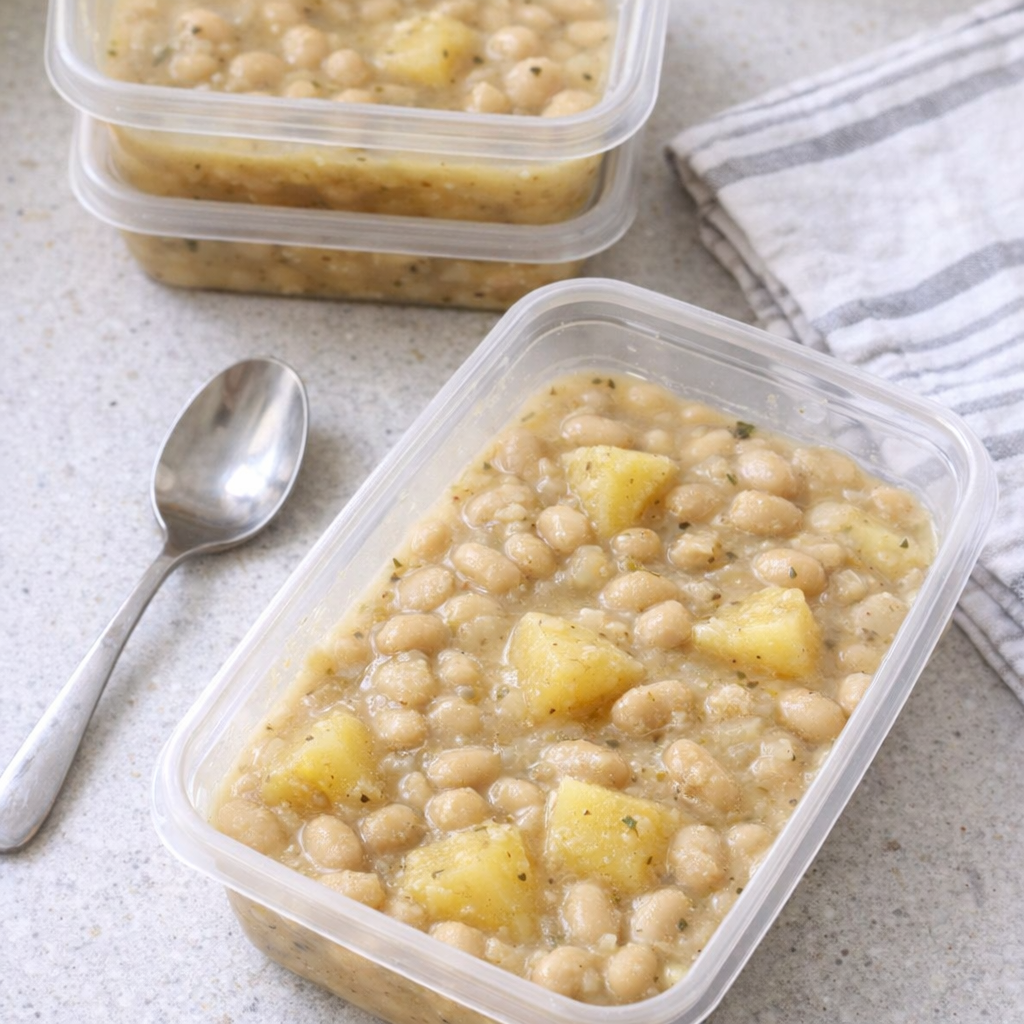
This slow cooker 4-ingredient navy bean and potato stew is the kind of stick-to-your-ribs comfort food my great-aunt swore by during the Depression. It’s built from humble pantry basics, stretches to feed a crowd, and somehow tastes even better the next day.
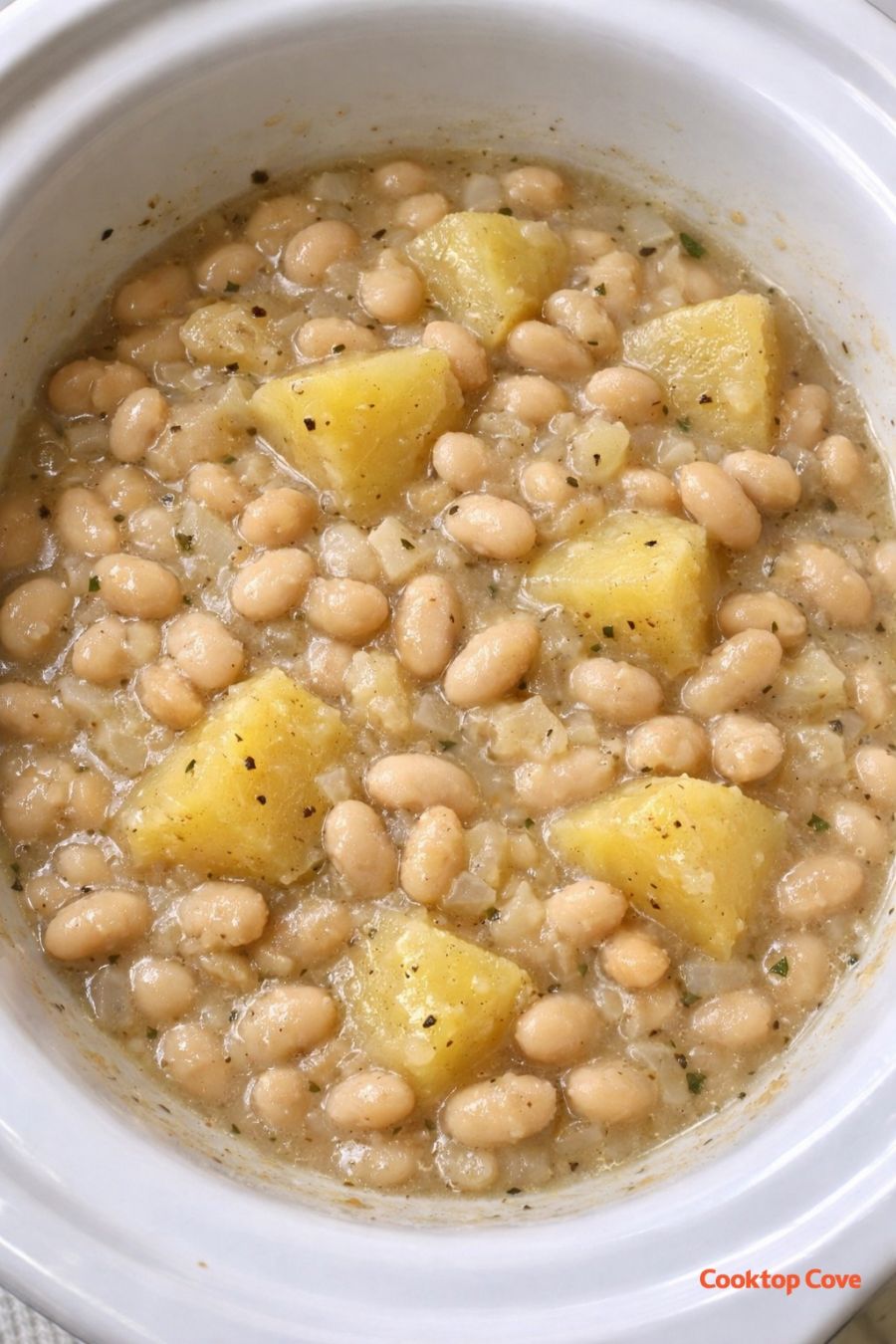
The beans turn creamy, the potatoes get tender and golden, and the broth thickens into a pale, hearty stew that keeps you full for hours. It’s the recipe I pull out on weeks when the budget is tight, my schedule is packed, and I still want something warm and homemade waiting in the slow cooker when I walk in the door.
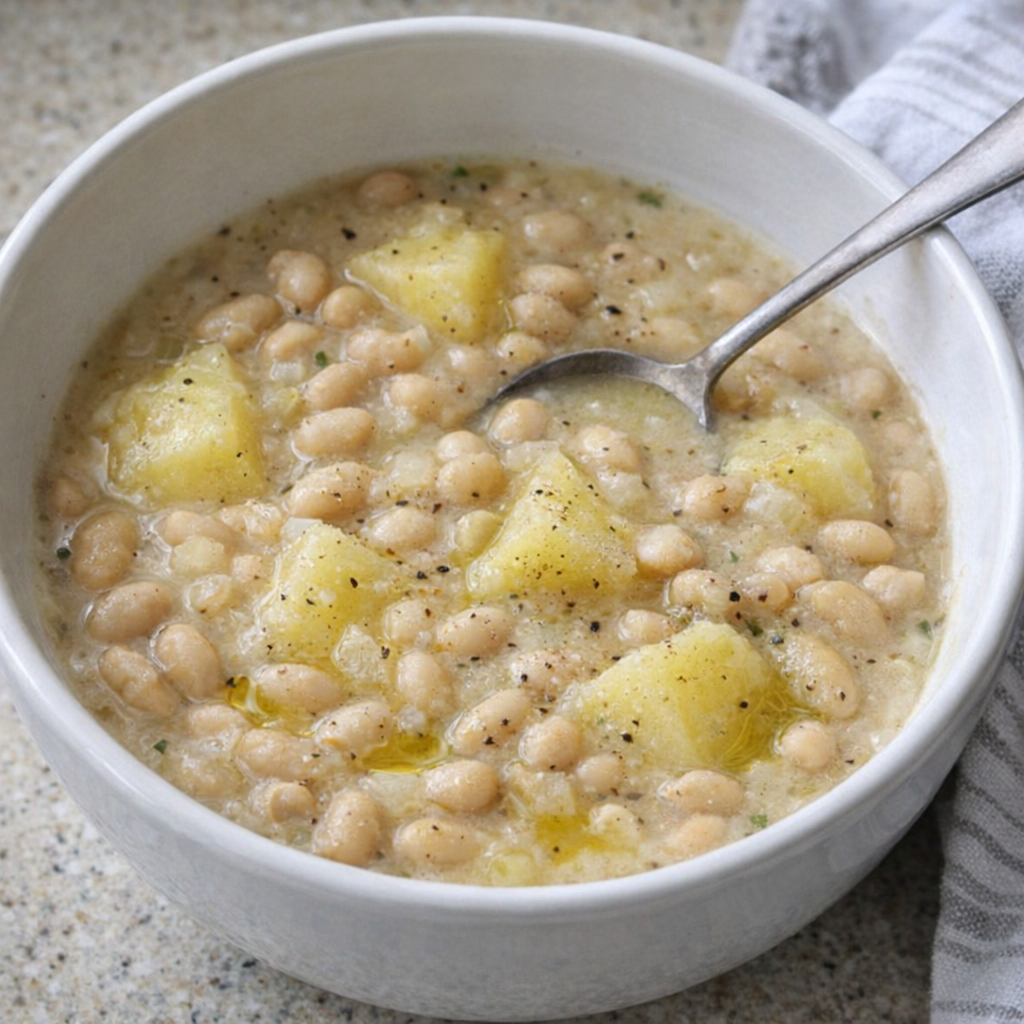
Serve this stew in deep bowls with plenty of black pepper on top and a drizzle of good olive oil or a small knob of butter if you have it. It’s perfect with crusty bread, cornbread, or even plain toast for dipping into the thick, creamy broth.
Add a simple side salad or steamed frozen vegetables to round out the meal on busy weeknights. Leftovers reheat beautifully for lunches, and the stew thickens as it sits, so you can thin it with a splash of water or broth and serve it alongside eggs for a hearty breakfast.
Slow Cooker Navy Bean and Potato Stew
Servings: 6-8
Ingredients
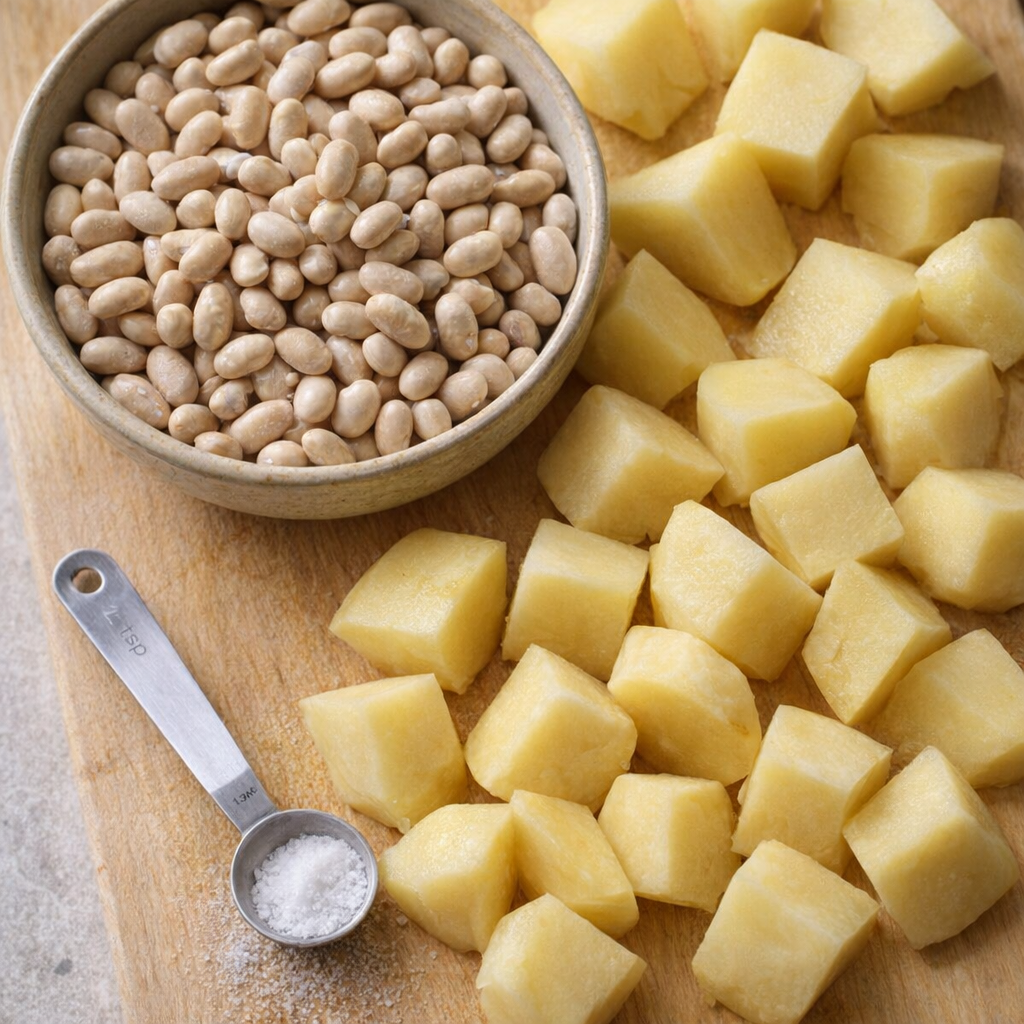
2 cups dried navy beans, rinsed and picked over
4 cups russet or Yukon Gold potatoes, peeled and cut into 1-inch chunks
6 cups water (or enough to cover beans and potatoes by about 1 inch)
2 teaspoons salt, plus more to taste
Directions
Rinse the dried navy beans under cool running water and pick out any broken beans or small stones. No need to soak for this recipe, but you can soak overnight if you prefer a slightly shorter cooking time.
Peel the potatoes and cut them into roughly 1-inch chunks. Aim for pieces that are all about the same size so they cook evenly and turn tender at the same time.
Add the rinsed navy beans and potato chunks to the slow cooker crock, spreading them out into an even layer so everything is mixed together.
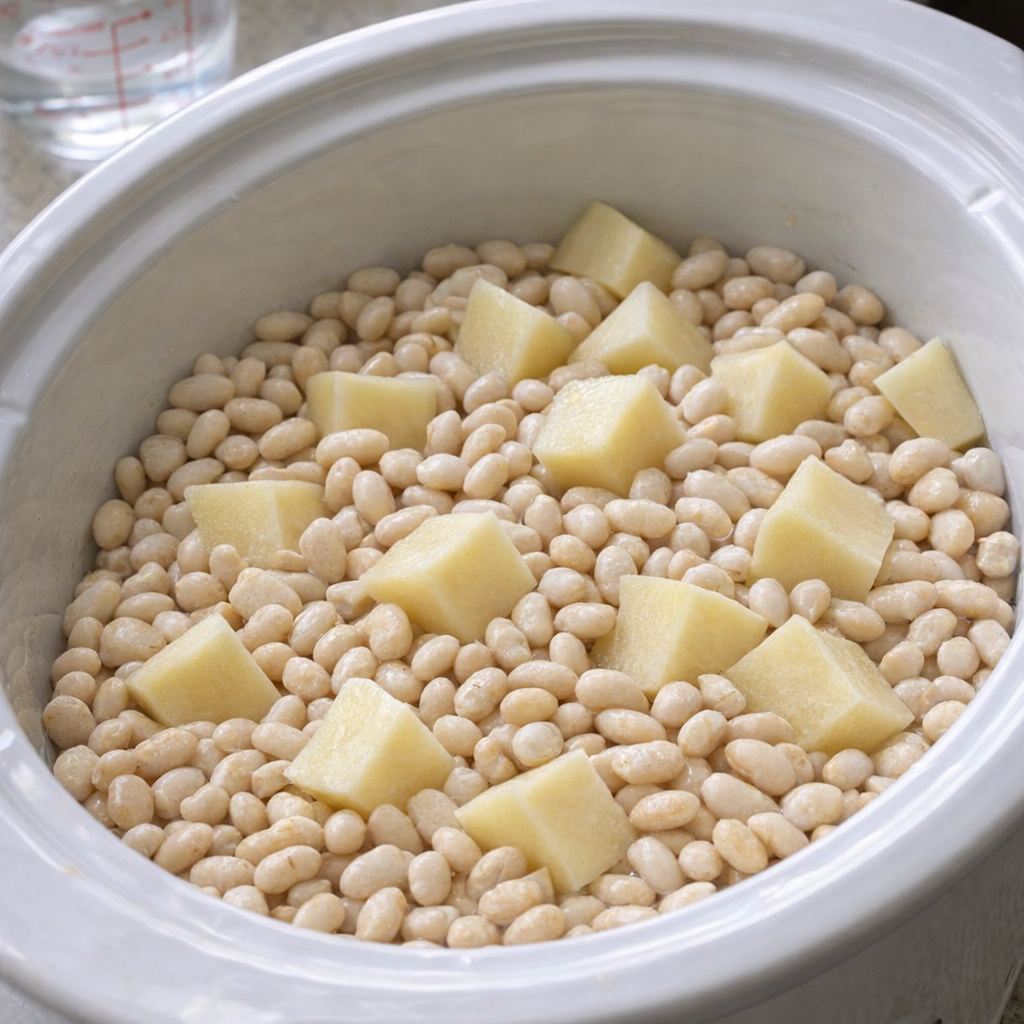
Pour in 6 cups of water, or enough to cover the beans and potatoes by about 1 inch. The liquid will look thin at first, but it will thicken as the beans break down and the potatoes soften during cooking.
Sprinkle the salt over the top and stir gently to combine. You can start with 2 teaspoons and adjust the seasoning later, since the flavors will concentrate as the stew cooks and thickens.
Cover the slow cooker with the lid and cook on LOW for 8–10 hours, or on HIGH for 4–5 hours. Cooking time can vary slightly depending on your slow cooker, but you’re looking for the navy beans to be very soft and creamy and the potatoes to be tender and starting to break down around the edges.
Once the beans and potatoes are fully cooked, give the stew a good stir. Use the back of a spoon or a potato masher to gently mash some of the potatoes and beans right in the slow cooker. This will thicken the broth into a creamy, pale stew while still leaving plenty of whole beans and chunks of potato for texture.
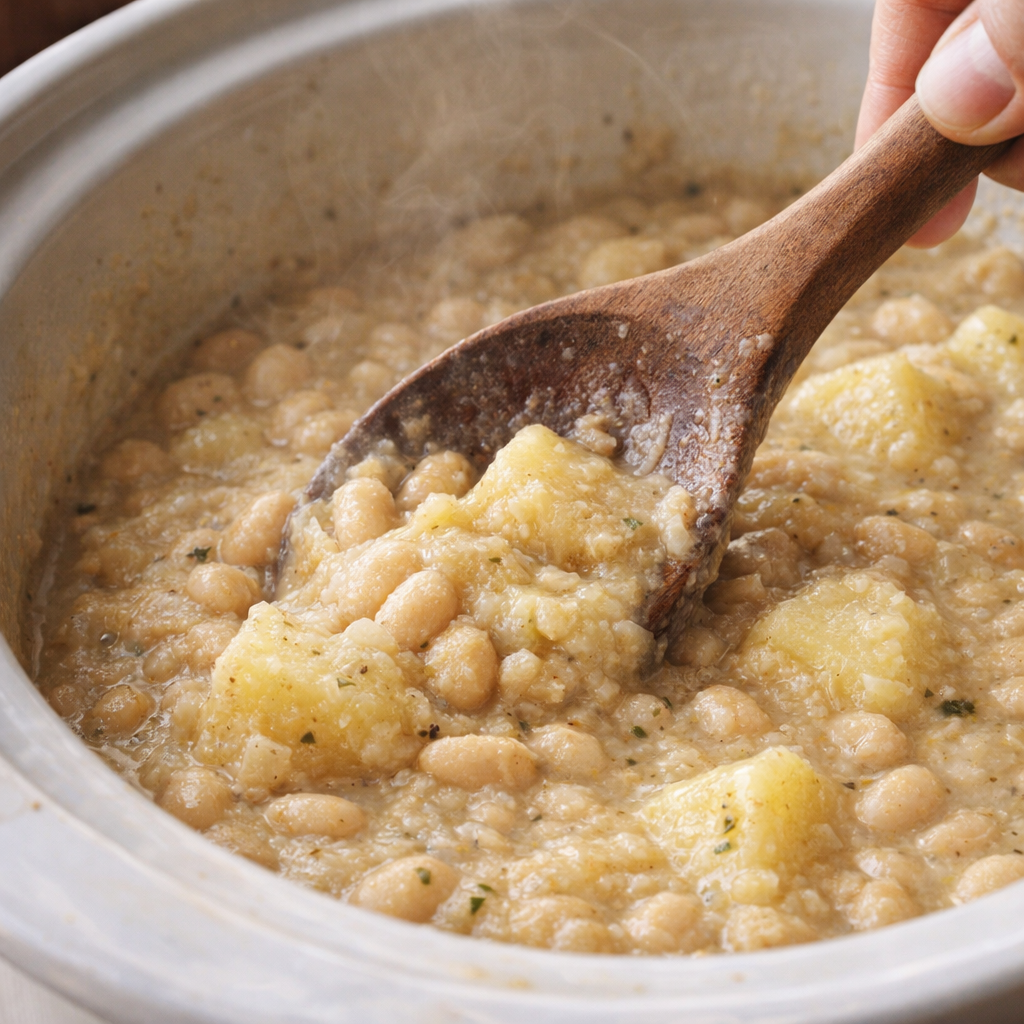
Taste the stew and add more salt if needed. If the stew is thicker than you like, stir in a little hot water to loosen it; if it’s thinner than you want, leave the lid off and cook on HIGH for another 15–20 minutes to reduce slightly.
Serve the stew hot, ladled straight from the slow cooker into bowls. Keep the slow cooker on the WARM setting if people are eating at different times; this is exactly how my great-aunt kept everyone fed on long, busy days.
Variations & Tips
To keep this as a true 4-ingredient, Depression-era style recipe, the base stays very simple, but you can still customize it with what you have on hand.
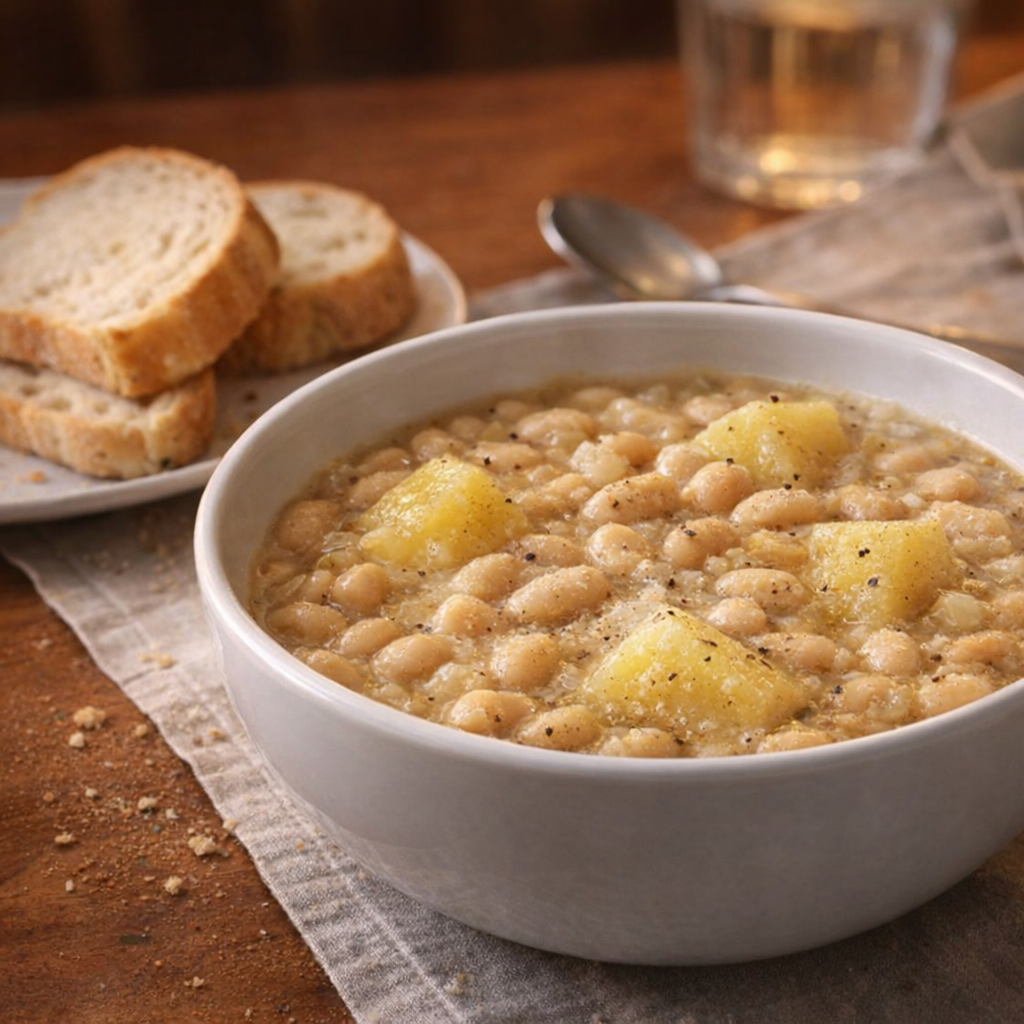
For extra richness, swap 1–2 cups of the water for milk or unsalted broth toward the end of cooking (add dairy in the last hour on LOW so it doesn’t curdle). If you have onions or garlic, sauté them in a little oil and stir them in at the beginning for more flavor. A bay leaf, a pinch of dried thyme, or a little black pepper can be added without changing the spirit of the dish.
To stretch it even further, serve the stew over rice, buttered noodles, or day-old bread. For more protein, stir in leftover cooked ham, sausage, or shredded chicken during the last hour of cooking so it can warm through without drying out.
Food safety tips: Always rinse and pick over dried beans before cooking to remove debris. For best texture and safety, cook the beans thoroughly until completely soft; undercooked beans can be hard to digest. Cool leftovers within 2 hours of cooking and store them in shallow containers in the refrigerator for up to 4 days, or freeze for up to 3 months. Reheat leftovers to a simmering temperature before serving, adding a splash of water if the stew has thickened too much in the fridge.