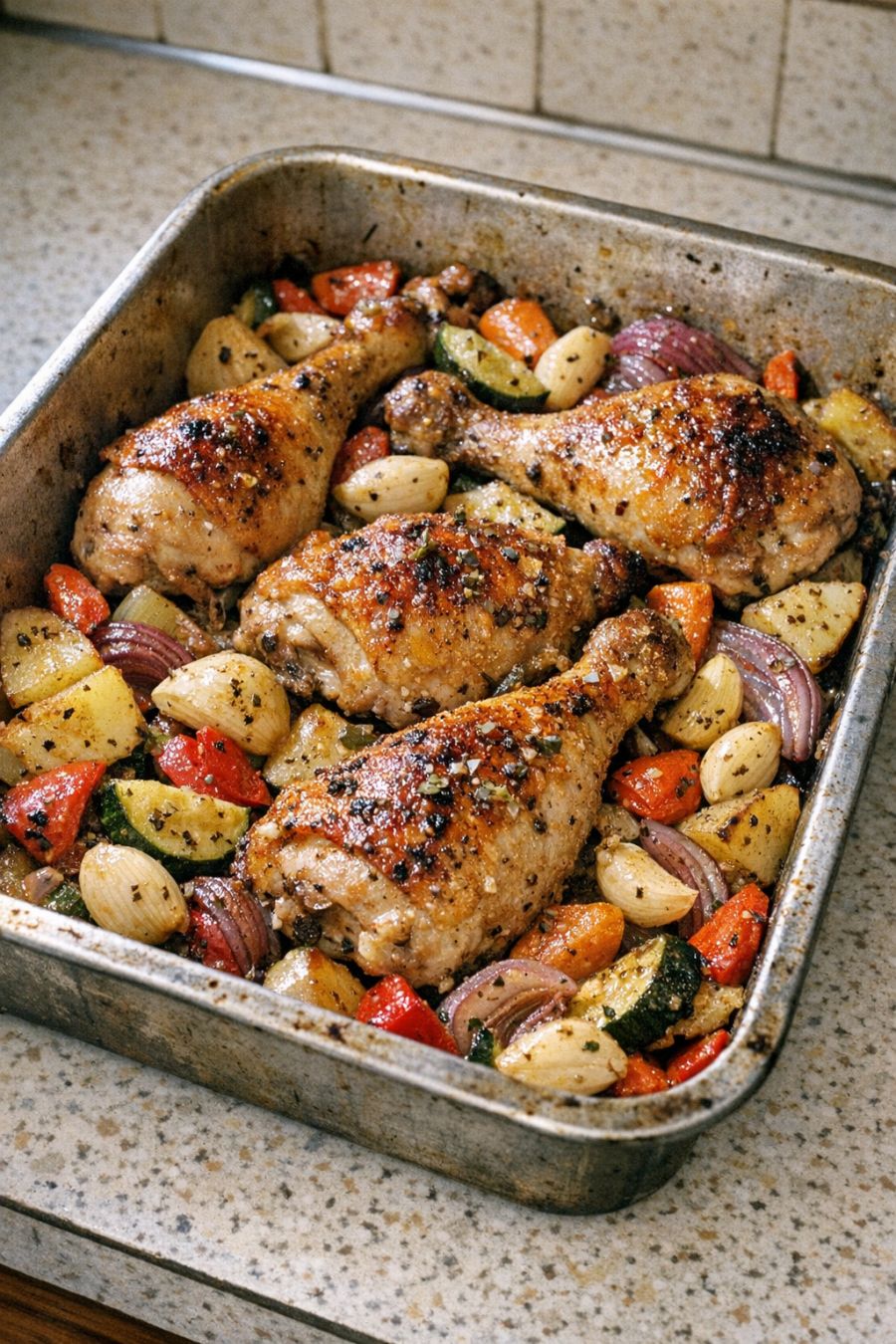
This 5-ingredient oven 1970s Father’s Day chicken using raw whole chicken legs is the kind of no-fuss, big-flavor meal many of us grew up with in the Midwest. It leans on four true pantry staples—oil, salt, dried Italian-style herbs, and bottled vinaigrette dressing—to create that nostalgic, savory aroma that fills the house while the chicken roasts. Everything happens right in the roasting pan: you toss the raw legs with the seasonings and a few chopped vegetables, slide it into the oven, and let time and heat do the work. It’s simple, practical, and just retro enough to feel like something Dad might have proudly pulled from the oven in the late 1970s.
Serve these roasted chicken legs with classic, comforting sides that fit the 1970s vibe: buttered egg noodles or mashed potatoes to soak up the pan juices, and a simple green salad dressed with the same vinaigrette you used on the chicken. Steamed green beans or frozen mixed vegetables (another pantry-era favorite) round out the plate. A crusty loaf of bread or warm dinner rolls are perfect for dipping into the savory juices left in the roasting pan.
5-Ingredient 1970s Father’s Day Roasted Chicken LegsServings: 4
Ingredients
3 pounds raw whole chicken legs (thigh and drumstick attached, about 4 large legs)
2 tablespoons vegetable oil (or other neutral oil)
1 1/2 teaspoons kosher salt (or 1 teaspoon table salt)
1 teaspoon dried Italian seasoning (or mixed dried herbs such as oregano and basil)
1/3 cup bottled Italian vinaigrette salad dressing
2 cups mixed chopped vegetables (such as onion, carrot, and bell pepper), optional but recommended
Directions
Preheat your oven to 400°F (200°C). Place a metal roasting pan or a large metal baking dish on the counter; you’ll do all the mixing right in this pan to keep cleanup easy.
Pat the raw whole chicken legs dry with paper towels so the skin will roast rather than steam. Lay the legs in a single layer in the roasting pan, skin side up, with a little space between each piece if possible.
Drizzle the vegetable oil evenly over the chicken legs. Sprinkle the salt and dried Italian seasoning over the tops, then use clean hands or tongs to turn and toss the legs directly in the pan until they’re lightly coated with oil and seasonings.
Scatter the mixed chopped vegetables around and between the chicken legs in the roasting pan. They don’t need to be precise; think of them as a colorful bed that will roast in the chicken juices. The pan should now resemble a casual, colorful mix of raw chicken and vegetables.
Pour the bottled Italian vinaigrette evenly over the chicken legs and vegetables. Toss everything once more in the pan so the legs and vegetables are lightly coated, then arrange the chicken legs skin side up again for best browning.
Transfer the roasting pan to the preheated oven. Roast for 35 to 45 minutes, turning the vegetables gently once halfway through to keep them from sticking, but leaving the chicken skin side up so it can crisp.
Begin checking for doneness at 35 minutes. The chicken legs are done when the skin is deep golden and lightly crisped, the juices run clear when pierced at the thickest part, and an instant-read thermometer inserted into the thickest part of the thigh (without touching bone) registers at least 165°F (74°C). If needed, continue roasting in 5- to 10-minute increments.
Once done, remove the pan from the oven and let the chicken rest in the hot pan for about 5 to 10 minutes. This allows the juices to settle and the vegetables to soak up a bit more flavor from the pan drippings.
Serve the roasted chicken legs straight from the roasting pan, spooning the softened vegetables and savory pan juices over each portion.
Variations & Tips
To keep the spirit of a 1970s pantry meal, you can swap the dried Italian seasoning for straight dried oregano or a generic “Italian blend” many of us still have in the cupboard. If you don’t have Italian vinaigrette, any bottled vinaigrette-style dressing (French, zesty Italian, or even a basic oil-and-vinegar blend) will work; the acidity helps tenderize the meat and creates a simple pan sauce. For the vegetables, use whatever you have: onions and carrots feel very retro, but celery, bell peppers, or even a handful of frozen mixed vegetables tossed in during the last 20 minutes of roasting fit the era and add color. If you like a slightly sweeter glaze, stir a teaspoon of sugar or honey into the vinaigrette before pouring it over the chicken. For crispier skin, avoid crowding the pan and skip covering the chicken at any point; you can also finish under the broiler for 2 to 3 minutes, watching closely to prevent burning. Food safety tips: Always start with fully thawed chicken legs if using frozen; partially frozen pieces will cook unevenly. Keep raw chicken and its juices away from ready-to-eat foods, and wash your hands, cutting boards, and any utensils that touch the raw meat with hot, soapy water. Use an instant-read thermometer to confirm the chicken reaches at least 165°F (74°C) at the thickest part of the thigh, and refrigerate leftovers within 2 hours in shallow containers. Reheat leftovers to 165°F (74°C) before serving.