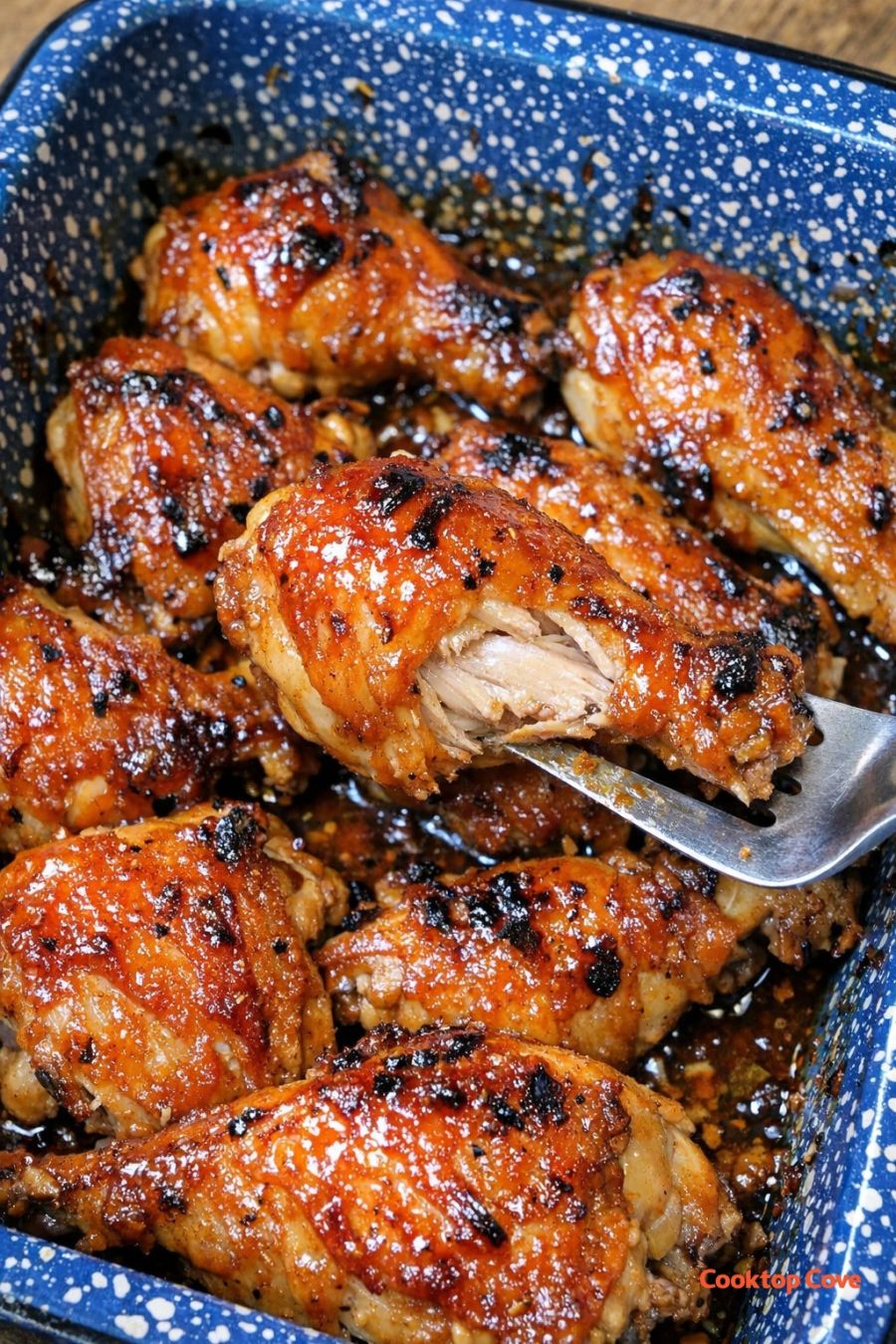
This oven baked 3-ingredient chicken Seville is the kind of dish that quietly becomes a family tradition. The recipe came to me on a church potluck card sometime in the late 1970s, and before long I was making it almost every Sunday after church, just like my own mother did with her favorite baked chicken. It uses only three things from the pantry—chicken, orange marmalade, and French dressing—but when it bakes, the whole house fills with a sweet, tangy, citrusy aroma that makes everyone wander into the kitchen asking when dinner is. The orange glaze bakes up glossy with little charred edges in the pan, and the meat turns so tender it practically falls off the bone.
This chicken is lovely with simple, comforting sides: buttered egg noodles or mashed potatoes to catch the extra sauce, and a pan of green beans or mixed vegetables. A crisp lettuce salad with a light vinaigrette balances the sweetness of the glaze. Warm dinner rolls or a slice of soft white bread are perfect for mopping up the sticky orange sauce left in the blue enamel baking dish. For dessert, something simple and homey—like vanilla pudding or a slice of pound cake—keeps the Sunday-supper feeling going.
Oven-Baked 3-Ingredient Chicken SevilleServings: 4
Ingredients
3 to 3 1/2 pounds bone-in chicken pieces (drumsticks and thighs preferred), patted dry
1 cup orange marmalade
1 cup French salad dressing (regular, not creamy)
Directions
Preheat your oven to 375°F (190°C). Set a rack in the middle of the oven so the chicken browns evenly.
Lightly grease a blue speckled enamel baking dish (or any similar 9x13-inch baking dish) with a bit of oil or nonstick spray so the glaze doesn’t stick too firmly.
In a medium bowl, stir together the orange marmalade and French dressing until the mixture is smooth and well blended. It should be thick but pourable.
Arrange the chicken pieces in a single layer in the baking dish, skin side up, leaving just a little space between each piece so the heat can circulate.
Pour the orange marmalade and French dressing mixture evenly over the chicken, turning each piece once with a fork or tongs so it’s well coated, then finish with all pieces skin side up. Spoon some of the sauce over the tops so every bit is covered.
Cover the baking dish loosely with foil and bake for 25 minutes to help the chicken start cooking through and keep it moist.
Remove the foil, baste the chicken with the pan juices, and return the dish to the oven uncovered. Bake for another 25 to 35 minutes, basting once or twice, until the chicken is cooked through, the glaze is glossy and bubbling, and the tops have some dark, caramelized spots. Total baking time should be about 50 to 60 minutes, depending on the size of the pieces.
Check for doneness: the chicken should reach an internal temperature of 165°F (74°C) in the thickest part, not touching the bone, and the juices should run clear when pierced.
For a little extra char and shine like in a Sunday potluck dish, you can turn the oven to broil for 2 to 3 minutes at the end, watching closely so the sugar in the marmalade doesn’t burn. The glaze should look thick, sticky, and slightly browned at the edges.
Let the chicken rest in the baking dish for about 5 to 10 minutes so the juices settle. Then use a serving fork to lift out the drumsticks and thighs, showing off the tender meat and spooning some of the orange glaze from the pan over each piece before serving.
Variations & Tips
If you prefer white meat, you can use bone-in, skin-on chicken breasts; just be careful not to overbake them, as they cook a bit faster than drumsticks and thighs. For smaller households, halve the recipe and use an 8x8-inch baking dish, but keep an eye on the baking time as it may be slightly shorter. If you like a little heat, stir in a pinch of red pepper flakes or a dash of hot sauce to the marmalade and French dressing mixture before pouring it over the chicken. You can also swap in apricot preserves for the orange marmalade for a slightly different but still very nostalgic flavor. For easier cleanup, line your baking dish with foil before greasing, as the sugary glaze can stick. Food safety tips: always start with fully thawed chicken, never leave raw chicken at room temperature for more than 2 hours, and wash your hands, cutting boards, and utensils thoroughly after handling raw poultry. Use a meat thermometer to ensure the chicken reaches 165°F (74°C) at the thickest part, and refrigerate leftovers within 2 hours of cooking. Leftovers reheat well, covered, at 325°F (165°C) until warmed through, or in the microwave in short bursts so the glaze doesn’t scorch.