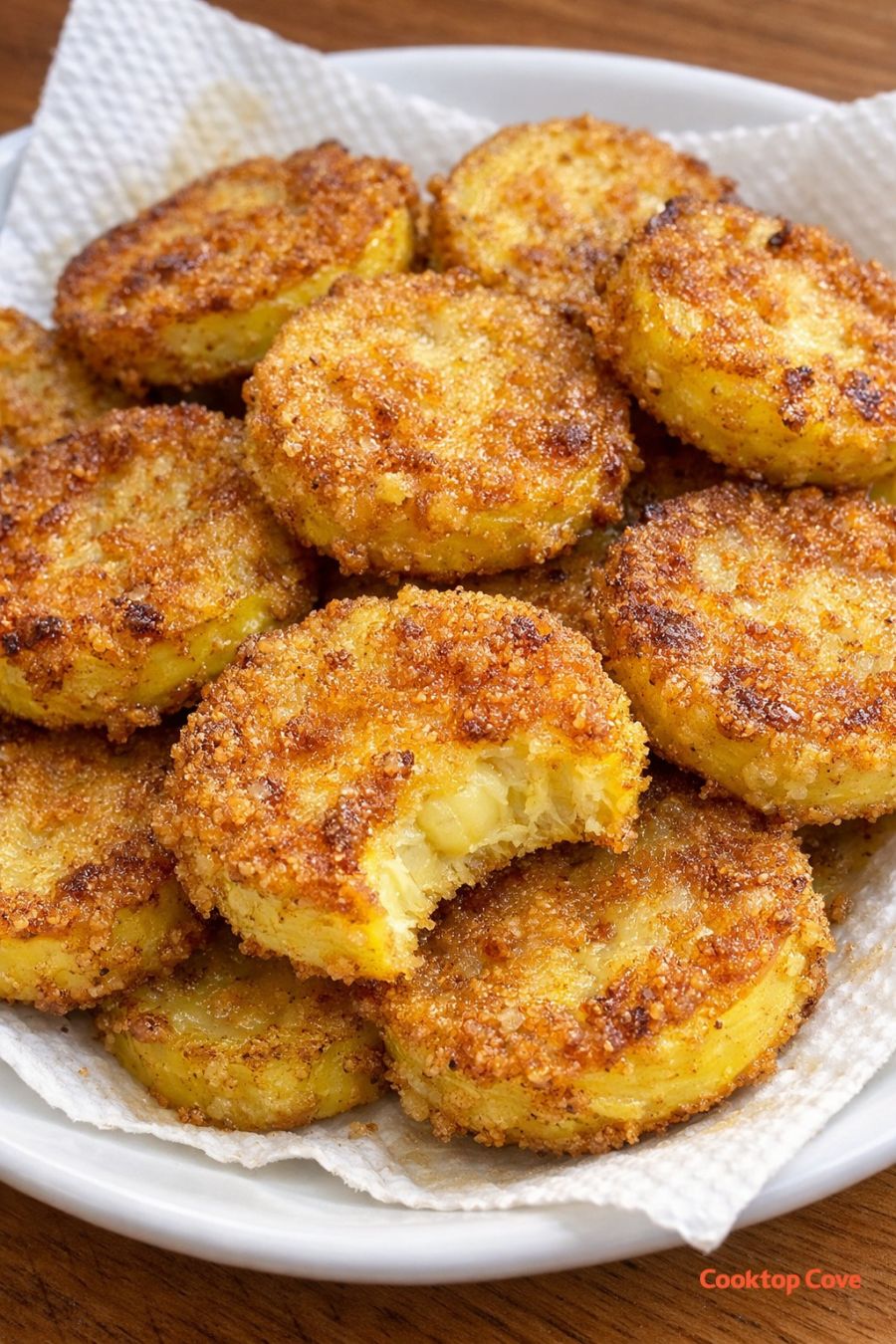
This 3-ingredient fried yellow squash is one of those recipes that feels like a hug in a skillet. My great aunt grew up in the Midwest during the Depression, when the summer garden was what kept everyone full. She’d slice up yellow squash, dust it in cornmeal, and fry it until the edges turned deep golden and crunchy, with soft, creamy centers. It’s simple, filling, and way more comforting than you’d ever expect from three basic ingredients. I love making it on busy weeknights because it comes together fast, uses what’s already in the garden or farmers’ market, and somehow tastes like it took way more effort than it actually did.
Serve the fried yellow squash hot, piled onto a paper towel–lined white plate so it stays crisp while any extra oil drips off. I like it alongside sliced garden tomatoes, a simple green salad, or grilled chicken or burgers. It also works as an easy appetizer with a little dish of salt and pepper on the side so everyone can season to taste. Leftovers (if there are any) can be reheated in a hot skillet or air fryer and tucked into sandwiches, served next to scrambled eggs, or used as a crunchy topper for a bowl of beans or a simple pasta.
3-Ingredient Fried Yellow SquashServings: 3–4
Ingredients
3 medium yellow squash (about 1 1/2 pounds total), sliced into 1/4-inch rounds
1 cup fine or medium-ground yellow cornmeal
1/2 cup neutral oil for frying (such as vegetable or canola), plus more as needed
Directions
Lay the sliced yellow squash out in a single layer on a cutting board or baking sheet. If the slices look very wet, gently blot both sides with a paper towel. This helps the cornmeal stick and keeps the oil from splattering too much.
Pour the cornmeal into a shallow dish or pie plate. Working a handful at a time, press each squash slice into the cornmeal, turning to coat both sides well. Shake off any loose excess and set the coated slices on a clean plate or tray. Repeat until all the squash is coated.
In a large skillet (cast iron works especially well), pour in enough oil to cover the bottom by about 1/8 inch. Heat over medium to medium-high until the oil shimmers and a pinch of cornmeal dropped in sizzles immediately.
Carefully place a single layer of cornmeal-coated squash slices into the hot oil, being sure not to crowd the pan. Fry on the first side for 2–3 minutes, or until the edges are deep golden brown and crisp.
Flip each slice and fry the second side for another 2–3 minutes, or until the squash is tender in the center and the cornmeal crust is evenly golden and crunchy.
Use tongs or a slotted spatula to transfer the fried squash to a paper towel–lined white plate to drain. Let sit for a minute or two so the crust sets and excess oil is absorbed.
Continue frying the remaining squash in batches, adding a little more oil to the pan as needed and letting it heat up before adding more slices. Serve the fried yellow squash hot, with salt and pepper at the table so everyone can season their own.
Variations & Tips
Because this recipe is built on just three ingredients, each one matters. Use fresh, firm yellow squash without soft spots for the best texture; older squash will be more watery and can make the crust less crisp. Fine or medium cornmeal gives that classic Depression-era crunch, but if you only have coarser cornmeal, you can pulse it briefly in a food processor for a slightly finer texture. For a little extra flavor without changing the basic three-ingredient idea, you can warm a sprig of fresh herbs (like thyme or rosemary) in the oil while it heats, then remove it before frying; the oil will pick up a subtle aroma without adding another actual ingredient to the squash. If you want to stretch the batch to feed more people, slice the squash slightly thinner and fry quickly so it doesn’t over-soften. To lighten things up a bit, you can shallow-fry in a nonstick skillet with a thinner layer of oil and work in smaller batches, or finish the fried slices on a wire rack in a 375°F oven for 5–7 minutes to help any excess oil drip off while keeping them crisp. Food safety and handling tips: keep the oil at a steady medium to medium-high heat so it doesn’t smoke; if it starts to smoke, reduce the heat and let it cool slightly before continuing. Never leave hot oil unattended, and let the skillet cool completely before moving or cleaning. Use tongs or a slotted spatula to avoid splashes, and keep paper towels and the serving plate a safe distance from the burner so they don’t get too close to the heat source.