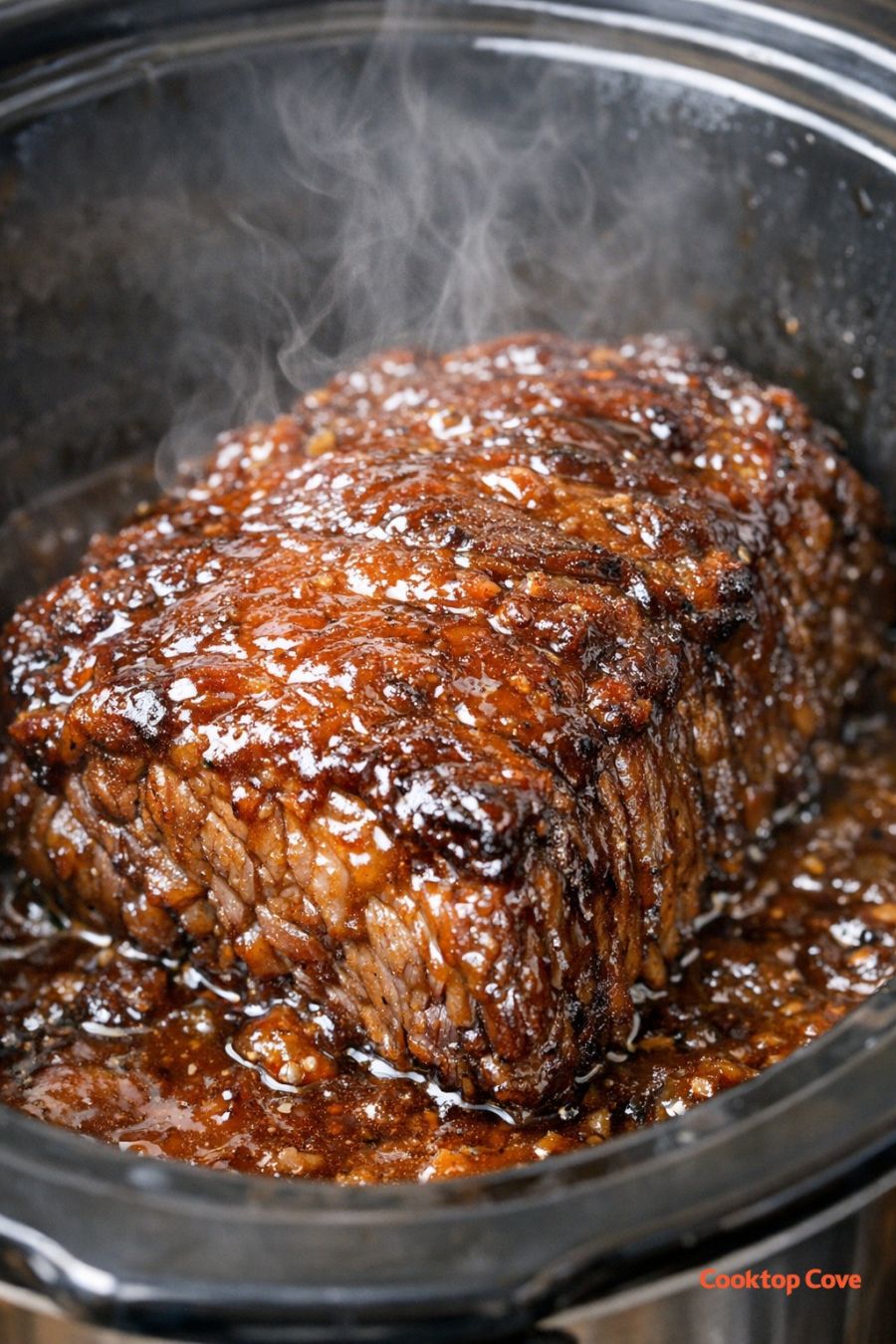
This four-ingredient slow cooker supper is my kind of solstice cooking: I toss everything into the crock in the morning, and by the time the sun dips low, there’s a deeply caramelized, fork-tender slab of marbled beef waiting for us. It leans on the Midwestern pot roast tradition—simple pantry staples, long slow heat, and a richly glazed sauce—while keeping the process as unfussy as possible. The key is starting with a well-marbled, tenderized cut (think blade roast, chuck, or even cube steak in a single thick slab), then letting low, steady heat transform it into something luxurious without keeping you indoors.
Serve thick slices of the saucy beef over creamy mashed potatoes, buttered egg noodles, or polenta so the velvety, caramelized juices have something to soak into. A crisp green salad with a tangy vinaigrette or simple steamed green beans balances the richness nicely. If you’re lingering outside, this also tucks well into soft rolls or baguette halves for impromptu sandwiches, with a sharp pickle or slaw on the side and a chilled, dry cider or light red wine to cut through the fat.
4-Ingredient Slow Cooker Solstice SupperServings: 6
Ingredients
3 to 3 1/2 pounds tenderized, well-marbled beef slab (such as blade roast, chuck roast, or cube steak pressed into a single layer)
1 (10.5-ounce) can condensed cream of mushroom soup
1 (1-ounce) packet dry onion soup mix
1/2 cup low-sodium beef broth or water
Directions
Pat the tenderized, marbled beef slab dry with paper towels. If it’s very large, fold or tuck the thinner end under so it fits snugly in the bottom of your slow cooker in a mostly single, even layer. This helps it cook evenly and stay juicy.
In a medium bowl, whisk together the condensed cream of mushroom soup, dry onion soup mix, and beef broth or water until fairly smooth. The mixture will be thick; it will loosen as the beef releases its juices.
Place the beef slab into the slow cooker. Pour the soup mixture evenly over the top, lifting the meat slightly with a fork or tongs so some sauce slips underneath. Spoon a little extra over any exposed areas so the surface is well coated.
Cover the slow cooker with the lid and cook on LOW for 8 to 10 hours, or on HIGH for 4 to 5 hours, until the beef is very tender and easily pulls apart with a fork. Avoid lifting the lid during cooking so the heat and moisture stay trapped inside.
Once the beef is tender, tilt the slow cooker slightly with a spoon or spatula and skim off any excess surface fat if desired. Gently spoon some of the caramelized sauce over the top of the meat to glaze it and keep it glossy.
Transfer the beef slab to a cutting board or serving platter, letting it rest for about 5 minutes. Slice or pull it into large pieces, then return the meat to the slow cooker and toss gently in the warm sauce, or spoon the sauce over the slices at the table.
Serve the slow-cooked beef hot, with plenty of the velvety, caramelized sauce ladled over each portion.
Variations & Tips
For a slightly tangier, more robust flavor, swap half of the beef broth for dry red wine, keeping the total liquid to about 1/2 cup. You can also use a tenderized, well-marbled pork shoulder slab in place of beef; cook on LOW for 8 to 10 hours until it shreds easily, and be sure to trim any excessively thick exterior fat cap to prevent the sauce from becoming too greasy. If you prefer a smoother, thicker gravy, remove the cooked meat at the end and tent it with foil, then whisk 1 tablespoon of cornstarch into 1 tablespoon of cold water and stir this slurry into the hot sauce in the slow cooker; cover and cook on HIGH for 10 to 15 minutes until glossy and thickened before returning the meat. For a deeper umami note, you can add a splash (about 1 tablespoon) of soy sauce or Worcestershire sauce, but keep in mind that both will increase the salt level, so use low-sodium broth when possible. Food safety notes: Always start with fully thawed meat; cooking large frozen slabs in a slow cooker can keep them in the temperature “danger zone” (40°F to 140°F) too long. Keep the lid on during cooking to maintain a safe temperature, and use a meat thermometer if you’re unsure—beef and pork should reach at least 145°F, though this recipe aims for higher temperatures to achieve shreddable tenderness. Refrigerate leftovers within 2 hours of cooking in shallow containers, and reheat to at least 165°F before serving again.