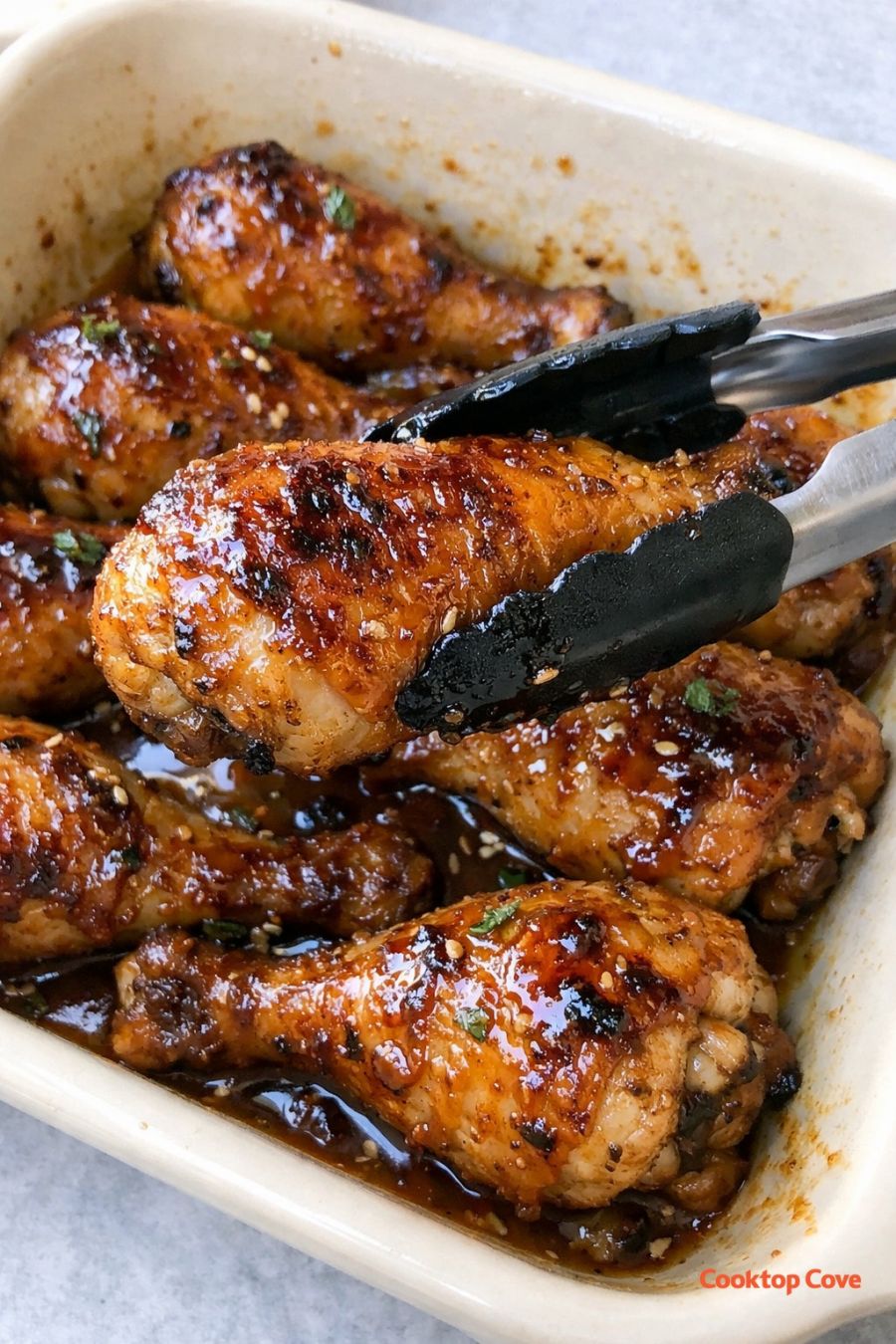
This oven baked 3-ingredient chicken riviera is the kind of recipe that feels like it’s been in the family forever—because it has. My late mother-in-law clipped it from a magazine in 1963, and it quickly became her signature dish for every summer gathering on the patio. It’s simple enough for a busy weeknight but special enough for company: golden-brown drumsticks with a tangy, glossy sauce that caramelizes in the oven. With just three pantry ingredients and almost no prep, it’s the kind of reliable, no-fuss recipe you can pull out whenever you want something comforting that still feels a little nostalgic and celebratory.
Serve these tangy, caramelized drumsticks straight from the warm baking dish with a big green salad, buttered corn on the cob, and maybe some crusty bread or garlic toast to soak up the extra sauce. For a heartier meal, pair with roasted potatoes or rice pilaf so the juices have something to run into. In the summer, I like to add sliced tomatoes and cucumbers on the side for a fresh contrast. A light, fruity dessert—like berries with whipped cream or a simple lemon bar—finishes the meal without feeling too heavy.
Oven Baked 3-Ingredient Chicken RivieraServings: 4–6
Ingredients
3 pounds chicken drumsticks (about 10–12 pieces), patted dry
1 cup bottled French or Catalina salad dressing (tangy, reddish, pourable)
1 cup apricot preserves
Directions
Preheat your oven to 375°F (190°C). Lightly grease a cream-colored (or any light-colored) stoneware or ceramic baking dish that’s large enough to hold the drumsticks in a single layer.
Pat the chicken drumsticks very dry with paper towels. This helps the skin crisp and brown nicely in the oven. Arrange them in a single layer in the prepared baking dish, leaving a little space between each piece so the heat can circulate.
In a medium bowl, whisk together the French or Catalina dressing and the apricot preserves until the mixture is smooth and glossy. It should be pourable and evenly blended, with no big clumps of preserves.
Pour the sauce evenly over the drumsticks, turning each piece with tongs to coat all sides. End with the drumsticks skin-side up so they can crisp while baking. Spoon a little extra sauce over the tops.
Bake the chicken, uncovered, for 25–30 minutes. Carefully remove the dish from the oven and use tongs to turn each drumstick over, spooning some of the sauce from the bottom of the dish over the chicken.
Return the dish to the oven and continue baking for another 20–25 minutes, or until the chicken is cooked through (internal temperature reaches 165°F/74°C in the thickest part, not touching the bone) and the skin is deep golden-brown. The sauce around the edges should be thickened and slightly sticky.
For extra color and a lightly crisped skin, increase the oven temperature to 425°F (220°C) for the last 5–8 minutes of baking, watching closely so the sugars in the sauce don’t burn. The drumsticks should look browned with a glistening, tangy coating.
Remove the baking dish from the oven and let the chicken rest for 5–10 minutes. Use tongs to lift a drumstick and give it a gentle twist; the skin should be crisp and the sauce glossy underneath. Serve the chicken directly from the baking dish, spooning some of the warm sauce over each piece.
Variations & Tips
For picky eaters, you can use a milder, creamier French dressing (the paler orange kind) instead of a sharper Catalina-style dressing; it will still caramelize nicely but taste a bit softer and sweeter. If apricot isn’t a family favorite, peach or orange marmalade preserves work beautifully in the same amount and keep the 3-ingredient spirit. To cut the sweetness a bit for grown-up palates, stir 1–2 teaspoons of Dijon mustard into the sauce (this technically adds an ingredient, but it’s a small tweak that doesn’t change the base recipe). For a touch of heat, add a pinch of red pepper flakes to half the pan and mark that side for the spice-lovers. If you prefer thighs instead of drumsticks, use bone-in, skin-on chicken thighs and add 10–15 minutes to the total bake time, checking for doneness at 165°F/74°C. Food safety tips: Always start with fresh or properly thawed chicken; if thawing from frozen, do it in the refrigerator, not on the counter. Patting the chicken dry helps it brown and also reduces splattering. Use separate cutting boards and utensils for raw chicken, and wash hands, knives, and any surfaces that touch raw poultry with hot, soapy water. Use a meat thermometer to confirm the chicken has reached a safe internal temperature of 165°F/74°C before serving. Leftovers should be cooled and refrigerated within 2 hours and eaten within 3–4 days; reheat until steaming hot all the way through.