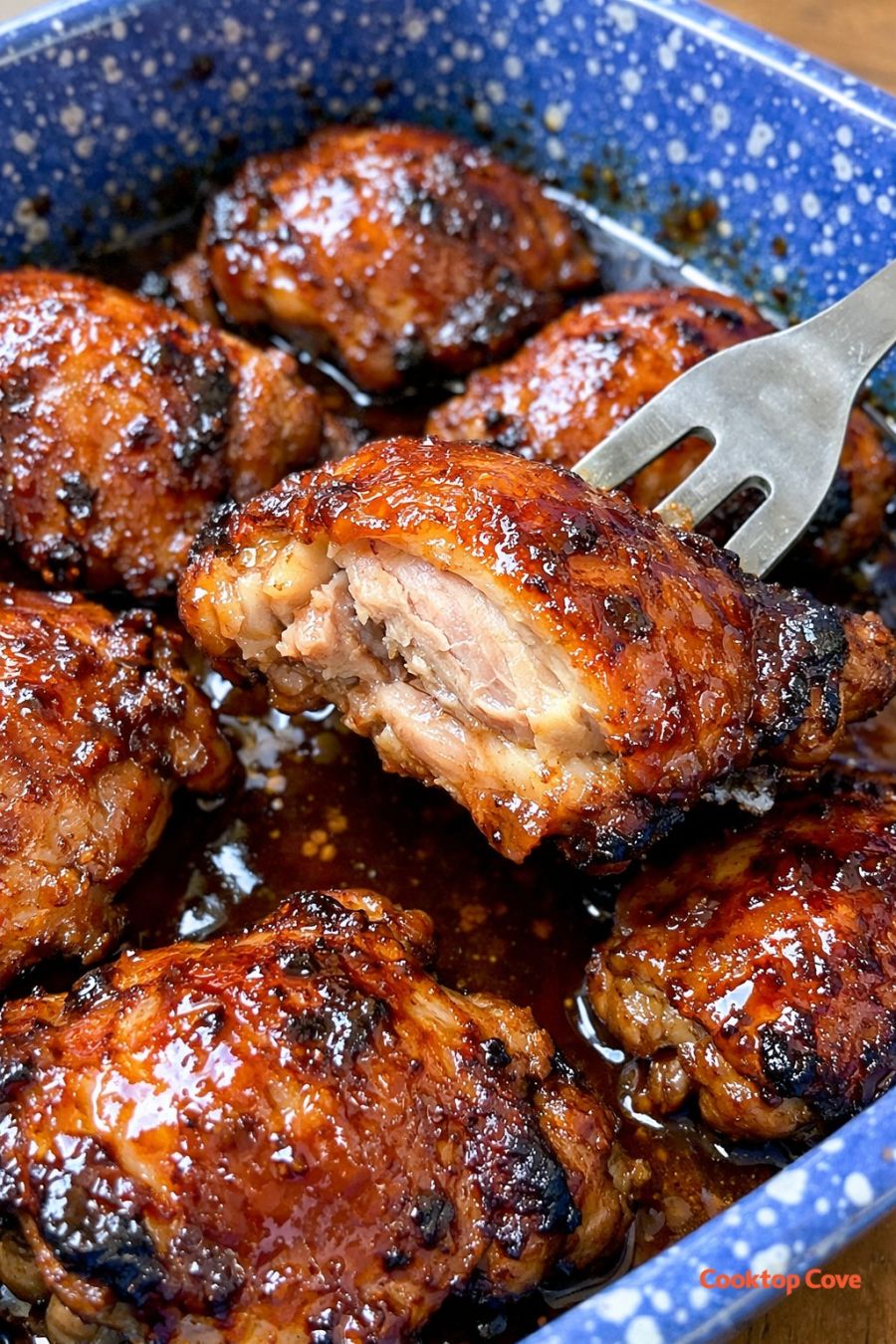
This oven baked 3-ingredient chicken Olympia is the kind of dish that used to quietly make its way up and down Midwestern streets in the 1970s, tucked into blue speckled casserole dishes and handed over with a hug. My neighbor Helen, who lived two doors down when my kids were born, made this for every new mother on our street. The sauce is nothing fancy—just bottled French dressing, dry onion soup mix, and a jar of apricot preserves—but it bakes into a glossy, caramelized glaze that keeps the chicken unbelievably tender. Helen finally wrote it down for all of us at her 80th birthday party, and I’ve been making it ever since for anyone who needs a warm, no-fuss supper.
Serve this chicken hot right from the casserole dish, spooning plenty of that amber sauce over each piece. It’s especially good with plain white rice or buttered egg noodles to catch the drippings. A simple green vegetable—steamed green beans, peas, or a tossed salad with a light vinaigrette—balances the sweetness of the sauce. Warm dinner rolls or a slice of soft white bread fit the old-fashioned spirit of the recipe and help mop up every last bit from the pan.
Oven Baked 3-Ingredient Chicken OlympiaServings: 4-6
Ingredients
3 to 3 1/2 pounds bone-in, skin-on chicken thighs (about 8 pieces)
1 (16-ounce) bottle French salad dressing (thick, bright orange style)
1 (10- to 12-ounce) jar apricot preserves
1 (1-ounce) packet dry onion soup mix
Directions
Preheat your oven to 350°F (175°C). Set out a 9x13-inch baking dish or a similar-sized blue speckled casserole, if you have one, to keep with tradition.
Pat the chicken thighs dry with paper towels. This helps the skin brown and the sauce cling. Trim off any large flaps of excess fat if you like, but leave the skin on for best flavor and tenderness.
Arrange the chicken thighs in a single layer in the baking dish, skin side up. The pieces can be close together but should not be stacked.
In a medium bowl, combine the French dressing, apricot preserves, and dry onion soup mix. Stir until the preserves are mostly broken up and the mixture is fairly smooth and well blended.
Pour the sauce evenly over the chicken thighs, making sure each piece is well coated. Use a spoon to scoop some sauce over any bare spots. The chicken will not be completely submerged; that is fine.
Cover the baking dish loosely with foil and place it on the middle rack of the preheated oven. Bake covered for 30 minutes to help the chicken cook through and stay moist.
After 30 minutes, remove the foil. Baste the chicken by spooning some of the hot sauce from the pan over the tops of the thighs.
Continue baking uncovered for another 30 to 40 minutes, basting once or twice more, until the chicken is cooked through, the sauce is thickened and glossy, and the edges of the chicken and sauce are caramelized. The internal temperature of the thickest part of the thighs should reach at least 165°F (74°C).
If you’d like deeper color and more caramelized edges, turn the oven up to 400°F (200°C) for the last 5 to 10 minutes of baking, watching closely so the sugars in the sauce don’t burn.
Let the chicken rest in the pan for 5 to 10 minutes after you take it out of the oven. The sauce will thicken slightly as it stands. Serve the chicken straight from the casserole dish, spooning the rich amber sauce over each piece.
Variations & Tips
For a slightly less sweet version, use half French dressing and half tomato sauce, or choose a tangier French or Catalina-style dressing. You can swap peach or orange marmalade for the apricot preserves if that’s what you have in the pantry; the flavor will be a bit different but still very much in the spirit of the 1970s original. If you prefer white meat, you can use bone-in, skin-on chicken breasts instead of thighs—just check for doneness a bit earlier, as they can dry out faster. Boneless, skinless thighs also work and cook a little more quickly; reduce the baking time by about 10 to 15 minutes and keep an eye on them so the sauce doesn’t over-caramelize. For extra savor, tuck a few peeled carrot chunks or wedges of onion around the chicken before pouring on the sauce; they’ll roast in the juices and make a nice side. Food safety tips: Always thaw chicken fully in the refrigerator, not on the counter. Keep raw chicken and its juices away from ready-to-eat foods, and wash your hands, cutting boards, and knives with hot soapy water after handling. Use a meat thermometer to ensure the thickest part of each piece reaches at least 165°F (74°C). Refrigerate leftovers within 2 hours in a shallow container and reheat until steaming hot before serving.