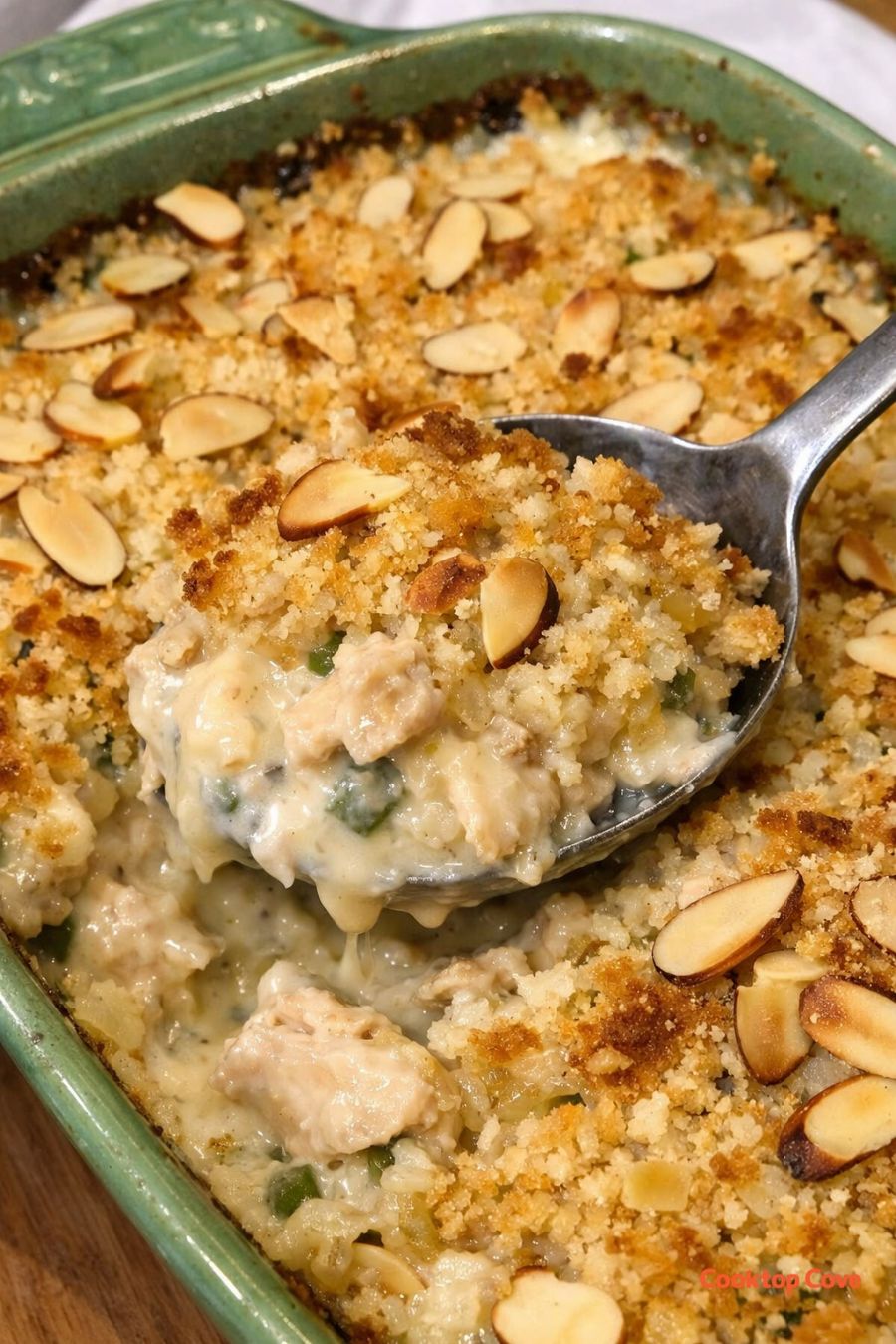
This oven baked 3-ingredient chicken almandine casserole is pure Midwestern nostalgia. My neighbor Dorothy brought a pan of it to our very first block party back in 1978—bubbling hot, smelling like Sunday supper, and crowned with toasted almonds. I finally convinced her to share the recipe last summer, and I was surprised by how simple it is: just chicken, a creamy canned-soup base, and sliced almonds. It’s the kind of recipe you make when you want something comforting, reliable, and low-fuss, but still pretty enough for company.
Serve this casserole straight from the oven with a simple green vegetable—steamed green beans, roasted broccoli, or a crisp salad with a tangy vinaigrette all balance the richness nicely. Buttered egg noodles, rice, or mashed potatoes make a classic base to soak up the creamy sauce. A basket of warm dinner rolls or crusty bread is very at home next to this dish, especially if you’re leaning into that vintage potluck vibe. For drinks, a light white wine or iced tea keeps things refreshingly simple.
Oven-Baked 3-Ingredient Chicken Almandine CasseroleServings: 6
Ingredients
2 pounds boneless, skinless chicken breast, cut into 1-inch pieces
2 cans (10.5 ounces each) condensed cream of chicken soup
1 cup sliced almonds, divided (about 4 ounces)
Cooking spray or butter, for greasing the casserole dish
Salt and black pepper, to taste (optional)
Paprika, for sprinkling on top (optional, for color)
Directions
Preheat your oven to 350°F (175°C). Lightly grease a 2- to 3-quart casserole dish (a vintage green one if you have it) with cooking spray or a thin coat of butter so the casserole doesn’t stick.
Spread the chicken pieces in an even layer in the bottom of the prepared casserole dish. If you like, season lightly with salt and black pepper; remember the soup base is already salty, so go easy.
In a medium bowl, stir the condensed cream of chicken soup until smooth. You do not need to dilute it with water or milk—Dorothy always used it straight from the can for a thicker, creamier sauce.
Pour the undiluted soup evenly over the chicken, using a spatula or the back of a spoon to nudge it into the corners and cover as much of the chicken as possible. It’s fine if a few pieces peek through; the sauce will loosen as it bakes.
Sprinkle about 3/4 cup of the sliced almonds evenly over the top of the casserole, reserving the remaining 1/4 cup for later. If you’re using paprika, dust a light, even sprinkle over the top for a little color—it’s a very 1978 touch.
Cover the casserole tightly with foil and bake for 25 minutes. This covered time helps the chicken cook through and the sauce heat evenly without drying the top.
After 25 minutes, carefully remove the foil. Gently stir just the sauce around the chicken once or twice to redistribute heat, but try to keep most of the almonds on top so they can toast. Scatter the remaining 1/4 cup sliced almonds over the surface for extra crunch.
Return the uncovered casserole to the oven and bake for another 20–25 minutes, or until the sauce is bubbling at the edges, the almonds are a light golden brown, and the chicken pieces reach an internal temperature of 165°F (74°C). If the almonds are browning too quickly, loosely tent with foil for the final minutes.
Let the casserole rest for 5–10 minutes on a heatproof surface before serving. This short rest allows the sauce to thicken slightly so you get that creamy, scoopable texture. Serve warm, spooned generously over rice, noodles, or potatoes.
Variations & Tips
To stay true to Dorothy’s three-ingredient spirit, the core is always chicken, condensed cream of chicken soup, and sliced almonds—but there’s room to adapt. For a slightly lighter version, you can swap one can of cream of chicken soup for cream of mushroom or a reduced-sodium variety; just expect a slightly thinner sauce. If you prefer dark meat, boneless, skinless chicken thighs work beautifully and are more forgiving if slightly overbaked. For extra flavor without adding more ingredients, quickly toast the sliced almonds in a dry skillet over medium heat until fragrant before sprinkling them on the casserole; they’ll add deeper nutty notes and better crunch. You can also play with texture by cutting the chicken into larger chunks and extending the bake time by 5–10 minutes, checking for doneness.
Food safety tips: Always start with fully thawed chicken—never bake this from frozen, as the exterior can overcook while the center stays underdone. Use a separate cutting board and knife for raw chicken, and wash your hands, utensils, and surfaces thoroughly with hot, soapy water after handling. The chicken should reach an internal temperature of 165°F (74°C); use an instant-read thermometer to check the thickest pieces in the center of the casserole. If you’re reheating leftovers, heat them to at least 165°F again and consume within 3–4 days, storing them refrigerated in a covered container. Avoid leaving the casserole at room temperature for more than 2 hours (or 1 hour if your kitchen is very warm) to minimize bacterial growth.