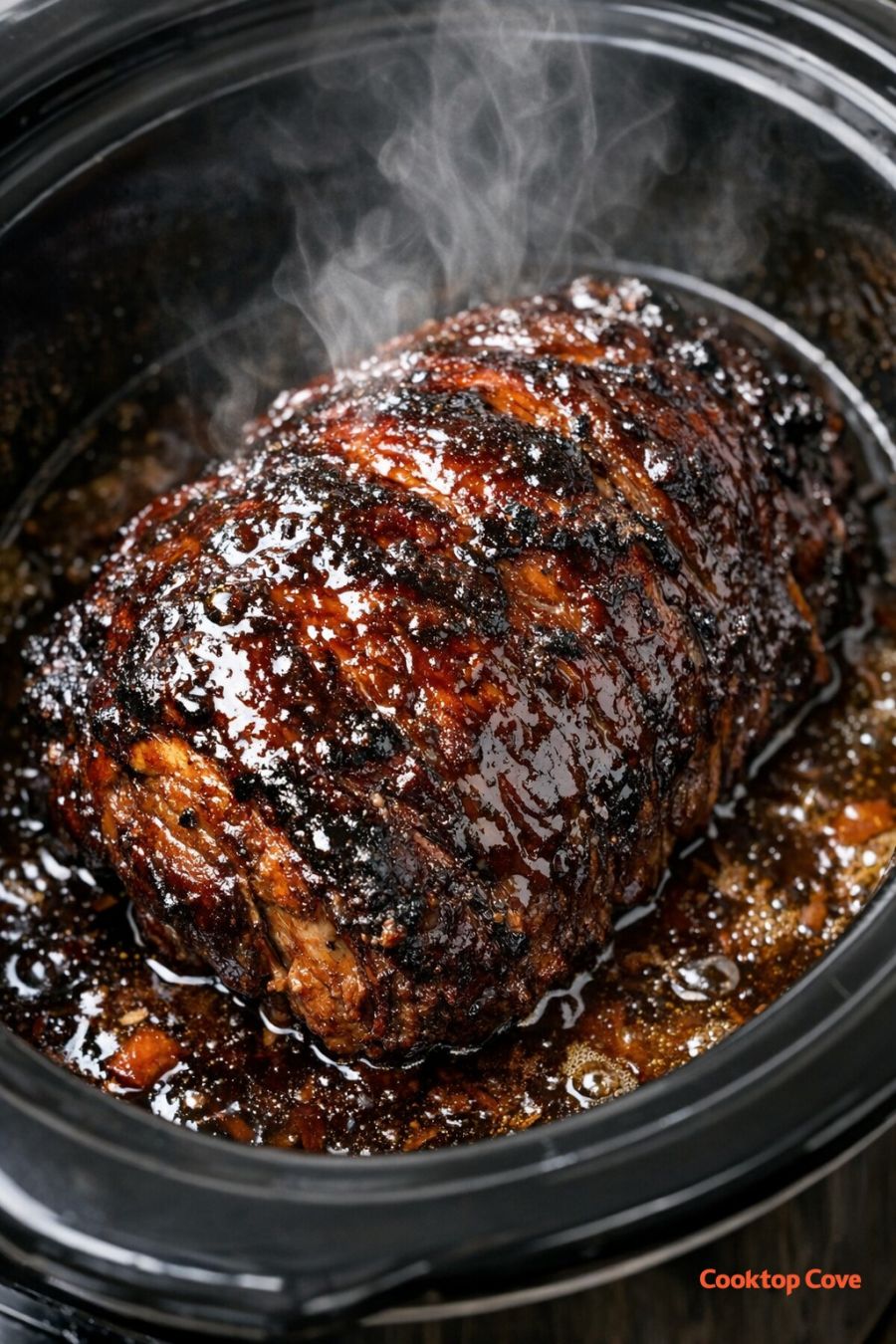
This is my kind of weekend recipe: four ingredients, five minutes of hands-on time, and the slow cooker does the rest. A top sirloin roast turns meltingly tender and gets coated in a glossy, dark mahogany glaze that looks like you fussed all afternoon—when really, you tossed it in before soccer practice and walked away. It’s the kind of hearty, no-fail dinner I lean on when I want to feed the family well but also actually enjoy my Saturday.
I like to spoon the sliced or shredded beef and its rich juices over creamy mashed potatoes or buttered egg noodles so they can soak up every bit of that glossy glaze. Steamed green beans, roasted carrots, or a simple side salad help balance the richness. If you’re feeding a crowd, pile the beef onto toasted buns with a slice of provolone or Swiss and pass extra juices on the side for dipping. Leftovers make great next-day sandwiches or can be tucked into tortillas with a little shredded cheese.
4-Ingredient Slow Cooker Dad’s Weekend Winner RoastServings: 6
Ingredients
3 to 3 1/2 pounds beef top sirloin roast, trimmed of excess surface fat
1 cup thick barbecue sauce (your favorite, hickory or brown sugar style works well)
1/2 cup low-sodium beef broth
1 packet (1 ounce) dry onion soup mix
Directions
Place the raw beef top sirloin roast into the bottom of a 5- to 7-quart slow cooker. If there’s a thicker fat cap on one side, place that side facing up so it bastes the meat as it cooks.
In a small bowl, whisk together the barbecue sauce, beef broth, and dry onion soup mix until mostly smooth and combined. It will be thick and glossy.
Pour the mixture evenly over the roast, turning the roast once with tongs to lightly coat all sides. Make sure some of the sauce mixture settles underneath so the meat sits in a shallow pool of liquid.
Cover the slow cooker with the lid and cook on LOW for 7 to 9 hours, or on HIGH for 4 to 5 hours, until the beef is very tender and easily pulls apart with a fork. Avoid lifting the lid during cooking so the heat and moisture stay trapped.
Once the roast is tender, use two forks to either slice it thickly in the slow cooker or gently shred it into large chunks, turning the meat in the dark mahogany glaze and juices so every piece is coated and glossy.
Taste the sauce and adjust if needed: if you want it a little sweeter, stir in an extra spoonful of barbecue sauce; if it needs a touch more savoriness, add a small pinch of salt. Let the beef rest in the hot juices on WARM for 10 to 15 minutes before serving so it soaks up even more flavor.
Serve the beef straight from the slow cooker, spooning plenty of the rich, glistening juices and glaze over each portion.
Variations & Tips
For picky eaters, choose a milder, sweeter barbecue sauce instead of something smoky or spicy. If your family doesn’t love onion pieces, you can briefly pulse the dry onion soup mix in a small blender before mixing it with the liquids so the bits are finer and more hidden. To add a little heat for grown-ups, stir 1 to 2 teaspoons of hot sauce or a pinch of red pepper flakes into the sauce mixture before pouring it over the roast. If you prefer a thicker, stickier glaze, once the roast is done, ladle 1 to 1 1/2 cups of the cooking liquid into a small saucepan, simmer it on the stove for 5 to 10 minutes until reduced and glossy, then pour it back over the meat in the slow cooker. For a slightly lighter version, you can trim more fat from the roast before cooking and use a reduced-sugar barbecue sauce. Leftovers keep well in the fridge for up to 4 days; reheat gently with a splash of water or broth so the sauce stays loose and glossy.
Food safety tips: Always start with a fresh or fully thawed beef roast—never put a partially frozen roast into the slow cooker, as it can spend too long in the temperature “danger zone.” Keep the roast refrigerated until you’re ready to cook, and don’t leave it out at room temperature for more than 1 to 2 hours total. Make sure the internal temperature of the beef reaches at least 145°F, though for this style of roast you’ll likely go well beyond that to achieve fork-tender results. Once cooking is finished, don’t let the roast sit on the counter; either keep it on the WARM setting for serving (for up to 2 hours) or cool and refrigerate leftovers promptly in shallow containers.