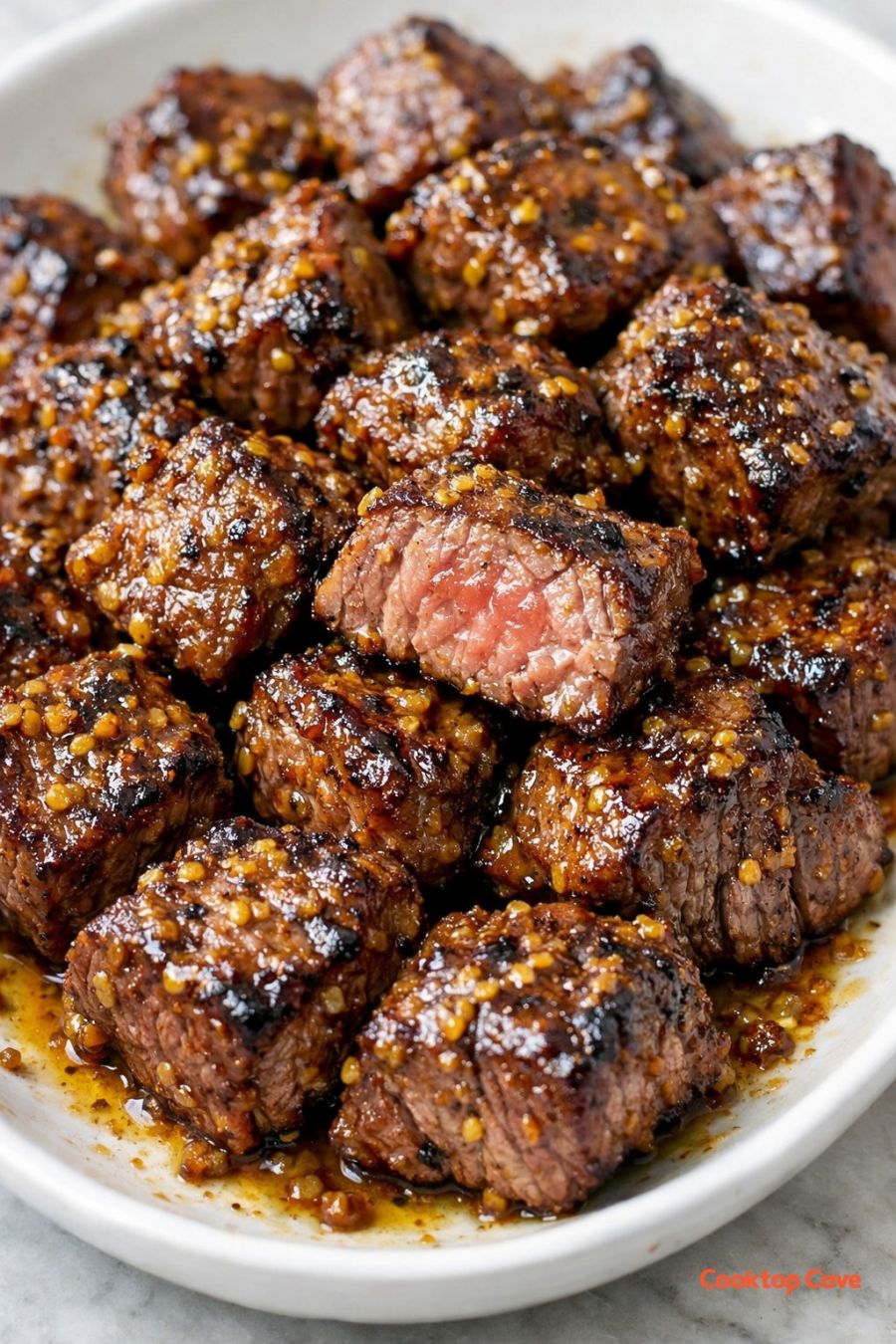
My dad used to fire up the old charcoal grill just for these mustard steak bites, even if it was the only thing he cooked that night. They’re the kind of simple, no-fuss food that fits right into a Midwest backyard evening—just good beef, good mustard, and a little salt, nothing fancy. The mustard sears into a tangy, savory glaze that clings to the browned edges, while the centers stay tender and juicy. With only three ingredients and a hot grill, you can have a platter of these low-carb bites on the table in no time, and they always seem to disappear faster than I can get them off the grates.
Pile these mustard steak bites onto a warm platter and pass toothpicks or small forks so folks can help themselves. They’re lovely alongside a simple green salad, grilled asparagus, or sliced cucumbers and tomatoes dressed with vinegar and onion for a light, low-carb plate. If you’re feeding a mixed crowd, you can add a bowl of buttered corn or roasted potatoes on the side. A cold, crisp beer or unsweetened iced tea fits right in with that backyard, feet-in-the-grass feeling.
Low Carb 3-Ingredient Mustard Steak BitesServings: 4
Ingredients
1 1/2 pounds beef steak (sirloin, ribeye, or strip), cut into 1-inch cubes
1/3 cup whole grain or Dijon mustard
1 1/2 teaspoons kosher salt (or 1 teaspoon fine sea salt)
Directions
Pat the steak cubes very dry with paper towels so they will sear instead of steam. Trim away any large pieces of excess fat or silverskin as you go.
Place the steak cubes in a large bowl. Sprinkle the salt evenly over the meat and toss with clean hands until all sides are lightly seasoned.
Add the mustard to the bowl. Use a spoon or your hands to coat every piece of steak so each cube is covered in a thin, even layer of mustard. The meat should be well glazed but not swimming in sauce.
Cover the bowl and let the steak marinate at room temperature for 20–30 minutes while you heat the grill. This takes the chill off the meat and lets the mustard flavor sink in a bit. If you need to wait longer than 30 minutes, refrigerate the meat and then bring it back toward room temperature for 15–20 minutes before grilling.
While the meat rests, preheat your grill to high heat. For gas, turn burners to high, cover, and heat for at least 10–15 minutes. For charcoal, build a hot, even bed of coals and let them burn until covered with gray ash. You want a good, hot fire for a quick sear.
If using skewers, thread the mustard-coated steak cubes onto metal or soaked wooden skewers, leaving a little space between each cube so the heat can reach all sides. If you prefer, you can cook the bites directly on a well-oiled grill grate using a grill basket to keep them from falling through.
Clean and oil the grill grates just before cooking to help prevent sticking. Place the skewers or steak cubes over the hottest part of the grill.
Grill the steak bites for about 2–3 minutes per side, turning with tongs until all sides are nicely browned and lightly charred in spots, and the mustard has formed a caramelized, golden-brown glaze. Depending on your grill and the size of the cubes, this usually takes 6–8 minutes total for medium-rare to medium.
To check doneness, cut into a thicker cube: the center should be rosy and juicy, or use an instant-read thermometer (about 130–135°F for medium-rare, 140–145°F for medium). Pull them off the grill a few degrees before your target, as they will continue to cook slightly while resting.
Transfer the steak bites to a warm serving platter. Let them rest for 5 minutes so the juices settle back into the meat. Serve hot, with any juices from the platter spooned over the top for extra flavor.
Variations & Tips
You can nudge this basic recipe in a few directions without losing the simple three-ingredient spirit. For a sharper flavor, use straight Dijon mustard; for a rustic look that matches the speckled glaze in the photo, choose whole grain mustard. If your steak is very thick or extra lean, you can slice it into slightly smaller, 3/4-inch cubes for quicker cooking and more browned edges. A fattier cut like ribeye will give you richer, more buttery bites, while sirloin stays a bit firmer and very lean for low-carb eaters. If you don’t have a grill, you can sear the mustard-coated steak bites in a heavy cast-iron skillet on the stovetop over high heat with a light wipe of oil, making sure not to crowd the pan. For those who like a little heat, you can swap in a spicy brown mustard, or sprinkle a pinch of black pepper over the meat before adding the mustard—but keep in mind that extra seasonings technically go beyond the three-ingredient idea. Food safety notes: Always start with fresh, cold beef and keep it refrigerated until close to marinating time. If you marinate longer than 30 minutes, do so in the refrigerator, not on the counter. Discard any leftover mustard in the bowl that has touched raw meat; don’t reuse it as a dipping sauce. Use clean plates and utensils for cooked steak—never place grilled meat back on the platter that held it raw. Cook beef to at least 145°F if serving to anyone with a compromised immune system, young children, pregnant people, or older adults who prefer their meat more done.