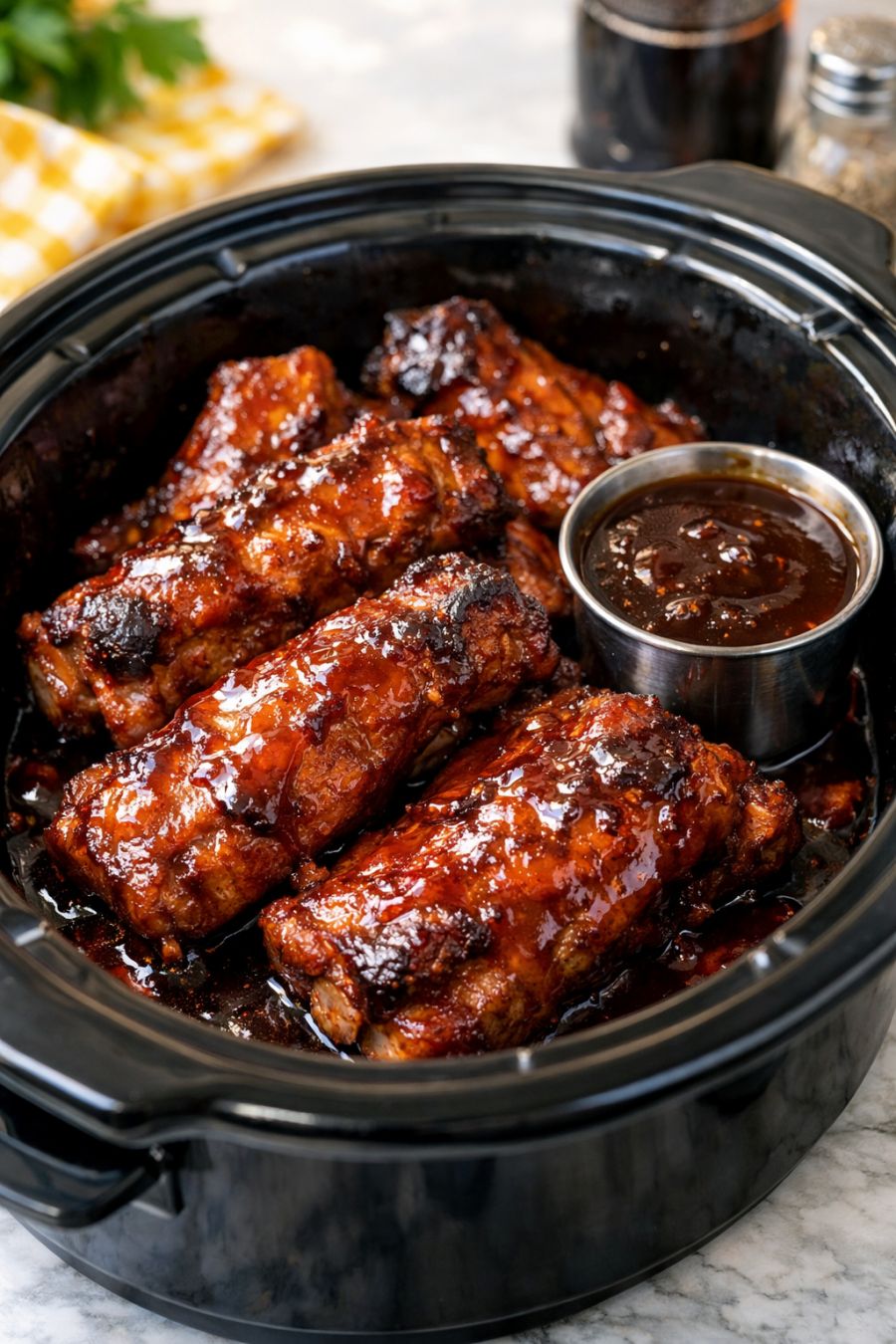
This is the kind of slow cooker supper that feels like a small miracle on a hot summer weekend. You start with raw boneless country-style pork ribs, tuck them into the bottom of the crock just like my mother did with her Sunday roasts, then add only two simple things: a bottle of barbecue sauce and a splash of root beer. By the time the afternoon ballgame is over, the house smells like a church picnic. It’s the sort of easy, no-fuss meal that lets you enjoy your day while the slow cooker does its quiet work, and it has that sweet-smoky Midwestern flavor that makes everyone wander back for seconds.
Pile the tender, saucy pork onto soft sandwich buns and spoon a little extra sauce from the pot over the top. This goes nicely with classic picnic sides: creamy coleslaw, potato salad, corn on the cob, or a simple sliced tomato and cucumber plate from the garden. A bowl of baked beans or a pan of cornbread fits right in, and for a light finish, serve cold watermelon wedges or fresh berries.
3-Ingredient Slow Cooker Country-Style Pork Ribs SupperServings: 6
Ingredients
3 to 4 pounds raw boneless country-style pork ribs
1 (18 to 20 ounce) bottle thick barbecue sauce (your favorite brand)
1 cup root beer (not diet)
Directions
Lay the raw boneless country-style pork ribs in a single, even layer in the bottom of a 5- to 6-quart slow cooker. It’s fine if they overlap a bit, but try to keep them mostly in one layer so they cook evenly.
In a medium bowl or large measuring cup, stir together the barbecue sauce and root beer until smooth and pourable. This thins the sauce just enough so it can seep down around the meat while it cooks.
Pour the barbecue sauce and root beer mixture evenly over the ribs in the slow cooker, making sure all the meat is lightly coated. Use a spoon to nudge the ribs so the sauce runs underneath and around them.
Cover the slow cooker with the lid and cook on LOW for 6 to 8 hours, or on HIGH for 3 to 4 hours, until the pork is very tender and easily pulls apart with a fork. Avoid lifting the lid during cooking so the heat and moisture stay inside.
Once the ribs are tender, use a slotted spoon or tongs to gently transfer them to a plate or cutting board. If you like them in pieces, you can leave them as is; for sandwiches, use two forks to pull the meat into chunky shreds.
Skim any excess fat from the surface of the sauce left in the slow cooker. Return the shredded or whole ribs to the pot and stir gently so the meat is well coated with the warm sauce.
Taste the saucy pork and adjust if you like: you can stir in a little more bottled barbecue sauce for extra thickness, or let the meat sit in the hot sauce on the WARM setting for 10 to 15 minutes so the flavors meld before serving.
Serve the pork hot, spooning it straight from the slow cooker onto plates or buns, with extra sauce from the pot drizzled over the top.
Variations & Tips
If your family prefers a little kick, use a spicy or smoky barbecue sauce in place of a sweeter one, or add a pinch of red pepper flakes to the sauce and root beer mixture before pouring it over the ribs. For a slightly less sweet version, choose a more tangy sauce and reduce the root beer to 3/4 cup. You can also use cola or Dr Pepper instead of root beer for a different but still very Midwestern flavor. If you’d like a thicker, stickier sauce at the end, transfer some of the cooking liquid to a saucepan and simmer it on the stove until it reduces and thickens, then stir it back into the meat. To turn this into more of a plated supper than sandwiches, leave the ribs in larger pieces and serve them alongside mashed potatoes or buttered noodles with the sauce spooned over. For food safety, always start with fresh, fully thawed pork ribs and keep them refrigerated until you’re ready to cook. Do not use diet soda, as artificial sweeteners can break down oddly with long cooking and won’t give the same body to the sauce. Make sure your slow cooker is at least half full but not more than about two-thirds full so it heats properly. Cook the ribs until they reach at least 145°F in the thickest part, though for tenderness you’ll usually go well beyond that. Refrigerate leftovers within 2 hours of cooking, storing them in a shallow, covered container, and reheat until steaming hot before serving again.