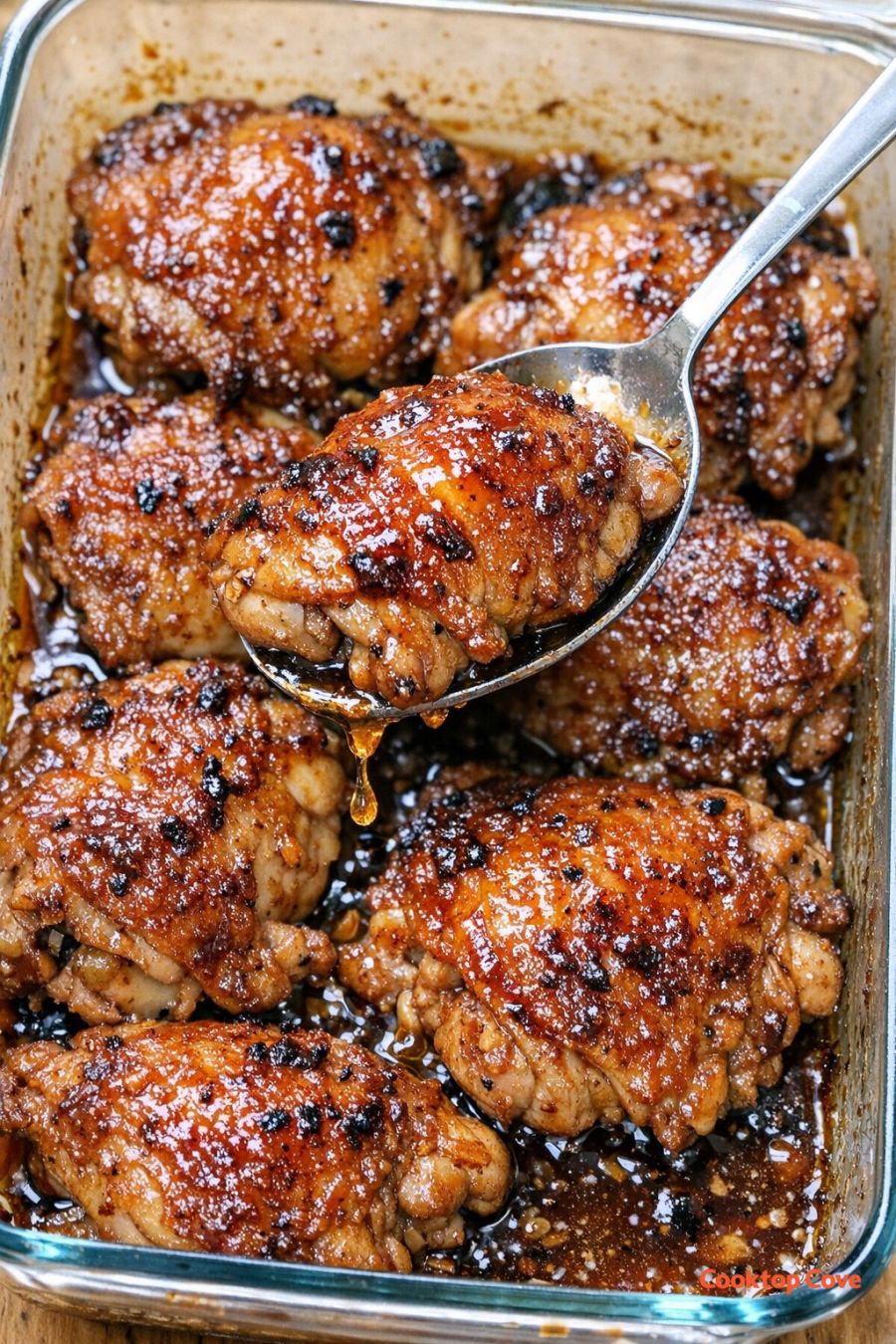
This oven baked 3-ingredient chicken pavilion is my version of the legendary potluck chicken my neighbor Betty brought to every church and neighborhood gathering for 40 years. People would crowd around the table, trying to guess the long list of ingredients in that sticky, caramelized glaze, and she’d just smile and say, “Only three, I promise.” It’s pure busy-weeknight magic: you whisk together a simple sauce, pour it over chicken thighs in a glass baking dish, and let the oven do the rest until the skin is golden and crisp and the sauce turns into a glossy, spoonable glaze. It’s the kind of recipe you make once and then keep in your back pocket forever because it’s easy, comforting, and always a hit.
Serve these sticky, caramelized chicken thighs straight from the baking dish with a big spoon for scooping up all that sauce. They’re perfect over fluffy white rice, buttered egg noodles, or mashed potatoes so the sweet-savory glaze can soak in. Add a simple green side like roasted broccoli, steamed green beans, or a tossed salad to balance the richness. For potlucks or game nights, I like to set the Pyrex dish on a trivet with a serving spoon, plus a basket of dinner rolls to mop up every last bit of sauce.
Oven Baked 3-Ingredient Chicken PavilionServings: 4
Ingredients
3 pounds bone-in, skin-on chicken thighs (about 6–8 pieces), trimmed of excess fat
1 cup bottled French or Catalina salad dressing
1 cup apricot preserves (or apricot jam)
Directions
Preheat your oven to 375°F (190°C). Set a rack in the center of the oven. Lightly grease a 9x13-inch glass (Pyrex-style) baking dish or coat it with cooking spray for easier cleanup.
Pat the chicken thighs dry with paper towels and trim any large, loose pieces of fat. Arrange the thighs in a single layer in the baking dish, skin side up, with a little space between each piece so the skin can brown.
In a medium bowl, whisk together the French or Catalina salad dressing and the apricot preserves until smooth and fully combined. The mixture should be pourable and glossy.
Pour the sauce evenly over the chicken thighs, making sure each piece is well coated. Use a spoon to scoop some of the sauce under the chicken as well, but keep the skin side mostly exposed so it can crisp in the oven.
Bake the chicken uncovered for 30 minutes. Carefully remove the dish from the oven and use a spoon to baste the chicken with the bubbling sauce from the bottom of the pan.
Return the dish to the oven and continue baking for another 20–30 minutes, or until the chicken is cooked through, the skin is deep golden, and the sauce is thickened and sticky. The internal temperature of the thickest part of the thighs should reach at least 165°F (74°C).
For extra caramelized, crispy skin, turn the oven to broil for 2–4 minutes at the end of cooking, watching closely so the sugars in the sauce don’t burn. The glaze should look glossy and slightly darkened around the edges.
Let the chicken rest in the baking dish for 5–10 minutes before serving. This helps the juices redistribute and the sauce thicken slightly more. Serve directly from the Pyrex with a large spoon, scooping plenty of sauce over each piece of chicken.
Variations & Tips
You can tweak this three-ingredient classic a few different ways without losing its simple magic. For a tangier version, use Russian dressing instead of French or Catalina, or stir in an extra spoonful of apricot preserves if you like it sweeter. If you prefer slightly less sweetness, use half apricot preserves and half orange marmalade for a brighter citrus note. Bone-in, skin-on chicken thighs work best because they stay juicy and the skin crisps under the glaze, but you can use drumsticks as a swap; just keep an eye on cooking time and check for doneness. If you want to prep ahead, you can arrange the chicken in the dish, pour the sauce over, cover, and refrigerate for up to 8 hours, then bake uncovered straight from the fridge, adding 5–10 extra minutes as needed. For food safety, always wash your hands, cutting board, and any utensils that touch raw chicken with hot soapy water. Use a meat thermometer to confirm the internal temperature reaches at least 165°F (74°C) at the thickest part, not touching the bone. Because the sauce contains sugar, it will bubble vigorously and can be very hot; let the dish rest a few minutes before serving and be careful when broiling so the glaze doesn’t burn. Leftovers should be cooled, covered, and refrigerated within 2 hours, and eaten within 3–4 days, reheating until steaming hot before serving.