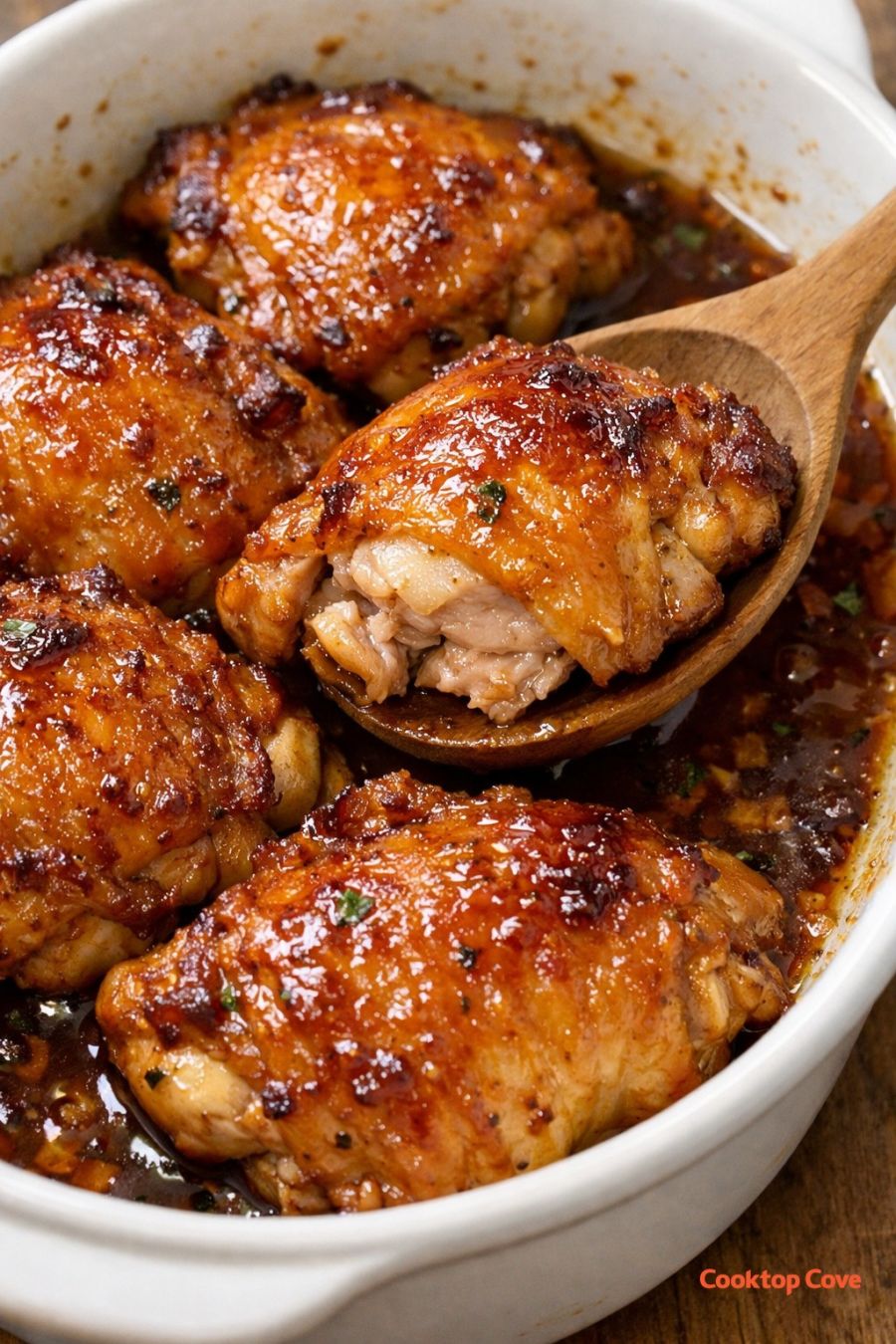
This oven baked 3-ingredient chicken ambassador is one of those old-fashioned, church-basement classics that shows up on the table and disappears before you can blink. My Aunt Dorothy brought a pan of this to every summer gathering from 1968 until she passed, and there was never a piece left—kids and grown-ups both hovered near the casserole dish, waiting for the next batch to come out of the oven. It’s sweet, tangy, and just a little savory, with glossy caramelized chicken thighs that get wonderfully golden and sticky around the edges. With only three ingredients and almost no prep, it’s a perfect weeknight dinner or potluck dish when you want something comforting that tastes like it took all afternoon.
Serve these sticky, golden brown chicken thighs straight from the baking dish with a big spoon for all those caramelized juices. They’re especially good with buttered egg noodles, mashed potatoes, or plain white rice to soak up the sauce. A simple green salad, steamed green beans, or corn on the cob makes it feel like a full summer supper. If you’re feeding a crowd, add a basket of dinner rolls so people can swipe every last bit of glaze from the pan.
Oven-Baked 3-Ingredient Chicken AmbassadorServings: 6
Ingredients
3 to 3 1/2 pounds bone-in, skin-on chicken thighs (about 8 pieces), patted dry
1 cup thick French or Russian salad dressing (or Catalina-style), well stirred
1 cup apricot preserves (or jam), slightly heaping
Directions
Preheat your oven to 375°F (190°C). Lightly grease a 9x13-inch or similar-sized white ceramic baking dish so the chicken doesn’t stick and the glaze can bubble and caramelize nicely.
Pat the chicken thighs very dry with paper towels. This helps the skin get golden and a little crispy around the edges instead of steaming. Arrange the thighs in a single layer in the baking dish, skin side up, with a little space between each piece if possible.
In a medium bowl, whisk together the French or Russian salad dressing and the apricot preserves until the mixture is smooth and glossy. It should look a bit like a thick, orange-pink barbecue sauce.
Pour the dressing and apricot mixture evenly over the chicken thighs, using a spoon to make sure each piece is well coated, especially the tops. Let the chicken sit in the sauce at room temperature for about 10 minutes while the oven finishes heating; this gives the glaze a head start soaking into the meat.
Place the baking dish on the middle rack of the preheated oven. Bake for 25 minutes without disturbing the chicken so the skin can start to brown and the glaze can begin to thicken.
After 25 minutes, carefully spoon some of the bubbling sauce from the bottom of the dish over the tops of the chicken thighs. Rotate the pan if your oven has hot spots to encourage even browning.
Continue baking for another 20 to 30 minutes, basting once more halfway through, until the chicken is deep golden brown with caramelized, sticky edges and the thickest part of the thighs reaches at least 175°F (79°C) on an instant-read thermometer. The sauce around the edges of the dish should be glossy and slightly thickened.
If you’d like the tops extra browned, move the dish to the upper third of the oven for the last 5 minutes of baking, watching closely so the sugars in the glaze don’t burn.
Remove the dish from the oven and let the chicken rest in the hot glaze for 5 to 10 minutes. This helps the juices settle back into the meat and the sauce thicken just a bit more. Use a wooden spoon or spatula to gently lift out each thigh, spooning some of the caramelized glaze over the top right before serving.
Variations & Tips
This is one of those recipes that every aunt in the neighborhood had her own spin on, and you can, too, while still keeping it simple. For a slightly tangier version closer to some 1960s church potlucks, swap half of the French dressing for Russian or Catalina dressing, as long as the total is still 1 cup. If your family likes a little heat, stir 1 to 2 teaspoons of crushed red pepper flakes into the dressing and apricot mixture before pouring it over the chicken (this doesn’t count as a main ingredient since it’s a small seasoning). For more savory depth, you can add 1 to 2 teaspoons of onion powder or garlic powder, or scatter a few thin onion slices in the pan underneath the chicken. Picky eaters sometimes prefer boneless, skinless chicken thighs; you can use them, but start checking for doneness about 10 minutes earlier since they cook faster, and note the top won’t get quite as crispy without the skin. If you’d like to reduce sweetness, use 3/4 cup apricot preserves and 1 1/4 cups of dressing, then bake a few minutes longer to let the thinner sauce concentrate. Food safety notes: Always wash your hands, cutting board, and any utensils that touch raw chicken with hot, soapy water. Use a separate cutting board for meat if possible. Cook chicken to a safe internal temperature of at least 165°F (74°C); thighs are often more tender and flavorful at 175°F to 185°F (79°C to 85°C). Don’t reuse any leftover marinade or sauce that has been in contact with raw chicken unless it has been thoroughly boiled. Refrigerate leftovers within 2 hours of cooking and use them within 3 to 4 days, reheating until steaming hot before serving.