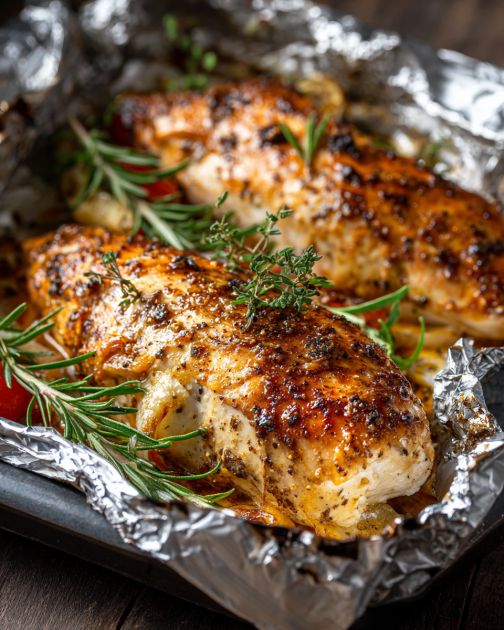
This foil-wrapped balsamic chicken tray is my kind of weeknight cooking: minimal ingredients, quick cleanup, and big flavor. The idea of cooking protein in a sealed packet actually has roots in the French technique en papillote, where food is baked in parchment to trap steam and concentrate flavor. Here, we borrow that concept but use foil and a simple trio of ingredients to keep things low carb and accessible. Balsamic vinegar, which originated in Italy’s Emilia-Romagna region, brings a deep, slightly sweet tang that makes chicken taste like it simmered all afternoon, even though it only spends a short time in the oven. This is a great recipe for anyone watching carbs, cooking for one or two, or simply wanting a no-fuss dinner that still feels a bit special.
I like to keep the sides as clean and simple as the main dish. Since the chicken is already rich and tangy from the balsamic, it pairs beautifully with roasted or steamed green vegetables—think broccoli, green beans, or asparagus tossed with olive oil and a pinch of salt. A crisp side salad with mixed greens, cucumber, and a light vinaigrette adds freshness and texture without adding many carbs. If you’re feeding a mixed crowd, you can round out the meal with a pan of roasted potatoes or a small portion of quinoa or farro on the side, while keeping your own plate focused on the chicken and vegetables.
3-Ingredient Foil-Wrapped Balsamic Chicken TrayServings: 2–3 servings
Ingredients
1 1/2 pounds boneless, skinless chicken thighs or breasts (about 4 pieces)
1/3 cup balsamic vinegar
2 tablespoons olive oil
1 teaspoon kosher salt (optional, not counted as an ingredient)
1/2 teaspoon freshly ground black pepper (optional, not counted as an ingredient)
Directions
1. Preheat your oven to 400°F (200°C). Tear off a large sheet of heavy-duty aluminum foil—big enough to form a sealed tray around the chicken with a bit of room for steam.
2. Lay the foil on a rimmed baking sheet and lightly crimp the edges upward to create a shallow tray shape. This helps catch any juices and keeps them from running off before you seal the packet.
3. In a small bowl, whisk together the balsamic vinegar and olive oil until the mixture looks slightly thickened and glossy. This quick emulsion helps the vinegar cling to the chicken as it cooks.
4. Place the chicken pieces in the center of the foil tray in a single layer. Sprinkle with kosher salt and black pepper if you’re using them.
5. Pour the balsamic-olive oil mixture evenly over the chicken, turning the pieces once with tongs or clean hands so they’re lightly coated on all sides.
6. Fold the long sides of the foil up and over the chicken, then fold them together tightly to seal. Fold in the short ends to create a fully enclosed packet, leaving just a little space inside for steam to circulate.
7. Transfer the baking sheet with the foil packet to the oven. Bake for 22–28 minutes, depending on the thickness of your chicken pieces, until the chicken is cooked through and reaches an internal temperature of 165°F (74°C).
8. Carefully open the foil—watch out for the burst of hot steam—and spoon some of the balsamic juices over the chicken. If you’d like a bit more color, you can return the open packet to the oven and broil on high for 2–3 minutes, keeping a close eye on it.
9. Let the chicken rest for 3–5 minutes in the juices, then serve directly from the foil tray or transfer to a serving platter, spooning the reduced balsamic sauce over the top.
Variations & Tips
Because this recipe leans on just three core ingredients, it’s very forgiving and easy to adapt. If you prefer a slightly sweeter profile, choose an aged balsamic, which is naturally thicker and more syrupy; it will reduce a bit in the packet and give you a sauce that tastes almost like a glaze. For a brighter, herbaceous version, tuck a few sprigs of fresh rosemary or thyme under the chicken before sealing the foil—the steam will gently infuse the meat without adding carbs. You can also layer low-carb vegetables directly under the chicken, such as sliced zucchini, bell peppers, or mushrooms; they’ll cook in the balsamic juices and turn into a built-in side dish. If you’re using chicken breasts and want extra insurance against dryness, lightly pound them to an even thickness so they cook more evenly, or reduce the cooking time by a few minutes and check early. Finally, if you’re grilling instead of baking, make individual foil packets with smaller portions of chicken and cook them over medium heat with the lid closed, checking for doneness after about 15–18 minutes.