
There’s something about a pan of scalloped potatoes that feels like home, no matter how many years go by. This 4-ingredient Amish-style version is the kind of dish you’d find on a farmhouse table after church on Sunday—simple, honest, and comforting. The Amish cooks I’ve known never fussed with fancy sauces or long ingredient lists; they relied on a few good staples, handled with care. These potatoes bake up tender and creamy, with just enough onion and milk to perfume the whole kitchen. You might make this when you need a dependable side that doesn’t ask for much attention, or when you’re craving the kind of food your grandmother might have pulled from the oven, cheeks warm from the heat and heart full from feeding her family.
These scalloped potatoes are right at home beside a Sunday roast—beef, pork, or a simple roasted chicken all pair beautifully. They also cozy up nicely with baked ham, green beans simmered with a little bacon, or buttered peas. For a lighter plate, serve them alongside a crisp green salad with a tangy dressing to cut through the richness. They’re sturdy enough to anchor a meatless supper too; just add a big bowl of steamed broccoli or roasted carrots. And if you’re lucky enough to have leftovers, they reheat well and make a fine companion to eggs for a hearty farmhouse-style breakfast.
4-Ingredient Amish Scalloped Potatoes
Servings: 6
Ingredients
2 1/2 pounds russet or Yukon Gold potatoes, peeled and thinly sliced
1 medium yellow onion, thinly sliced
3 cups whole milk
4 tablespoons butter, plus a little extra for greasing the dish
Salt and black pepper, to taste (optional but recommended)
Directions
Preheat your oven to 350°F (175°C). Generously butter a 9x13-inch baking dish or a similarly sized casserole dish.
Peel the potatoes and slice them very thin, about 1/8 inch thick. A steady hand and a sharp knife work just fine, the way our mothers and grandmothers did it. Thin slices help the potatoes cook evenly and turn tender.
Slice the onion into thin half-moons. You don’t need perfect pieces; they’ll soften and melt into the potatoes as they bake.
Layer about one-third of the potato slices in the bottom of the buttered dish. Scatter one-third of the sliced onions over the potatoes. Dot with about one-third of the butter. If you’re using salt and pepper, season this layer lightly.
Repeat the layering twice more with potatoes, onions, and butter, seasoning each layer if desired, ending with a layer of potatoes on top dotted with the last of the butter.
Warm the milk gently in a small saucepan over low heat until it’s just warm to the touch but not boiling. This helps the potatoes start cooking evenly and keeps the milk from curdling.
Pour the warm milk evenly over the layered potatoes and onions. The liquid should come close to the top layer but not completely cover it; a few slices peeking out are just fine.
Cover the baking dish tightly with foil and bake for 45 minutes. This covered time lets the potatoes soften and soak up the milk, much like the slow, gentle cooking in old woodstove ovens.
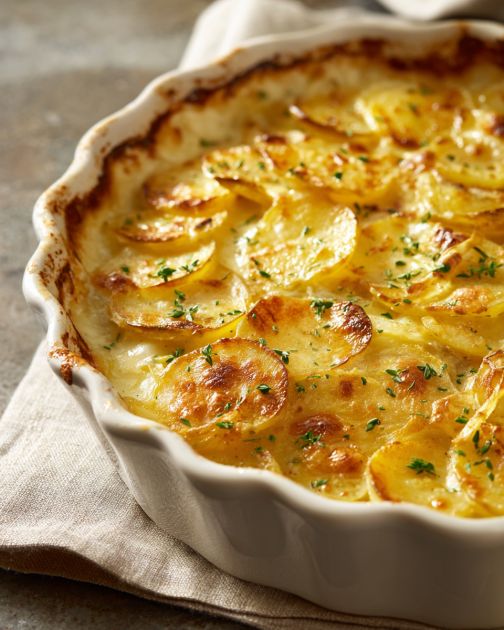
After 45 minutes, remove the foil and continue baking for another 30–40 minutes, or until the potatoes are very tender when pierced with a knife and the top is lightly golden and bubbling around the edges.
Let the scalloped potatoes rest for at least 10–15 minutes before serving. This short rest helps the dish set up so the slices hold together better when you scoop them out.
Serve warm, spooned straight from the baking dish, just the way it would be passed down a long farmhouse table.
Variations & Tips
If you’d like a little extra richness, you can replace 1 cup of the milk with heavy cream, though traditional Amish versions often stick to plain whole milk. For a slightly heartier dish, tuck a few thin pats of ham between the layers of potatoes and onions—this was a common way to stretch leftovers after a holiday ham. If your family enjoys a bit of cheese, sprinkle a small handful of shredded mild cheddar or Colby between the middle layers, though classic Amish scalloped potatoes are usually cheese-free and rely on the starch of the potatoes to thicken the milk. To add a gentle herbal note, you can rub a pinch of dried thyme or parsley between your fingers and scatter it lightly over the layers. For make-ahead convenience, assemble the dish a few hours early and keep it covered in the refrigerator, then bring it closer to room temperature before baking. And if the top browns too quickly while baking, simply lay a piece of foil loosely over the dish to protect it while the potatoes finish turning tender underneath.
