
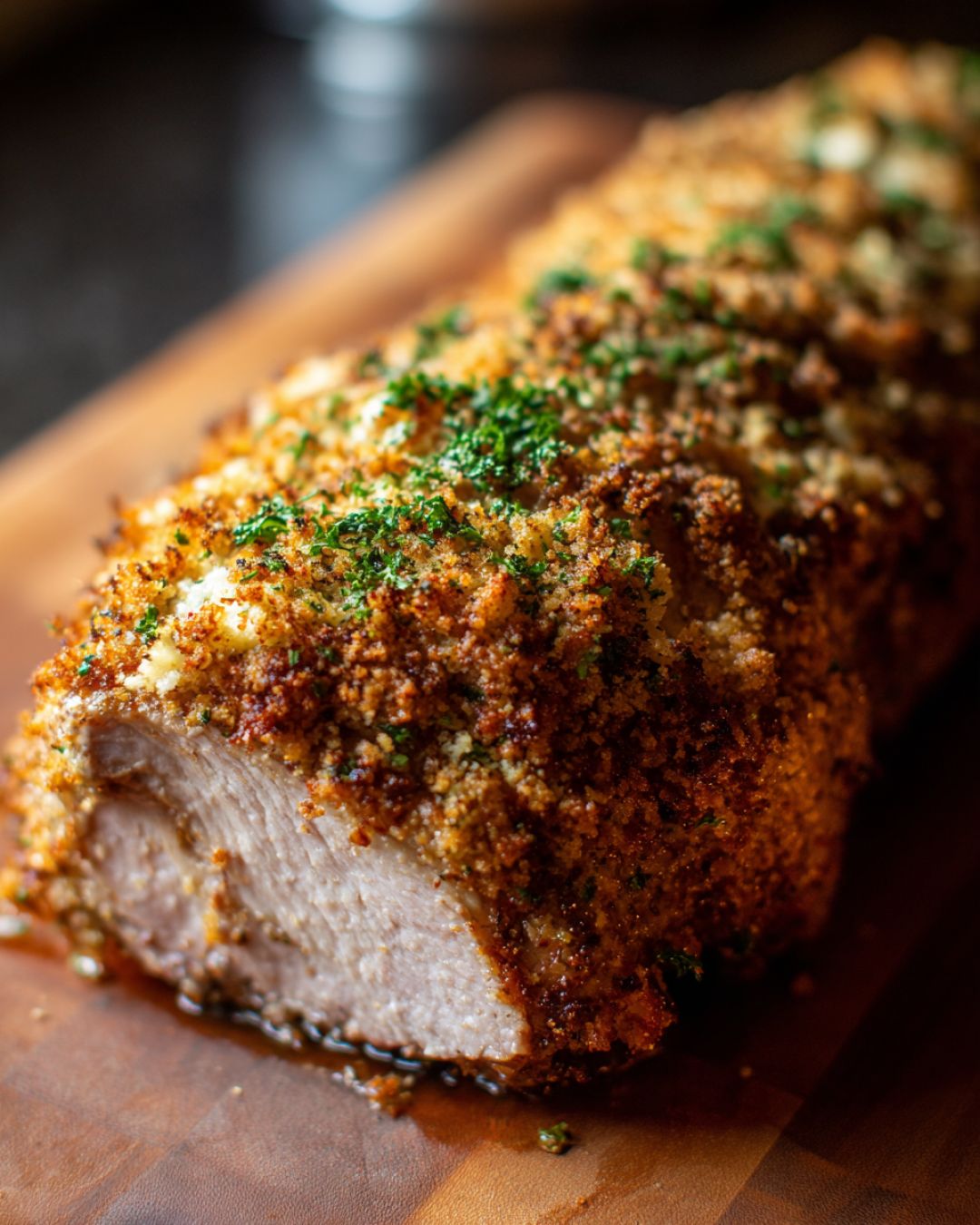
Pork tenderloin is one of those weeknight workhorses that feels a little bit fancy with almost no effort, which is exactly why it’s so beloved across the Midwest. This version borrows a bit from classic oven-baked, panko-crusted cutlets and adapts the idea for the slow cooker: instead of searing or breading and frying, we press a well-seasoned panko mixture right onto the raw tenderloin and let gentle, moist heat do the work. The result is incredibly tender pork with a savory, toasty topping that soaks up the juices as it cooks. It’s a great option when you want something that feels like a Sunday supper but can be assembled in 10 minutes before you head out the door. While panko is Japanese in origin—developed as a lighter, crisper breadcrumb for fried foods—it’s become a pantry staple in American kitchens, especially for adding texture to otherwise lean proteins like pork tenderloin.
This slow cooker panko-crusted pork tenderloin pairs beautifully with simple, comforting sides that can soak up the flavorful juices. I like to spoon thick slices of the pork over mashed potatoes or a creamy polenta so the seasoned cooking liquid becomes a built-in sauce. Roasted or steamed green vegetables—think green beans, broccoli, or Brussels sprouts—add a fresh, slightly bitter counterpoint to the richness of the meat. A crisp, vinegar-forward slaw or a simple mixed-green salad with a mustardy vinaigrette also works well, cutting through the tenderness of the pork and the buttery panko topping. If you’d rather keep it very casual, tuck slices into soft rolls with a bit of grainy mustard and pickles for an easy sandwich-style dinner.
Slow Cooker Panko-Crusted Pork Tenderloin
Servings: 4
Ingredients
1 1/2 to 2 lb pork tenderloin, trimmed of silver skin
1 cup panko breadcrumbs
2 tbsp olive oil (plus more for greasing)
2 tbsp Dijon mustard
1 tsp kosher salt, divided
1/2 tsp freshly ground black pepper, divided
1 tsp garlic powder
1 tsp onion powder
1 tsp smoked paprika (or sweet paprika)
1/2 tsp dried thyme
1/2 tsp dried rosemary, crumbled
1/4 cup grated Parmesan cheese (optional, but recommended)
1/4 cup low-sodium chicken broth or water
Cooking spray or 1 tsp olive oil for the slow cooker insert
Directions
1. Prepare the slow cooker: Lightly grease the bottom of your slow cooker with cooking spray or a teaspoon of olive oil. Pour the chicken broth or water into the bottom; this creates a moist environment so the pork stays tender while the panko topping absorbs some flavorful steam.
2. Season the pork: Pat the pork tenderloin dry with paper towels. Sprinkle it all over with 1/2 teaspoon of kosher salt and 1/4 teaspoon of black pepper, pressing gently so the seasoning adheres.
3. Make the panko mixture: In a medium bowl, combine the panko breadcrumbs, olive oil, garlic powder, onion powder, smoked paprika, dried thyme, dried rosemary, remaining 1/2 teaspoon kosher salt, remaining 1/4 teaspoon black pepper, and Parmesan cheese if using. Stir until the panko is evenly coated and looks slightly damp; this helps it hold together on top of the pork.
4. Add a flavor base: In a small bowl, stir together the Dijon mustard with 1 tablespoon of water to loosen it slightly. This thin layer of mustard will act like culinary “glue” for the panko and also season the surface of the meat.
5. Coat the tenderloin: Place the seasoned pork tenderloin on a cutting board or plate. Brush or spread the mustard mixture over the top and sides of the tenderloin, focusing most of it on the top surface where the crust will sit.
6. Press on the panko crust: Spoon the seasoned panko mixture along the top of the tenderloin, pressing it firmly so it adheres in a thick, even layer. It’s fine if some crumbs fall off; just press them back on or mound them along the top. Carefully transfer the crusted tenderloin to the slow cooker, placing it panko-side up.
7. Slow cook: Cover and cook on LOW for 2 1/2 to 3 1/2 hours, or until the internal temperature of the thickest part of the pork reaches 145°F (63°C). The exact time will depend on your slow cooker and the size of the tenderloin. Avoid lifting the lid frequently, as that releases heat and can extend the cooking time.
8. Rest the pork: Once the pork reaches 145°F, turn off the slow cooker and let the tenderloin rest inside, covered, for 10 minutes. This rest allows the juices to redistribute and helps the crust set a bit more firmly.
9. Slice and serve: Carefully lift the tenderloin from the slow cooker using two spatulas or a wide spatula and a spoon to support the crust. Transfer to a cutting board and slice into 1/2-inch medallions, cutting straight down so you don’t drag the crust off the top. Spoon a little of the cooking liquid from the slow cooker over the slices on the plate, if desired, and serve warm.
10. Optional finishing step for extra crunch: If you prefer a crisper topping, transfer the cooked tenderloin to a foil-lined baking sheet after resting and place it under a preheated broiler for 1 to 2 minutes, watching closely. This will toast the panko a bit more without drying out the meat.
Variations & Tips
Because this recipe is built on a simple technique—pressing a seasoned panko mixture onto raw pork and letting the slow cooker handle the rest—it’s easy to adapt. For a herb-forward version, swap the smoked paprika for 2 teaspoons of finely chopped fresh herbs like parsley, thyme, and rosemary, and stir them into the panko right before pressing it onto the meat. If you enjoy a hint of sweetness, mix 1 tablespoon of honey or maple syrup into the Dijon layer before adding the crumbs; it will give the crust a subtle sweet-savory character that plays nicely with pork. You can also lean into global flavors: use chili powder, cumin, and a pinch of cayenne for a Southwestern profile, or add a teaspoon of curry powder and a bit of grated ginger to the panko for a gentle Indian-inspired spin. For a richer, almost schnitzel-like vibe, replace half the olive oil in the panko mixture with melted butter. If you’re cooking for a smaller household, slice a larger tenderloin in half crosswise and crust only the portion you plan to eat that night, freezing the rest unseasoned for another meal. Leftovers reheat well when wrapped in foil and warmed gently in a low oven, and they’re excellent cold in sandwiches or sliced over salads. Finally, remember that slow cookers vary; the first time you make this, start checking the internal temperature on the earlier side so you learn how quickly your particular model cooks lean cuts like tenderloin.
