
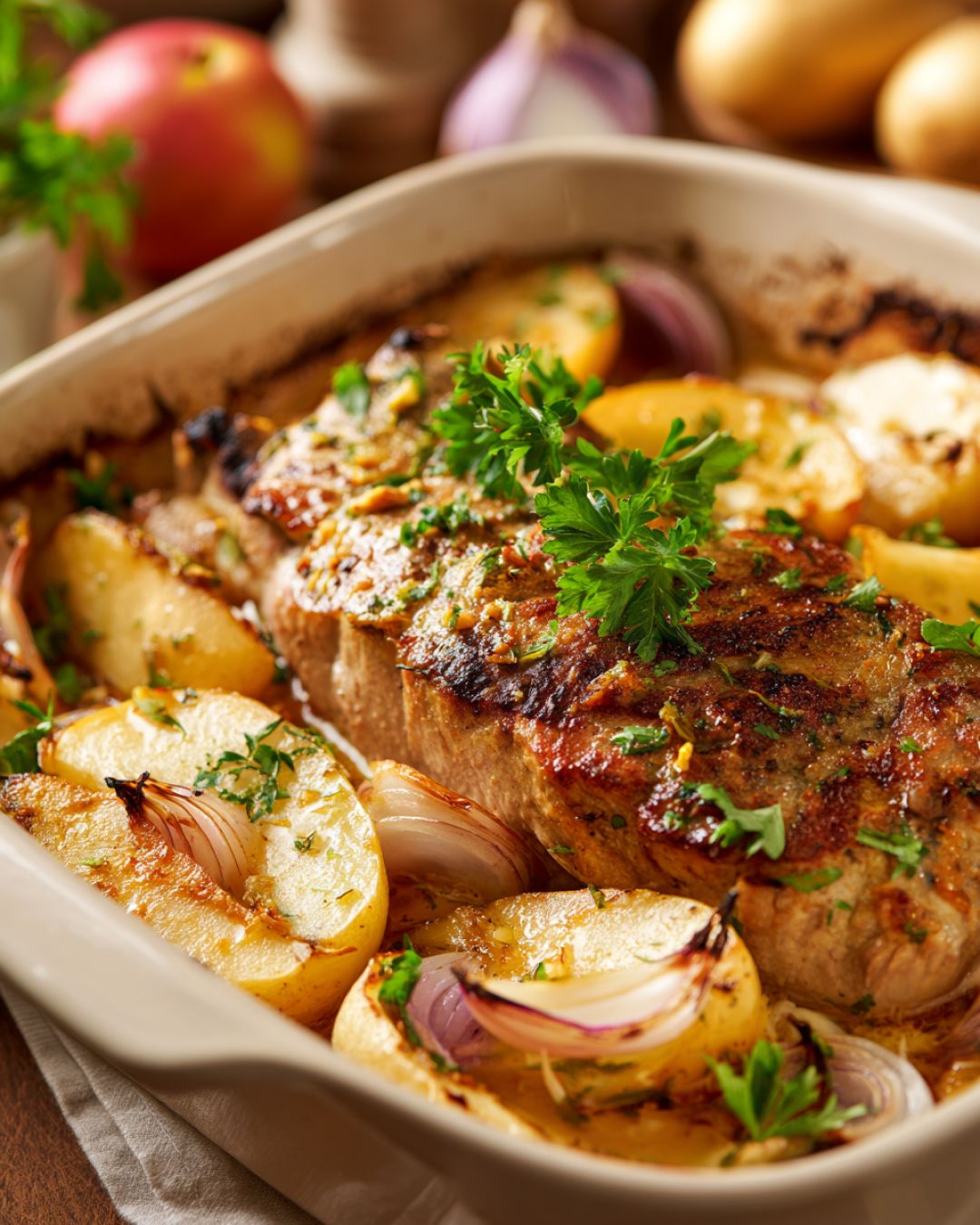
This roasted pork and apple casserole is one of those cozy, weeknight-friendly dinners that feels a little bit special without asking you to spend your whole evening in the kitchen. It’s inspired by classic Midwestern pork-and-apples comfort food, but streamlined for busy schedules and baked in one pan. The sweetness of the apples, the savoriness of the pork, and a simple pan sauce all come together into something that tastes like you fussed way more than you actually did. It’s the kind of dish I throw together on a Tuesday when I want the house to smell amazing and still have time to pack lunches for tomorrow.
This casserole pairs really well with something simple and starchy to soak up the juices—think buttery mashed potatoes, steamed rice, or a crusty loaf of bread you can tear into at the table. A crisp green salad with a tangy vinaigrette helps balance the richness, and roasted green beans or sautéed Brussels sprouts are easy veggie sides that can cook while the casserole is in the oven. If you’re planning ahead for the week, make a double batch of a basic grain like quinoa or farro on Sunday; it reheats beautifully and turns this dish into a quick, complete meal when you’re short on time.
Simple Roasted Pork Tenderloin & Apple Casserole
Servings: 4
Ingredients
1 1/2 to 2 lb pork tenderloin, trimmed
2 large apples (such as Honeycrisp, Gala, or Fuji), cored and sliced into wedges
1 large yellow onion, sliced
2 medium carrots, peeled and sliced into 1/2-inch pieces (optional but nice for color)
2 tbsp olive oil, divided
1 tbsp butter (optional, for extra richness)
1 tsp kosher salt (plus more to taste)
1/2 tsp freshly ground black pepper
1 tsp dried thyme (or 2 tsp fresh thyme leaves)
1/2 tsp dried rosemary, crushed (or 1 tsp fresh, chopped)
1/2 tsp garlic powder
1/2 tsp smoked paprika (or sweet paprika)
1/2 cup low-sodium chicken broth
1/4 cup apple cider or apple juice
1 tbsp Dijon mustard
1 tsp whole-grain mustard (optional, for texture)
1–2 tsp brown sugar or maple syrup (optional, to taste, depending on sweetness of apples)
1 tbsp apple cider vinegar or white wine (optional, for brightness)
Fresh parsley, chopped, for garnish (optional)
Directions
Preheat your oven to 400°F (200°C). Lightly grease a 9x13-inch baking dish or similar casserole dish with a little olive oil or cooking spray.
Pat the pork tenderloin dry with paper towels. This helps it brown better and not steam. If the tenderloin is very thick on one end, you can tuck the thin end under slightly so it cooks more evenly.
In a small bowl, mix together the salt, black pepper, thyme, rosemary, garlic powder, and smoked paprika. Drizzle 1 tablespoon of olive oil over the pork tenderloin, then rub the spice mixture all over the meat until it’s evenly coated. Set aside while you prep the vegetables and apples.
Add the sliced apples, onion, and carrots (if using) to the prepared baking dish. Drizzle with the remaining 1 tablespoon of olive oil, season lightly with a pinch of salt and pepper, and toss to coat. Spread them out in an even layer so they roast instead of steam.
Nestle the seasoned pork tenderloin on top of the apple and vegetable mixture in the center of the dish. If using butter, dot small pieces of it over the apples and onions for extra flavor.
In a measuring cup or small bowl, whisk together the chicken broth, apple cider (or apple juice), Dijon mustard, whole-grain mustard (if using), and brown sugar or maple syrup (if using). Taste the mixture; if you like a bit more tang, add the apple cider vinegar or white wine. Pour this mixture around the pork, over the apples and vegetables, but not directly on top of the pork so you don’t wash off the seasoning.
Place the casserole in the preheated oven and roast for 20–25 minutes, or until the pork reaches an internal temperature of 145°F (63°C) in the thickest part. If your tenderloin is very thick, it may need a few extra minutes. The apples and onions should be tender and starting to caramelize around the edges.
Once the pork is cooked, remove the baking dish from the oven. Transfer the pork tenderloin to a cutting board and let it rest for about 5–10 minutes. This helps the juices redistribute so the meat stays moist when you slice it.
While the pork rests, give the apples, onions, and carrots a gentle stir in the pan juices. If you’d like a slightly thicker sauce, you can carefully pour the liquid into a small saucepan and simmer it on the stove for a few minutes to reduce, then pour it back over the apples and vegetables.
Slice the rested pork tenderloin into 1/2-inch medallions. Nestle the slices back into the casserole dish over the apples and vegetables, spooning some of the pan juices over the top. Garnish with chopped fresh parsley if you like, and serve warm straight from the baking dish.
Variations & Tips
To make this casserole even more weeknight-friendly, you can chop the apples, onions, and carrots the night before and store them in an airtight container in the fridge; the next day, all you have to do is season the pork, assemble, and bake. If you prefer a creamier sauce, stir 2–3 tablespoons of heavy cream or half-and-half into the pan juices after baking, then warm it through on the stove before pouring it back over the casserole. For a slightly heartier version, add 2–3 small cubed potatoes or sweet potatoes to the apple and onion mixture (just be sure to cut them into small pieces so they cook through in time). You can also play with the flavor profile: swap thyme and rosemary for a pinch of ground sage for a more Thanksgiving-style vibe, or add a thinly sliced fennel bulb with the onions for a subtle anise note. If you’re cooking for a smaller household, halve the recipe and bake it in an 8x8-inch dish, or cook the full amount and use the leftovers for easy lunches—sliced pork and apples reheat well and are great over a bowl of rice or tucked into a sandwich with a smear of Dijon.
