
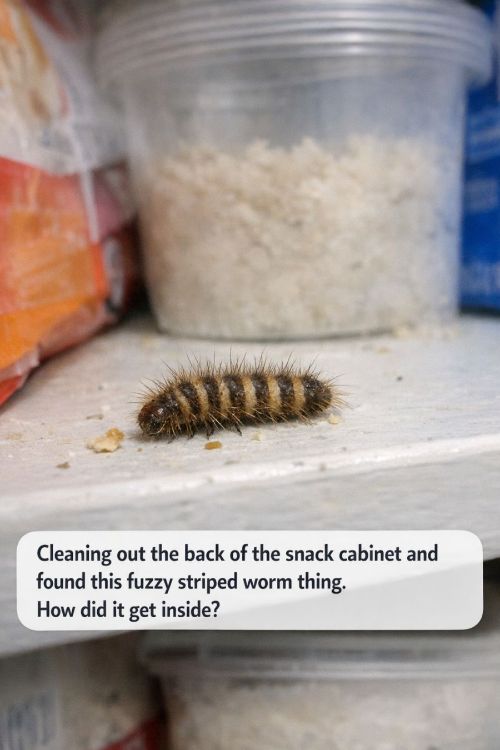
While cleaning out the back of the snack cabinet, it’s not uncommon to stumble upon some surprises. Among forgotten bags of chips and half-eaten boxes of crackers, you might find something unexpected – a fuzzy, striped worm-like creature. The initial reaction is often one of disgust and curiosity. What is it? How did it get there?
Discovering such a creature in your pantry can be unsettling, but it’s a more common occurrence than you might think. This article will delve into what this fuzzy striped worm actually is, how it found its way into your snack cabinet, and what you can do to prevent future infestations. Understanding these unwelcome guests is the first step in keeping your pantry pest-free.
1. What That Fuzzy Striped “Worm” Actually Is
The fuzzy striped worm you’ve found is likely the larval stage of a larder beetle. Larder beetle larvae are small, measuring about 1/2 inch in length, and are easily identified by their characteristic light and dark stripes, with a bristly appearance. These larvae are notorious for their ability to infiltrate food storage areas, making their presence in your pantry a common occurrence.
Larder beetles, scientifically known as Dermestes lardarius, are part of the Dermestidae family, which includes other beetles known for feeding on dry animal and plant matter. As larvae, they are particularly inclined to seek out high-protein food sources, which makes the snack cabinet an attractive destination.
2. Why Larder Beetle Larvae Love Snack Cabinets
Larder beetle larvae are particularly attracted to pantries and snack cabinets because they provide an ideal environment for growth. These areas are typically dark, warm, and filled with a variety of food sources. The larvae thrive on foods that are high in protein and fat, such as nuts, grains, and dried meats, which are commonly found in snack cabinets.
The larvae require a warm environment to grow, ideally between 65°F and 85°F, which is often the ambient temperature of pantries. The availability of food and the secluded nature of storage shelves allow them to develop unnoticed until they are discovered by homeowners during a thorough cleaning.
3. How They Sneak In: From Grocery Store To Pantry
Larder beetles and their larvae can make their way into your home through various means, often hitching a ride from the grocery store. Infestations can start when you bring home products that are already contaminated with beetle eggs or larvae. Dry goods like flour, cereal, and pet food are common sources.
Once inside, if conditions are favorable, the larvae can reproduce and spread to other areas of your pantry. Unsealed packages, paper bags, and cardboard boxes provide easy access for the beetles to lay eggs, which can then hatch and develop unnoticed among your stored food items.
4. Hidden Entry Points: Cracks, Vents, And Packaging Gaps
Larder beetle larvae are adept at finding their way into your pantry through tiny cracks, vents, and gaps in packaging. Small openings in your home, such as cracks in walls or around windows and doors, can provide entry points for adult beetles seeking a place to lay their eggs.
Additionally, many food packages are not airtight, and the gaps or seams in cardboard boxes and paper bags can allow the larvae to enter and infest your food supplies. It’s crucial to inspect your pantry for potential entry points and seal them to prevent access.
5. Clues You Missed: Signs An Infestation Was Brewing
Before you discover the larvae, there are often subtle signs that an infestation is underway. You might notice small holes in packaging, which are a clear indication that larvae have entered. Another sign is the presence of shed larval skins or small, granular waste, which can resemble grains of sand or sawdust.
An unpleasant odor can also accompany a significant infestation, as dead beetles and larvae decompose. Regular inspection and cleaning of your pantry can help catch these signs early and prevent a full-blown infestation.
6. Are Larder Beetle Larvae Dangerous To You Or Your Food?
Larder beetle larvae are not harmful to humans in terms of direct health threats, but they can contaminate food supplies. Consuming food that has been infested can lead to the ingestion of larvae, which is more of a psychological concern than a health risk.
However, the presence of larvae can spoil food, rendering it unfit for consumption. Their waste products and shed skins can also cause allergic reactions in sensitive individuals. Therefore, it is important to address infestations promptly to maintain food safety and hygiene.
7. What To Do Immediately When You Find One
If you discover a larder beetle larva in your snack cabinet, it’s important to act quickly. Remove any contaminated food items and dispose of them in a sealed bag to prevent the spread of larvae. Thoroughly clean the area with soap and water, and consider using a vacuum to remove any lingering debris.
Inspect other food items for signs of infestation, and if in doubt, err on the side of caution and dispose of them. It’s better to lose a few items than to risk a larger infestation.
8. Deep-Cleaning The Snack Cabinet To Stop The Spread
A deep-cleaning of your snack cabinet is essential to prevent the spread of larder beetle larvae. Start by removing all items from the cabinet and vacuuming any crevices or corners where larvae might hide. Use a mild detergent to wash the shelves and interior surfaces, paying close attention to seams and corners.
Consider using a natural insecticide or a vinegar solution to wipe down the surfaces, which can deter future infestations. Once cleaned, allow the cabinet to dry completely before restocking to ensure no residual moisture attracts pests.
9. When You Need A Pest Professional (And What They’ll Do)
If your infestation persists despite your best efforts, it might be time to call in a pest professional. Professionals can assess the severity of the infestation and identify potential entry points that you might have missed.
They will use targeted treatments, which may include insecticides or fumigation, to eradicate the beetles and their larvae effectively. Pest professionals can also provide recommendations for long-term prevention and help seal entry points to keep your pantry pest-free.
10. How To Pest-Proof Your Pantry For Good
To prevent future infestations, pest-proofing your pantry is essential. Store food in airtight containers made of glass or heavy-duty plastic, as these are impenetrable to beetles and their larvae. Regularly clean your pantry and check for signs of pests, particularly in warmer months.
Seal any cracks or gaps in the pantry area and consider installing weather stripping around doors and windows. Keep dry goods in a cool, dry place, and avoid storing items directly on the floor where they may be more accessible to pests.
11. When It’s Safe To Restock – And How To Store Snacks Smarter
After addressing an infestation and deep-cleaning your pantry, wait until you are sure no larvae or beetles remain before restocking. Monitor the area for a few weeks to ensure no new signs of pests appear.
When restocking, prioritize storing snacks in airtight containers and label them with purchase dates to facilitate regular rotation. Keep older items at the front to ensure they’re used first, minimizing the risk of forgotten, potentially contaminated goods. By adopting smarter storage practices, you can keep your pantry organized and pest-free in the long run.
