
This slow cooker 3-ingredient citrus carnitas recipe is my secret weapon for those weeks when takeout is calling my name but my budget says absolutely not. My sister actually makes this almost every week—she portions it into foil trays, stashes some in the fridge and some in the freezer, and then just reheats it for tacos, bowls, and burritos. The pork shoulder cooks low and slow with fresh orange and lime until it’s ridiculously juicy, shreddy, and falling right off the bone. It’s inspired by classic Mexican carnitas but simplified for real-life weeknights: just a big hunk of pork, citrus, and salt, and the slow cooker does the rest.
Serve these citrus carnitas piled into warm tortillas with chopped onion, cilantro, and a squeeze of extra lime. They’re also great over rice or cauliflower rice with black beans and sliced avocado for easy burrito bowls. For a more complete spread, add chips and salsa, a simple cabbage slaw, or roasted veggies. The leftovers reheat beautifully, so I like to pack them into meal prep containers with rice and some steamed or roasted vegetables for quick lunches all week.
Slow Cooker 3-Ingredient Citrus Carnitas
Servings: 8–10
Ingredients
4–5 lb bone-in pork shoulder (pork butt), excess fat trimmed
2 large oranges, juiced (about 1 cup juice) plus wedges for serving
4 limes, juiced (about 1/2 cup juice) plus wedges for serving
2–2 1/2 tsp kosher salt
Directions
Pat the pork shoulder dry with paper towels and trim off any thick, hard pieces of external fat, leaving a good layer so the meat stays juicy.
Sprinkle the kosher salt all over the pork shoulder, rubbing it into all sides so it’s evenly seasoned.
Place the pork shoulder into the slow cooker, bone side down if using bone-in. If it’s too large, you can wedge it in or cut it into 2–3 big chunks.
Pour the fresh orange juice and lime juice evenly over the pork. The liquid should come partway up the sides of the meat but not fully cover it.
Cover and cook on LOW for 8–10 hours, or on HIGH for 4–6 hours, until the pork is very tender and easily falls apart when pulled with a fork.
Once cooked, carefully transfer the pork to a large cutting board or sheet pan, leaving the cooking liquid and rendered fat in the slow cooker.
Use two forks to shred the pork into bite-sized pieces, discarding the bone and any large pieces of fat.
Skim off and discard some of the excess fat floating on top of the cooking liquid in the slow cooker, leaving several spoonfuls for flavor and moisture.
Return the shredded pork to the slow cooker and gently toss it in the warm citrusy juices and rendered fat so every piece is coated and moist.
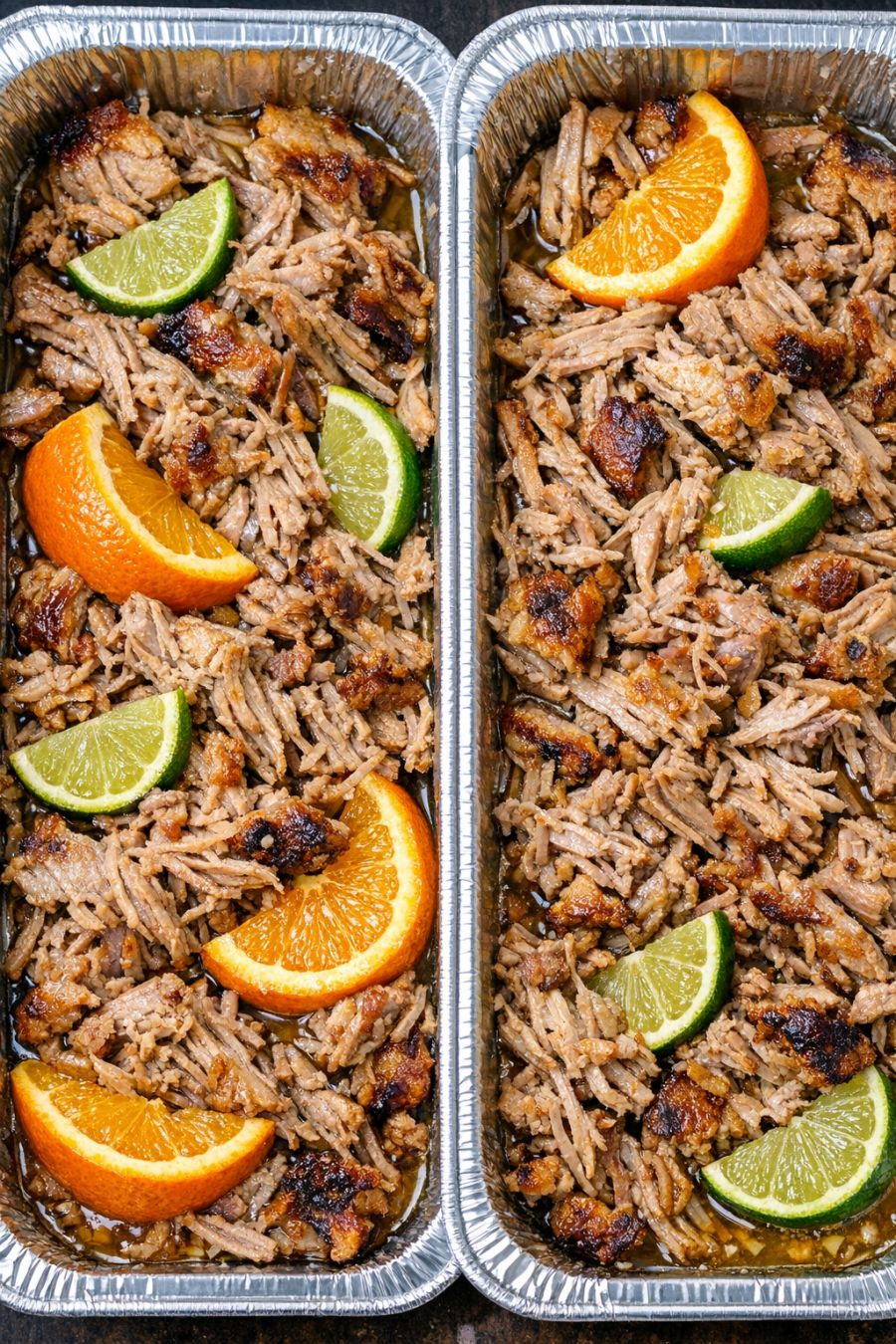
For the crispy edges shown in the photo-style result, transfer the shredded pork and some of the juices into 2 foil trays, spreading it out in an even layer, and broil on the top rack of your oven for 5–8 minutes, watching closely, until the edges are golden brown and slightly crisp.
Serve the carnitas straight from the foil trays or slow cooker, with extra orange and lime wedges tucked around the meat for squeezing over the top.
Variations & Tips
To keep the 3-ingredient spirit, I treat salt as the only seasoning, but you can dress this up if you want a little more flair. Add 1–2 teaspoons ground cumin, 2–3 teaspoons chili powder, or a few cloves of minced garlic to the slow cooker for extra depth. If you prefer boneless pork shoulder, use the same weight; just reduce the cook time slightly and start checking for tenderness about an hour earlier. For crispier carnitas without turning on the broiler, spread the shredded pork in a hot cast-iron skillet with a bit of the cooking liquid and let it sizzle undisturbed until the bottom gets browned and crispy. Meal-prep tip: portion the cooked pork and juices into foil trays or airtight containers—keep a few days’ worth in the fridge and freeze the rest for up to 3 months. Thaw overnight in the fridge and reheat covered in the oven or in a skillet with a splash of the juices. You can also swap some of the orange for grapefruit juice for a slightly more bitter, grown-up flavor, or use the carnitas in enchiladas, quesadillas, nachos, or breakfast tacos with scrambled eggs.
