
This low carb 3-ingredient fried cabbage and bacon is the kind of simple comfort food my grandpa swore by: cheap, filling, and deeply satisfying. It’s a classic Midwestern skillet dish, rooted in the frugal cooking traditions of families who stretched a head of cabbage and a few strips of bacon into a full meal. With only bacon, cabbage, and butter, you get tender, slightly charred ribbons of cabbage coated in smoky bacon drippings and melted butter, plus crisp, salty bits of bacon in every bite. It’s the sort of recipe you make on a weeknight when you want something cozy and reliable, without fuss or extra trips to the store.
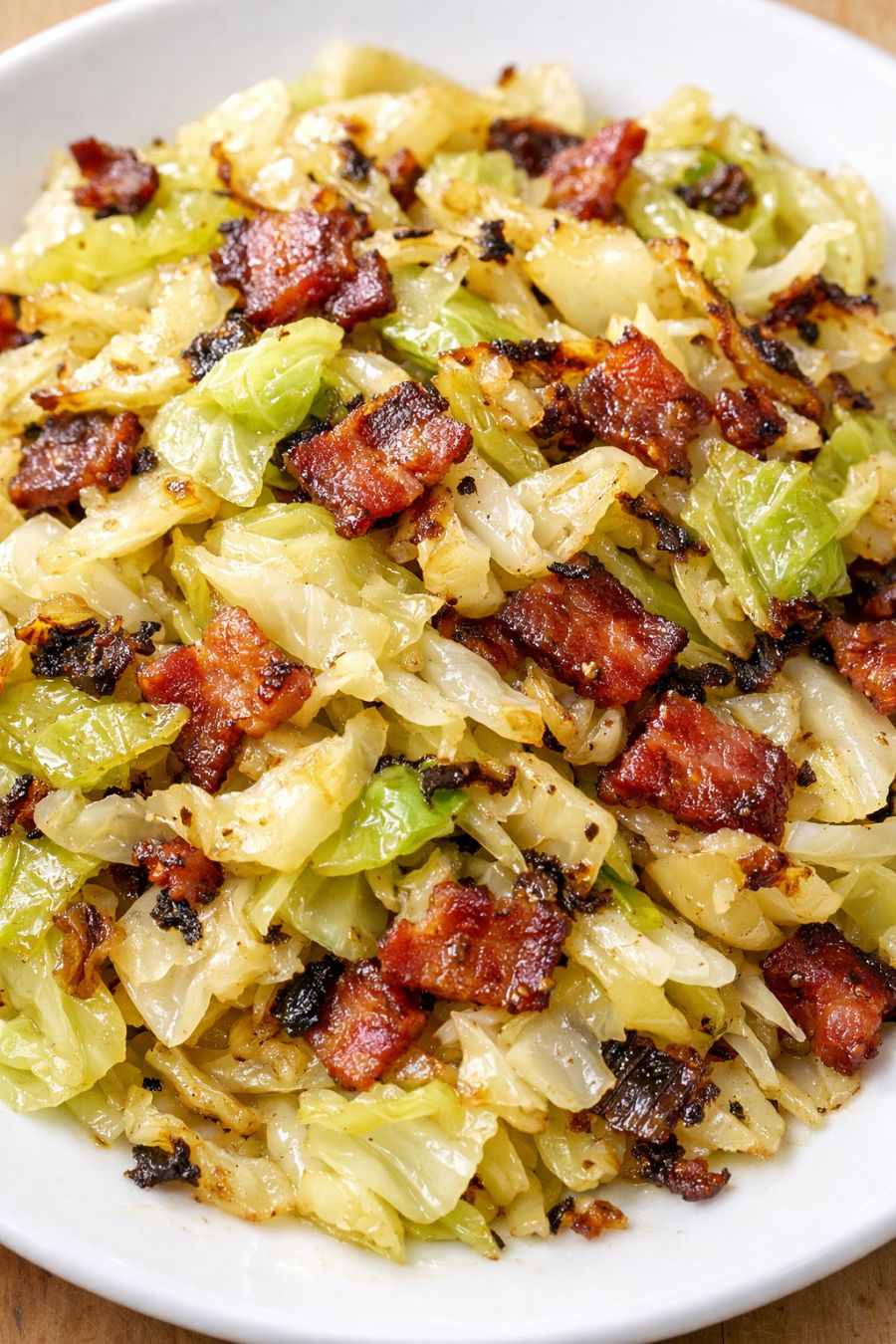
Serve this fried cabbage and bacon hot, straight from the skillet, piled onto a simple white plate so the glossy cabbage and dark bacon bits can really shine. It works well as a main dish with a fried or soft-poached egg on top, or alongside roasted chicken, grilled sausages, or a seared pork chop. For a low-carb plate, pair it with a fresh green salad or sliced tomatoes dressed with a little vinegar and olive oil. If you’re feeding mixed eaters, it’s also excellent spooned over mashed cauliflower or, for those not counting carbs, a small scoop of buttered egg noodles or rustic bread to soak up the flavorful fat.
Low Carb 3-Ingredient Fried Cabbage and Bacon
Servings: 3–4
Ingredients
8 ounces thick-cut bacon, cut into small pieces
1 medium head green cabbage (about 2 pounds), cored and thinly sliced into ribbons
2 tablespoons unsalted butter
1/2 teaspoon kosher salt, or to taste
1/4 teaspoon freshly ground black pepper, or to taste
Directions
Prepare the cabbage by removing any tough or damaged outer leaves. Cut the cabbage into quarters, slice out the core from each quarter, then thinly slice the quarters into long, ribbon-like shreds. Set aside.
Place the bacon pieces in a large, heavy skillet (cast iron or stainless steel works well) and set the pan over medium heat. Cook, stirring occasionally, until the bacon is crisp and has rendered a generous amount of fat, 8–10 minutes. Adjust the heat as needed so the bacon browns without burning.
Once the bacon is crisp, use a slotted spoon to transfer the pieces to a plate, leaving the rendered bacon fat in the skillet. You want a visible layer of fat covering the bottom of the pan; if there is an excessive amount (more than about 3 tablespoons), carefully spoon off a bit, but keep enough to coat the cabbage well.
Add the butter to the hot bacon fat in the skillet. Let it melt completely, stirring to combine it with the rendered fat. The mixture should be glossy and lightly bubbling.
Add the sliced cabbage to the skillet. It will likely mound up high at first; that’s fine. Use tongs or a large spoon to turn the cabbage so it is coated in the butter and bacon fat. Sprinkle with about half of the salt and pepper to start.
Cook the cabbage over medium to medium-high heat, stirring and turning frequently, until it softens and begins to turn translucent, 8–10 minutes. As it cooks down, it will shrink and fit more comfortably in the pan.
Once the cabbage is tender, increase the heat slightly and let some of the edges take on color, stirring only every minute or so. You’re aiming for a mix of tender, silky cabbage with some lightly charred or caramelized edges, another 4–6 minutes. Adjust the heat as needed so the browned bits don’t burn.
Return the crisp bacon pieces to the skillet and toss them through the cabbage until evenly distributed and heated through, 1–2 minutes. Taste and adjust the seasoning with the remaining salt and pepper, keeping in mind that the bacon is already salty.
When the cabbage is tender, glistening, and speckled with dark red bacon bits, remove the skillet from the heat. Let it sit for 1–2 minutes so the flavors settle, then serve hot on warm plates, making sure to spoon some of the flavorful fat over each portion.
Variations & Tips
For a slightly smokier, deeper flavor, choose thick-cut, hardwood-smoked bacon and let some of the cabbage sit undisturbed for a minute or two at a time to develop more char on the edges. If you like a bit of tang to cut the richness (a common trick in old farmhouse kitchens), splash in 1–2 teaspoons of apple cider vinegar right at the end of cooking and toss well. To stretch this dish into a more substantial main while keeping it low carb, crack a few eggs directly into the skillet after the cabbage is cooked, cover, and let them steam until just set, or serve the fried cabbage under sliced grilled sausage or leftover roast chicken. You can also play with texture by cutting the cabbage into slightly thicker strips for more bite, or very fine shreds for a softer, almost noodle-like feel. If you need to prepare it ahead, cook the bacon and slice the cabbage in advance; store them separately in the fridge, then fry the cabbage in the reserved fat and butter just before serving so you still get that freshly crisped bacon and glossy, tender cabbage that makes this simple three-ingredient dish so comforting.
