
This 6-ingredient wacky cake is the kind of practical kitchen magic my Midwestern grandmother swore by: no eggs, no butter, and no milk, yet it bakes up incredibly moist and tender every single time. Wacky cake (also called depression cake or crazy cake) dates back to the 1930s and 40s, when pantry staples had to stretch and expensive ingredients were hard to come by. Instead of creaming butter and sugar, you stir everything together in one bowl, rely on oil and water for moisture, and let baking soda and vinegar provide the lift. The result is a deeply chocolatey cake that tastes better than most boxed mixes, stays soft for days, and feels wonderfully low-pressure for busy home cooks.
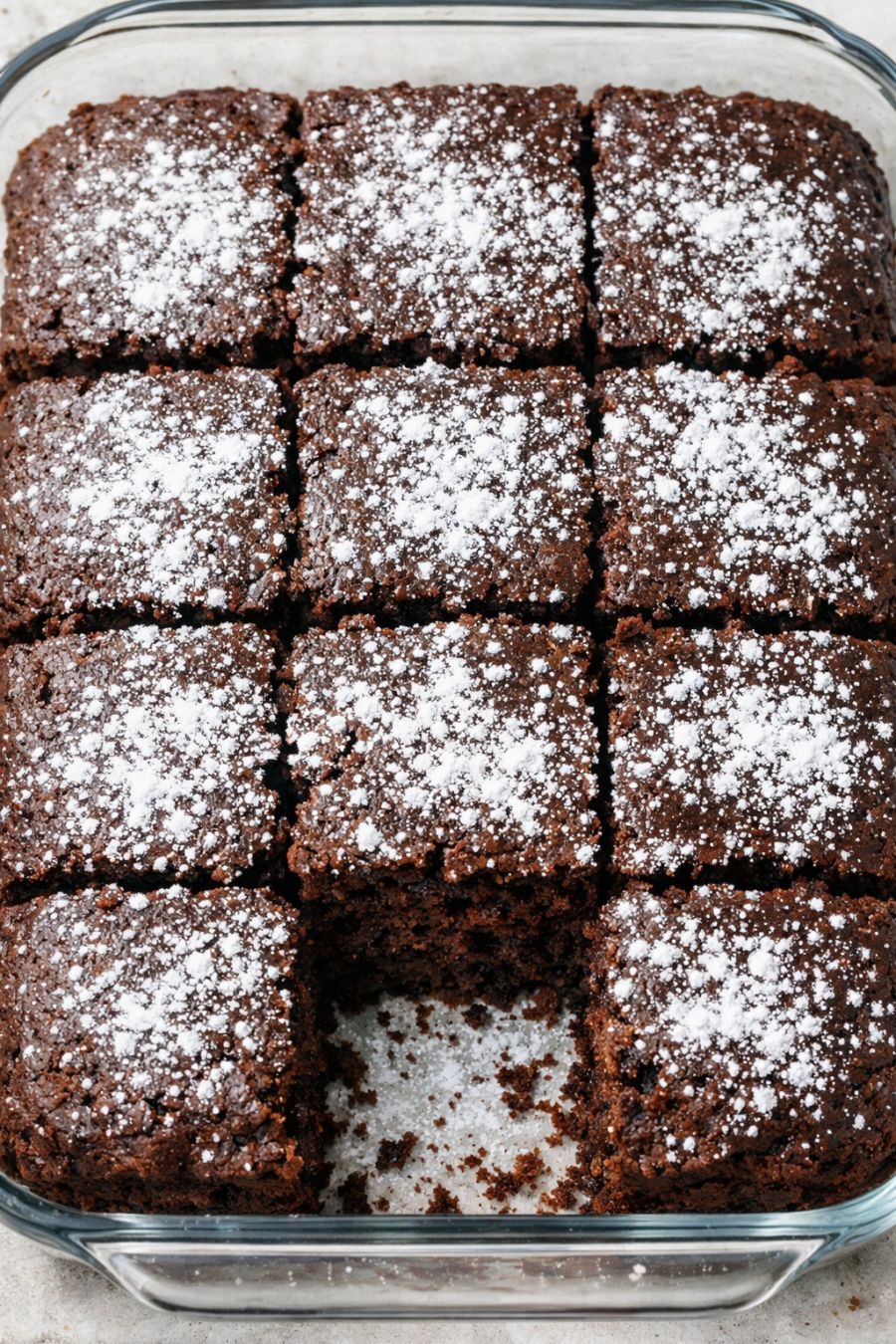
Serve this wacky cake in simple squares, dusted generously with powdered sugar just before bringing it to the table. A cup of coffee or black tea balances the cake’s richness, while a glass of cold milk makes it feel especially nostalgic. For a more dressed-up dessert, add a dollop of lightly sweetened whipped cream or a scoop of vanilla or coffee ice cream alongside each slice. Fresh berries, especially raspberries or sliced strawberries, pair beautifully with the dark chocolate flavor and add a bit of brightness. Because the cake stays moist, it’s also ideal for making a day ahead and serving at room temperature after a family meal or birthday celebration.
6-Ingredient Wacky Cake
Servings: 9
Ingredients
1 1/2 cups all-purpose flour
1 cup granulated sugar
1/4 cup unsweetened cocoa powder
1 teaspoon baking soda
1/2 teaspoon fine salt
1/3 cup neutral oil (such as canola or vegetable oil)
1 tablespoon white vinegar
1 teaspoon vanilla extract
1 cup cool water
Powdered sugar, for dusting (optional)
Directions
Preheat your oven to 350°F (175°C). Lightly grease an 8x8-inch glass baking dish, then dust it with a little cocoa powder or line the bottom with a strip of parchment if you like easy lifting.
In a medium mixing bowl, whisk together the flour, granulated sugar, cocoa powder, baking soda, and salt until the mixture looks uniform and the cocoa has no visible lumps.
In a large bowl (or directly in a large measuring cup), combine the neutral oil, white vinegar, vanilla extract, and cool water. Stir to blend.
Pour the wet mixture into the bowl with the dry ingredients. Using a whisk or spatula, stir just until everything is evenly combined and you no longer see dry flour. The batter will be fairly thin; avoid overmixing so the crumb stays tender and airy.
Pour the batter into the prepared glass baking dish, smoothing the top gently with a spatula so it reaches all corners and settles into an even layer.
Bake on the middle rack for 25–30 minutes, or until the top looks set, the edges pull slightly from the sides of the dish, and a toothpick inserted in the center comes out with just a few moist crumbs but no wet batter.
Transfer the dish to a cooling rack and let the cake cool completely in the glass pan. As it cools, the crumb will set into a moist, sponge-like texture that slices cleanly into squares.
Once the cake is cool, use a small fine-mesh sieve to dust the surface lightly and evenly with powdered sugar. Cut into 9 squares (or smaller pieces if you prefer) and serve directly from the glass dish.
Variations & Tips
For a deeper chocolate flavor, stir 1/2 cup of mini chocolate chips into the batter just before pouring it into the pan; they will melt slightly and create pockets of richness without changing the structure. To add a subtle coffee note that enhances the cocoa, replace 1/2 cup of the water with strong cooled coffee. Citrus lovers can swap the vanilla for 1 teaspoon of orange zest and 1/2 teaspoon of orange extract, then top the cooled cake with powdered sugar mixed with a pinch of zest. If you need a dairy-free topping, serve the cake with coconut whipped cream or a dairy-free vanilla ice cream; the base cake is already eggless and butter-free, making it friendly for many dietary needs. For a slightly lighter texture, you can sift the dry ingredients before mixing. The cake also doubles easily: bake a double batch in a 9x13-inch glass dish, increasing the baking time by a few minutes and checking for doneness with a toothpick. Store leftovers tightly covered at room temperature for up to three days; the vinegar-and-oil structure helps the crumb stay moist without turning dense, which is exactly why it’s such a reliable birthday cake.
