
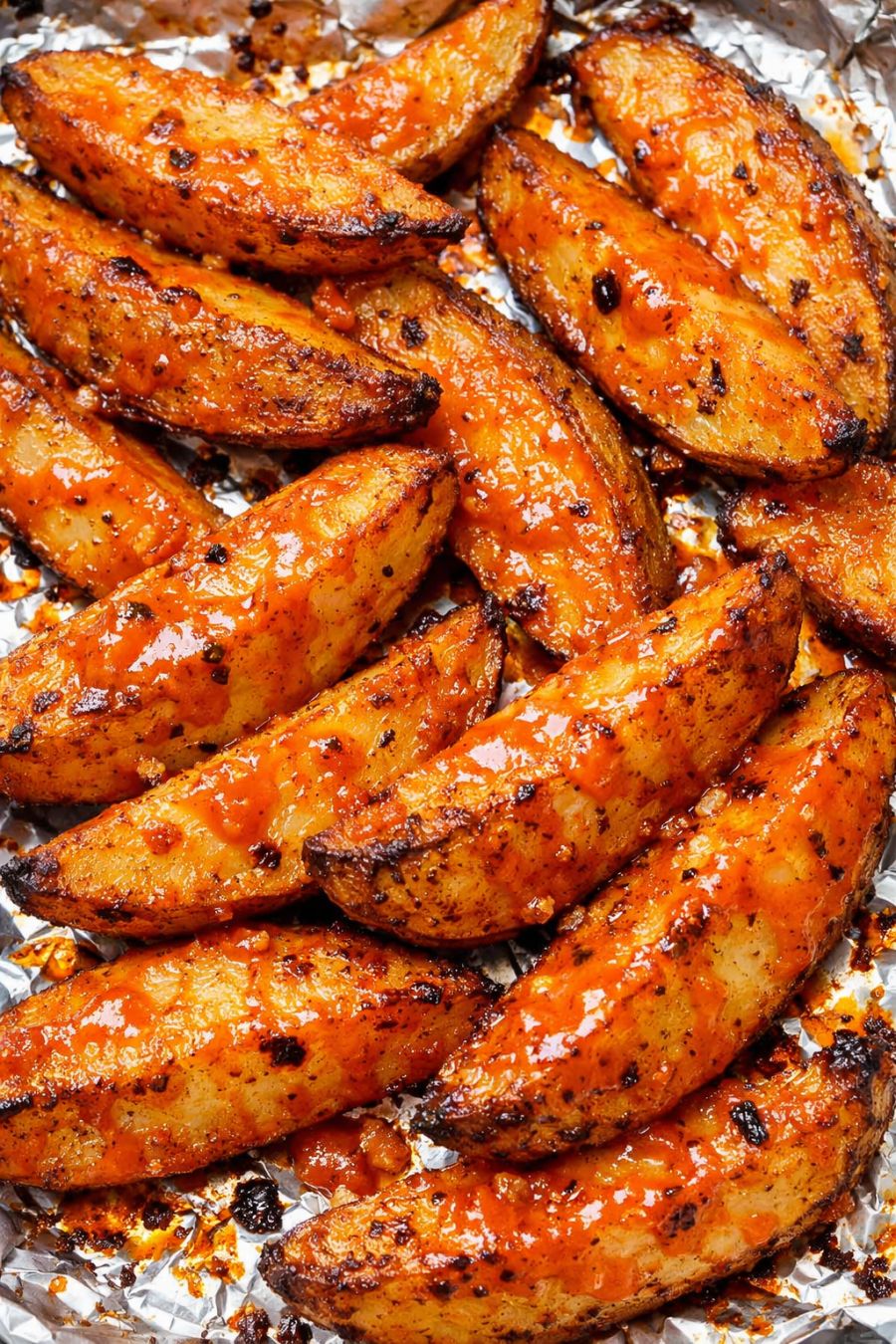
This oven baked 3-ingredient buffalo potato wedges recipe is exactly the kind of game day hack my college roommate swore by. It’s the sort of no-fuss food you can throw together between quarters and still feel like you cooked. The idea is simple: roast hearty potato wedges until they’re crisp, then toss them in a bold, buttery buffalo sauce right on the sheet pan. It borrows the flavor profile of classic Buffalo wings, but uses potatoes as the canvas, making it budget-friendly, vegetarian, and endlessly snackable. With only three ingredients and one pan, it’s tailor-made for busy weekends, casual gatherings, or nights when you want something spicy and satisfying without a lot of prep or cleanup.
Serve these buffalo potato wedges straight from the foil-lined baking sheet while they’re still sizzling and the edges are crisp. They pair well with a cool, creamy dip like ranch or blue cheese dressing, plus some crunchy celery and carrot sticks to echo the classic Buffalo wing setup. For something more substantial, pile the wedges alongside grilled sausages, rotisserie chicken, or veggie burgers. They’re also great as a base for a quick platter: scatter the hot wedges with crumbled blue cheese or shredded cheddar and a handful of sliced green onions, then serve with cold beer, sparkling water, or a light lager to balance the heat.
Oven Baked 3-Ingredient Buffalo Potato Wedges
Servings: 4
Ingredients
2 pounds russet potatoes, scrubbed and cut into thick wedges
3 tablespoons neutral oil (such as canola or vegetable oil)
1/2 cup prepared buffalo wing sauce
Directions
Preheat your oven to 425°F (220°C). Line a large rimmed baking sheet with aluminum foil for easy cleanup, then lightly grease the foil with a bit of the oil to help prevent sticking.
Cut the scrubbed russet potatoes into thick wedges: slice each potato in half lengthwise, then cut each half into 3 to 4 long wedges, depending on the size of the potato. Try to keep the wedges roughly the same thickness so they cook evenly.
Place the potato wedges on the prepared baking sheet. Drizzle with the neutral oil and toss directly on the foil-lined pan until every wedge is lightly coated. Arrange the wedges in a single layer with a little space between them so they roast instead of steam.
Bake the potatoes for 25 minutes, then remove the tray from the oven and carefully flip each wedge with a spatula or tongs. Return the tray to the oven and continue baking for another 15 to 20 minutes, or until the wedges are deeply golden on the edges and tender in the center when pierced with a fork.
Once the wedges are crisp and cooked through, remove the tray from the oven. Immediately drizzle the hot wedges with the prepared buffalo wing sauce right on the baking sheet. Use a spatula or tongs to gently toss and turn the wedges in the sauce until they are evenly coated and the sauce clings to the crispy edges.
Spread the sauced wedges back into a single layer on the foil-lined tray. Let them sit for 2 to 3 minutes so the buffalo sauce thickens slightly on the hot potatoes, then taste one and adjust by adding a touch more sauce if you like extra heat and tang.
Serve the buffalo potato wedges straight from the baking sheet while they are still hot and the edges are crisp, passing extra buffalo sauce on the side for anyone who wants an extra kick.
Variations & Tips
For a slightly richer flavor, you can warm the buffalo wing sauce gently on the stovetop with a tablespoon of butter before drizzling it over the hot wedges, still keeping it a three-ingredient recipe if your buffalo sauce is unadulterated. If you prefer a little less heat, look for a mild buffalo sauce or mix your sauce with a splash of water before tossing so it coats more gently. To play with texture, cut the wedges a bit thinner for extra crispiness, but keep a close eye on them in the last 10 minutes of baking to prevent burning. You can also adjust the cooking method slightly: if you like a darker char, switch the oven to broil for the final 2 to 3 minutes, watching carefully. For serving, these wedges make a great base for a simple “loaded” platter—after saucing them, scatter with chopped green onions and crumbled blue cheese or shredded cheddar at the table, so the core recipe still stays true to the three-ingredient concept. Leftovers reheat nicely in a hot oven or toaster oven to bring back some of the crisp edges.
