
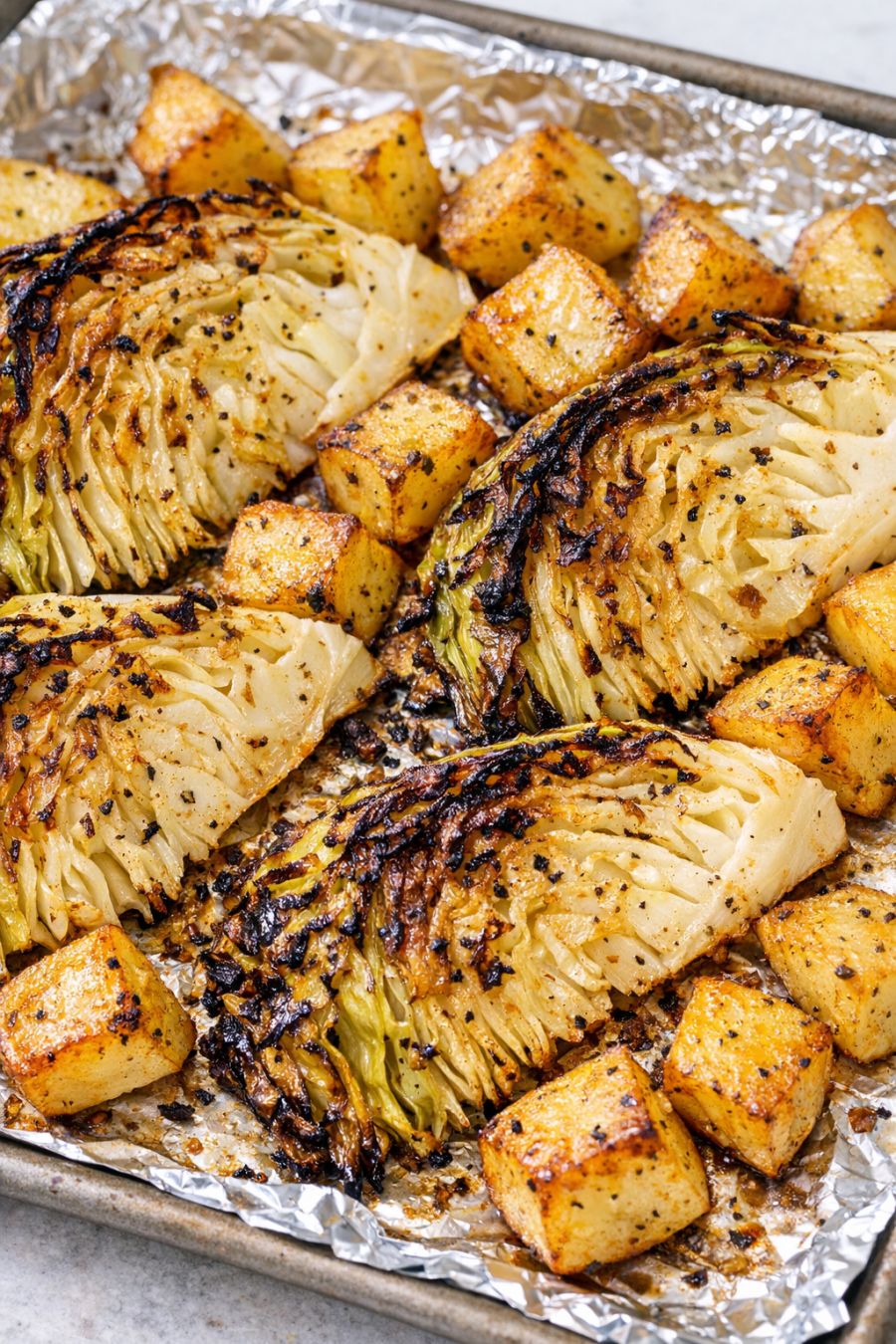
This oven baked 4-ingredients roasted cabbage and potatoes is the kind of side dish that feels like a warm memory. My Irish grandmother made versions of this all through my childhood—simple, thrifty, and deeply satisfying. Cabbage and potatoes are classic staples in Irish home cooking, and here they’re roasted together until the cabbage edges are caramelized and the potatoes turn golden and crisp. With only cabbage, potatoes, oil, and salt, the flavors are clean and nostalgic, and the hands-on time is minimal, making it perfect for busy weeknights or a relaxed Sunday roast.
Serve these roasted cabbage wedges and potatoes alongside roasted chicken, pork chops, or a simple pan-seared sausage for a hearty, traditional-style meal. They’re also lovely with baked salmon or as part of a vegetarian plate with a pot of beans or lentil stew. A spoonful of whole-grain mustard, a drizzle of vinegar, or a pat of butter added at the table can round out the flavors without complicating the recipe itself. Leftovers reheat well in a hot skillet, making them an easy base for a fried egg the next morning.
Oven Baked 4-Ingredients Roasted Cabbage and Potatoes
Servings: 4
Ingredients
1 small green cabbage (about 2 to 2 1/2 pounds), cored and cut into 6–8 wedges
1 1/2 pounds russet or Yukon gold potatoes, cut into 1-inch chunks
1/4 cup neutral oil (such as canola or vegetable oil)
1 1/4 teaspoons kosher salt (or to taste)
Directions
Preheat your oven to 425°F (220°C). Line a large rimmed baking sheet with aluminum foil for easy cleanup.
Prepare the vegetables: Remove any tough or damaged outer leaves from the cabbage. Cut the cabbage into 6–8 wedges, keeping the core attached so the wedges hold together. Cut the potatoes into roughly 1-inch chunks so they cook at the same rate as the cabbage.
Place the cabbage wedges and potato chunks on the foil-lined baking sheet in a single layer. If the pan feels crowded, divide everything between two pans so the vegetables can roast rather than steam.
Drizzle the oil evenly over the cabbage and potatoes. Sprinkle with the salt. Using your hands, gently turn the potatoes and carefully flip the cabbage wedges to coat everything evenly with the oil and salt. Arrange the cabbage wedges cut sides down as much as possible, and spread the potatoes out around them.
Roast on the middle rack for 20 minutes, then carefully remove the pan and use a spatula or tongs to turn the potatoes and gently flip the cabbage wedges to a fresh cut side. This helps develop even browning and those nostalgic, caramelized edges.
Return the pan to the oven and continue roasting for another 20–25 minutes, or until the potatoes are deeply golden and tender when pierced with a fork and the cabbage is browned on the edges and tender at the core. Total roasting time is usually 40–45 minutes, depending on your oven and the size of the vegetables.
Taste a potato and a bit of cabbage; if needed, sprinkle with a pinch more salt right on the hot pan. Serve the roasted cabbage wedges and potatoes straight from the baking sheet or transfer to a warm platter, making sure to scoop up any crisp, browned bits from the foil.
Variations & Tips
Because this recipe is built on just four ingredients, each one matters, but there’s still room to adapt it to your kitchen. If you prefer softer textures, lower the oven temperature to 400°F and roast a bit longer; for extra crisp edges, move the pan to the top rack for the last 5 minutes. You can swap Yukon gold potatoes for russets for a creamier interior, or use a mix of both for contrast. While the base recipe uses only cabbage, potatoes, oil, and salt to keep that nostalgic, old-fashioned flavor, you can embellish at the table without changing the ingredient list: serve with a pat of butter, a drizzle of cider vinegar, a spoonful of mustard, or a grind of black pepper. To stretch it into a heartier meal, top the hot vegetables with a fried or poached egg, or fold any leftovers into a skillet hash the next morning. If you’re cooking for a crowd, simply double the recipe and use two baking sheets, rotating their positions halfway through roasting so everything browns evenly.
