
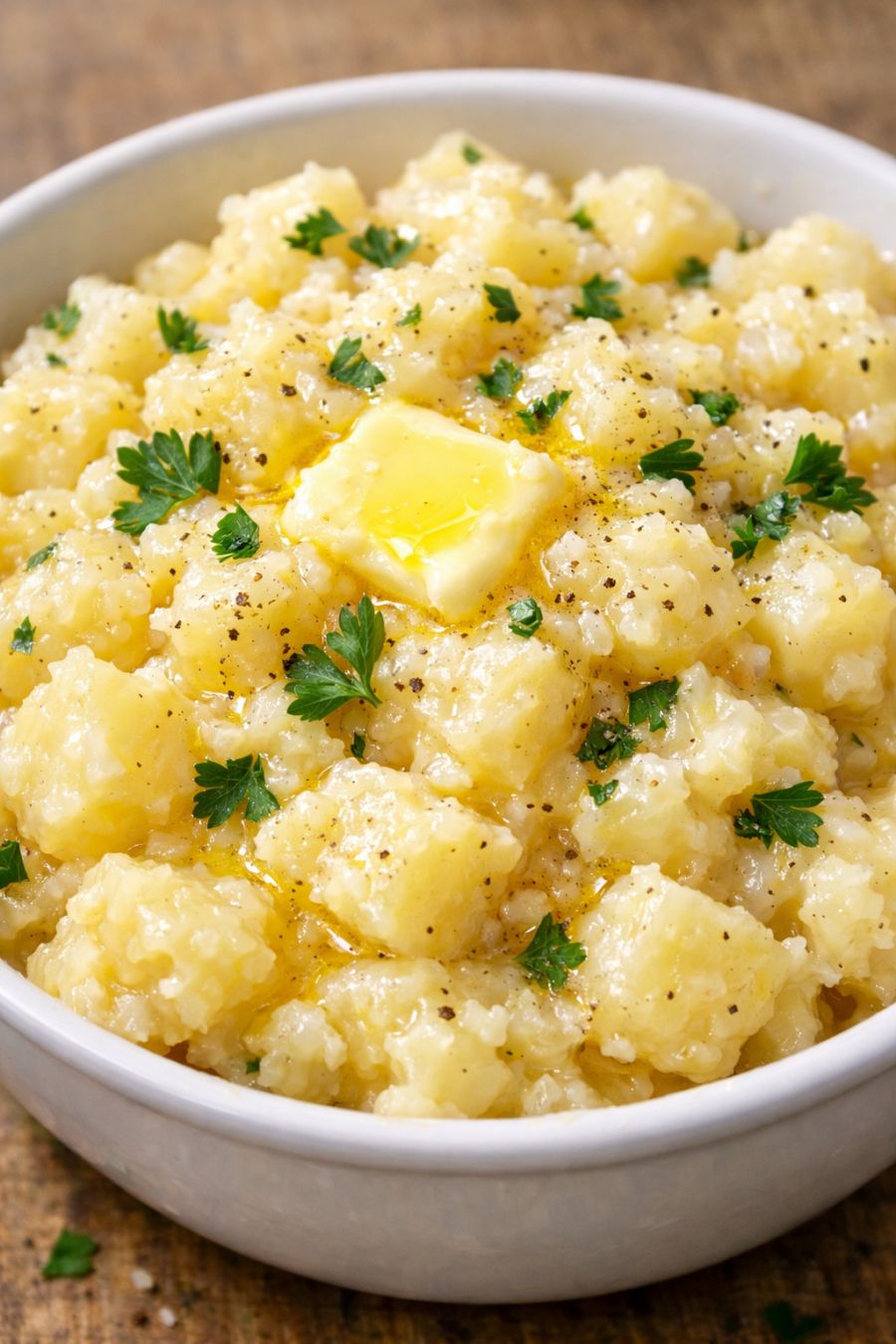
These slow cooker Amish-style buttermilk potatoes are the kind of simple, comforting side dish that quietly steals the show. The method is as homespun as it gets: raw diced potatoes in the slow cooker, a generous pour of tangy buttermilk over the top, then just three more pantry ingredients to coax everything into something velvety and deeply satisfying. The idea is loosely inspired by Amish farmhouse cooking, where buttermilk and potatoes are everyday staples and long, gentle cooking is used to develop flavor without fuss. This is the dish you can start in the afternoon, forget about, and then set on the table to a chorus of “Can I get that recipe?” at dinner.
Serve these buttermilk potatoes anywhere you’d normally reach for mashed or stewed potatoes: alongside roast chicken, pork chops, pot roast, or a simple pan-seared sausage. They’re especially good with something that has a bit of crust or char to contrast their creaminess. Add a green vegetable—steamed green beans, roasted Brussels sprouts, or a crisp salad with a sharp vinaigrette—to balance the richness. Leftovers reheat well and make a cozy base for a fried egg the next morning, or can be spooned into a bowl and topped with braised greens for a simple lunch.
Slow Cooker Amish Buttermilk Potatoes
Servings: 6
Ingredients
3 pounds russet or Yukon Gold potatoes, peeled and cut into 3/4-inch dice
2 cups cultured buttermilk, well shaken
4 tablespoons unsalted butter, cut into small pieces
1 1/2 teaspoons kosher salt, plus more to taste
1/2 teaspoon freshly ground black pepper
Directions
Lightly grease the inside of a 4- to 6-quart slow cooker with a small dab of butter or neutral oil to help prevent sticking.
Add the peeled, 3/4-inch diced potatoes to the slow cooker, spreading them into an even layer so they cook uniformly.
Sprinkle the kosher salt and black pepper evenly over the potatoes, then dot the top with the pieces of butter so they melt down into the mixture as it cooks.
Slowly pour the well-shaken buttermilk over the potatoes, making sure most of the potatoes are moistened. You should see the buttermilk pooling slightly between the potato pieces, as in a close-up process shot of hands pouring buttermilk over raw diced potatoes in a slow cooker on a beige speckled granite countertop.
Gently stir once or twice to distribute the seasoning and butter without breaking up the potato pieces too much. The potatoes do not need to be fully submerged; they will release moisture as they cook.
Cover the slow cooker with the lid and cook on LOW for 5 to 6 hours, or on HIGH for 2 1/2 to 3 hours, until the potatoes are very tender when pierced with a fork.
Once the potatoes are tender, use a wooden spoon or potato masher to gently mash and stir them directly in the slow cooker until they are mostly creamy with some soft chunks remaining, or until they reach your preferred texture.
Taste and adjust seasoning with additional salt and pepper if needed. If the potatoes seem thicker than you’d like, stir in a splash more buttermilk, a tablespoon or two at a time, until they’re as loose and creamy as you prefer.
Turn the slow cooker to WARM, cover, and hold for up to 1 hour before serving, stirring occasionally to keep the potatoes smooth. Serve straight from the slow cooker or transfer to a warm serving bowl.
Variations & Tips
For a richer version, stir in an extra tablespoon or two of butter at the end of cooking, letting it melt into the hot potatoes before serving. If you like a touch of onion flavor, rub the inside of the slow cooker with a cut clove of garlic or a slice of onion before adding the potatoes; this adds aroma without introducing another actual ingredient to the pot. For a slightly tangier profile, use full-fat buttermilk and finish with a small splash of additional buttermilk right before serving. To keep things more rustic, skip most of the mashing and serve the potatoes as tender buttermilk-braised chunks; they’ll have a stew-like texture that’s great with braised meats. If you need to scale up for a crowd, you can increase all ingredients by 50%, but be sure to use a larger slow cooker and allow for the longer end of the cooking time. Leftovers can be thinned with a bit of broth and blended into a quick buttermilk potato soup, or pressed into a skillet with a little oil or butter and pan-fried into crisp-edged potato cakes.
