
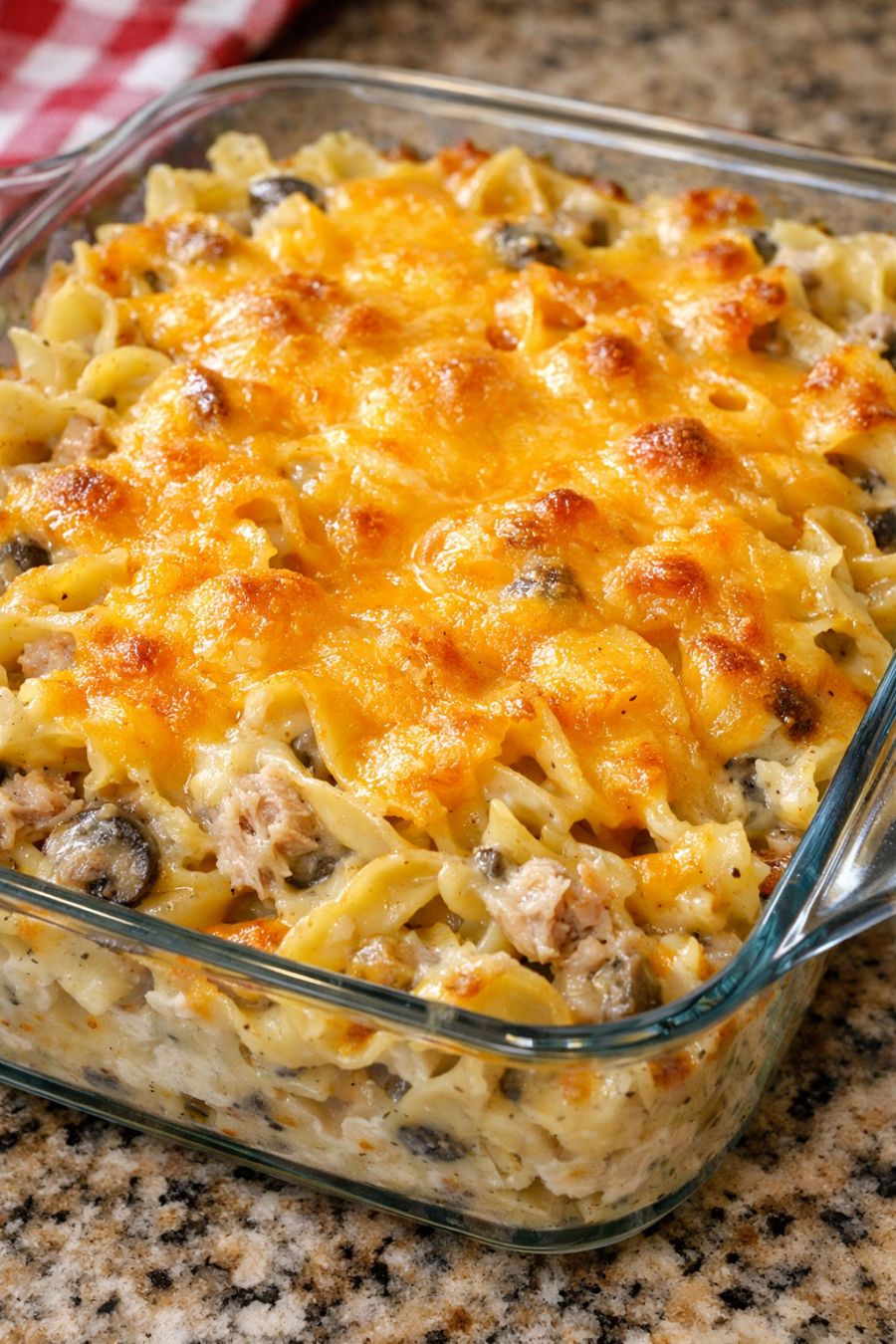
This is the kind of classic Midwestern tuna noodle casserole I can assemble almost on autopilot: dry egg noodles straight into a glass baking dish, flaked canned tuna scattered over the top, then everything bathed in a simple, creamy mixture before it goes into the oven. It’s loosely rooted in Amish and church-basement cooking traditions—humble pantry staples, minimal fuss, and a comforting, stick-to-your-ribs result. With just five ingredients and no pre-boiling the noodles, it’s a practical, weeknight-friendly supper that tastes like something your neighbor’s mom might have brought to every potluck in the 1980s.
Serve this tuna noodle casserole piping hot with something bright and fresh alongside to balance the richness—think a crisp green salad with a tangy vinaigrette, sliced tomatoes with a sprinkle of salt, or simple steamed green beans. A side of buttered peas or roasted carrots also plays nicely with the creamy noodles. If you want to stretch the meal, add warm dinner rolls or buttered toast for scooping up the sauce, and finish with something light for dessert, like fresh fruit or a simple gelatin salad in true Midwestern fashion.
5-Ingredient Amish-Style Tuna Noodle Casserole
Servings: 6
Ingredients
8 oz (about 4 cups) dry wide egg noodles
2 (5 oz) cans tuna in water, drained and flaked
2 (10.5 oz) cans condensed cream of mushroom soup
2 1/2 cups whole milk
1 cup shredded mild cheddar cheese, divided
Directions
Preheat your oven to 375°F (190°C). Lightly grease a 9x13-inch glass baking dish with a bit of oil or cooking spray so the noodles don’t stick.
Scatter the dry egg noodles evenly into the bottom of the glass baking dish, spreading them into an even layer. This is your base—no need to boil them first.
Using your fingers or a fork, flake the drained canned tuna into small pieces. Scatter the flaked tuna evenly over the dry noodles, making sure it’s fairly well distributed so every scoop gets some fish.
In a medium bowl, whisk together the condensed cream of mushroom soup and the whole milk until smooth and pourable, with no big lumps of soup remaining.
Stir 1/2 cup of the shredded cheddar cheese into the soup-and-milk mixture. This gives the sauce a gentle cheesy richness without overwhelming the tuna.
Pour the creamy mixture evenly over the noodles and tuna in the baking dish, moving slowly and covering the entire surface so the noodles underneath have a chance to soak up liquid. Use the back of a spoon to gently press down any noodles that are sticking up so they’re mostly submerged in the sauce.
Sprinkle the remaining 1/2 cup shredded cheddar cheese evenly over the top of the casserole. This will melt and form a lightly golden, comforting top layer.
Cover the glass baking dish tightly with foil to trap steam and help the dry noodles cook through in the sauce.
Bake the covered casserole on the center rack for 35 minutes, then carefully remove the foil. Continue baking, uncovered, for another 10–15 minutes, or until the top is bubbling, the cheese is melted, and the noodles are tender when you poke a fork down into the center.
Remove the casserole from the oven and let it rest for at least 10 minutes before serving. This short rest helps the sauce thicken slightly and makes it easier to scoop neat portions. Serve warm, straight from the glass dish.
Variations & Tips
Because this casserole is built on pantry staples, it’s easy to adapt while keeping the same basic method of scattering tuna over dry noodles and baking in a glass dish. If you prefer a different soup base, swap one or both cans of cream of mushroom for cream of celery or cream of chicken; the milk ratio stays the same. For a slightly richer, more old-fashioned texture, replace 1/2 cup of the milk with heavy cream or evaporated milk. You can also change the cheese: mild cheddar is classic, but Colby, Monterey Jack, or a blend will all melt nicely. To add vegetables without adding extra ingredients, you can trade half of the noodles for an equal volume of frozen peas or mixed vegetables, scattering them in with the tuna before pouring on the sauce—just know that this technically nudges you beyond the original five-ingredient concept. If you like a crispier top, uncover the casserole a bit earlier and broil for 1–2 minutes at the end, watching closely. Leftovers reheat well in a low oven with a splash of milk to loosen the sauce; this is one of those dishes that tastes even more nostalgic the next day.
