
This low carb 3-ingredient hot dog and green bean skillet is exactly the kind of no-fuss pan fry that got a lot of Midwestern families through lean times. My own grandpa swore by this combo: cheap hot dogs, a big can of green beans, and a knob of butter. The hot dog coins sear up smoky and browned, the beans blister and stay bright, and the butter ties everything together in a glossy, savory sheen. It’s humble, filling, and surprisingly satisfying—proof that you don’t need a long shopping list to get dinner on the table that everyone will devour.
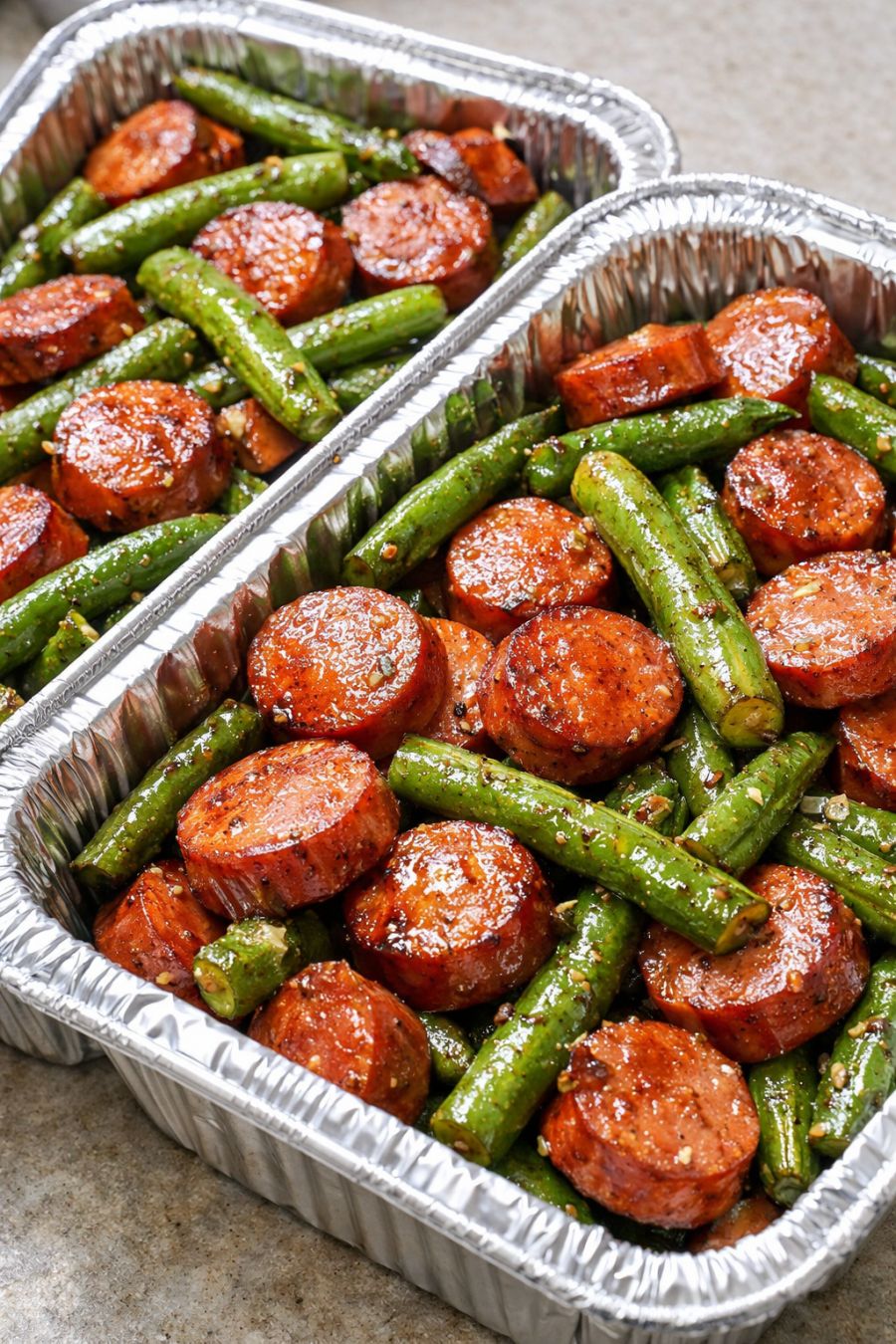
Serve this skillet straight from the pan or portion it into foil trays for that old-fashioned, camp-style feel. It’s hearty enough to stand on its own, but you can round it out with a simple green salad or sliced tomatoes if you want more vegetables. For those not counting carbs, offer a slice of crusty bread or a buttered roll on the side to soak up the buttery juices. A spoonful of yellow mustard or a dash of hot sauce at the table gives a nice tangy contrast to the smoky, rich flavors.
Low Carb Hot Dog and Green Bean Skillet
Servings: 3–4
Ingredients
1 pound beef or turkey hot dogs (about 8), sliced into 1/2-inch coins
1 pound fresh green beans, trimmed (or well-drained canned green beans in a pinch)
3 tablespoons salted butter
Directions
Prep the ingredients: Slice the hot dogs into 1/2-inch coins so they sear quickly and evenly. Rinse and trim the green beans, snapping off the stem ends. Pat the beans dry with a clean towel; this helps them blister instead of steam. If using canned green beans, drain them very well.
Start the skillet: Place a large, heavy skillet (cast iron if you have it) over medium-high heat. Add 2 tablespoons of the butter and let it melt until it foams and just begins to turn golden at the edges.
Brown the hot dogs: Add the sliced hot dogs in a single layer. Let them cook undisturbed for 2–3 minutes so the bottoms can sear and develop a deep golden brown color. Stir and continue cooking another 2–3 minutes until most sides are nicely browned and slightly crisp. This browning is where the smoky flavor builds.
Add the green beans: Push the hot dog coins to one side of the skillet. Add the remaining 1 tablespoon butter to the empty side. When it melts, add the green beans, spreading them out as much as possible. Let them cook without stirring for 2–3 minutes so they blister and get a few dark spots.
Pan fry together: Toss the green beans and hot dogs together in the skillet, coating everything in the buttery fat. Continue to cook, stirring every minute or so, for 5–7 minutes, until the beans are tender-crisp (or fully tender if that’s your preference) and glistening, and the hot dogs are deeply browned. Taste a bean and a hot dog coin; if needed, add a small pinch of salt, but remember the hot dogs and butter are already seasoned.
Serve: Spoon the hot dog and green bean mixture into two foil trays or directly onto plates. Scrape any buttery juices from the pan over the top so everything has that glossy, rich sheen. Serve hot, while the beans are bright and the hot dog coins are still a bit crisp at the edges.
Variations & Tips
To keep the spirit of the original three-ingredient pan fry, think of variations as small tweaks rather than full rewrites. For a spicier version, choose smoked or spicy hot dogs, or finish the skillet with a pinch of red pepper flakes—still essentially the same recipe, just with a little kick. If fresh green beans are out of reach, use canned or frozen: drain canned beans very well and pat them dry so they can blister, or thaw and dry frozen beans before they hit the pan. For more browning, cook the hot dogs a minute or two longer and don’t overcrowd the skillet; a wider pan gives better sear and more of those golden edges that make this taste so satisfying. You can also portion the finished mixture into individual foil trays and reheat them in the oven for quick make-ahead lunches—the flavors hold up well, and the butter keeps everything moist. If you’re feeding a bigger crowd, simply double the ingredients and cook in two batches so you don’t lose that crucial sear that makes this simple dish taste like more than the sum of its parts.
