
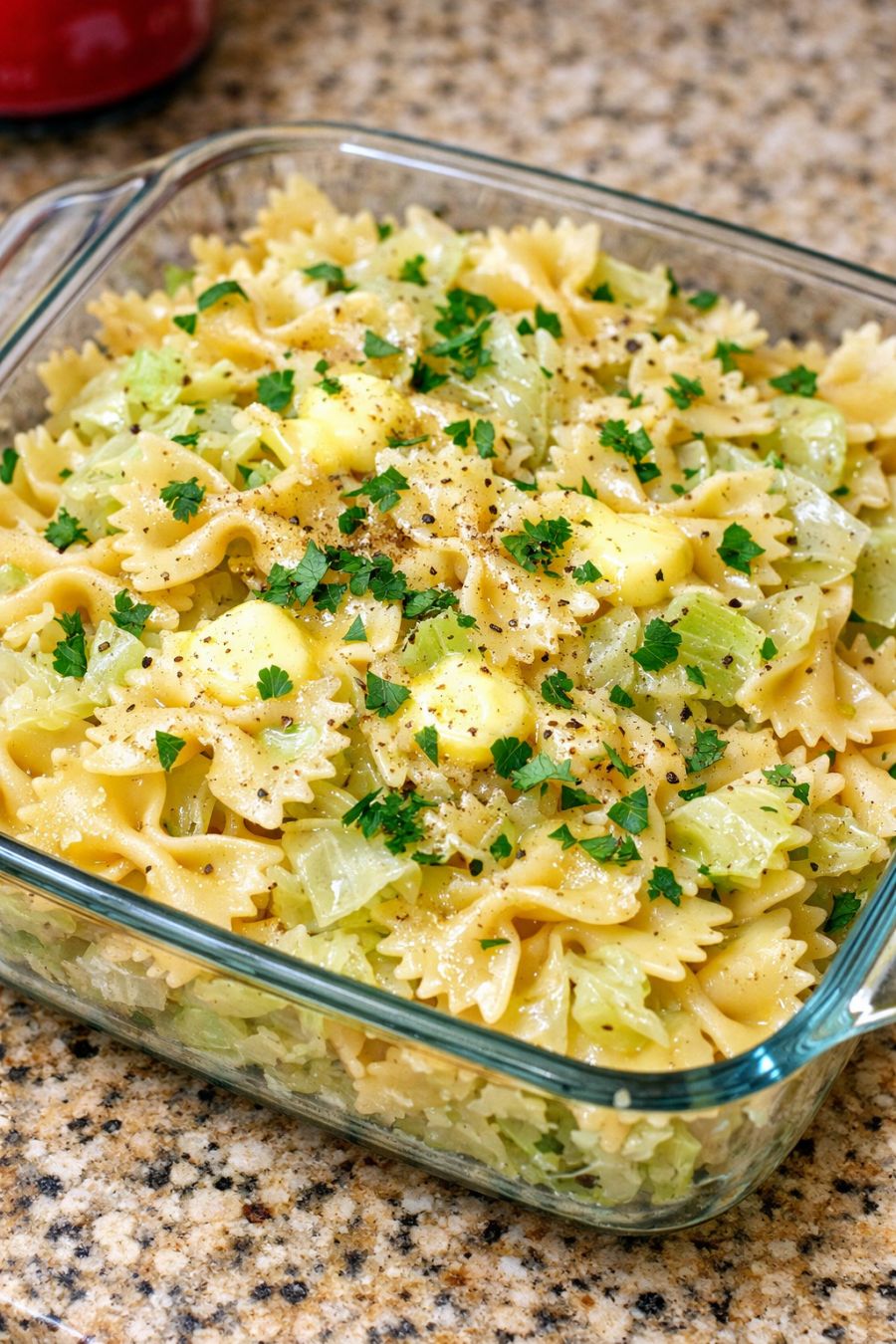
This cozy Amish-inspired cabbage noodle bake is the kind of weeknight supper that quietly earns a permanent place in the rotation. It leans on the simple, thrifty cooking traditions of Amish and Midwestern kitchens: sturdy pasta, sweet green cabbage, plenty of butter, and a good hit of seasoning all baked together until tender and comforting. The best part is the process—you literally scatter chopped raw cabbage over raw bowtie pasta in a glass casserole dish, add just two more ingredients, and let the oven do the rest. It’s practical, budget-friendly, and exactly the kind of unfussy comfort food I crave after a long day in the city.
Serve this cabbage noodle bake straight from the glass casserole dish with a big spoon and a simple side: sliced fresh tomatoes in summer, or a crisp green salad with a sharp vinaigrette the rest of the year. I like to add something with acidity to balance the richness—pickled beets, cucumber salad, or even a spoonful of sauerkraut on the side. For protein, pair it with roasted sausage, baked chicken thighs, or pan-fried pork chops. A little black pepper at the table and maybe a sprinkle of fresh parsley, if you have it, finish the plate nicely.
4-Ingredient Amish Cabbage Noodle Bake
Servings: 4
Ingredients
8 oz (about 4 cups) uncooked bowtie (farfalle) pasta
6 cups finely chopped green cabbage (from about 1/2 small head)
1/2 cup (1 stick / 113 g) unsalted butter, melted
2 1/2 cups low-sodium chicken broth (or vegetable broth)
Directions
Preheat your oven to 375°F (190°C). Lightly grease a 9x13-inch glass casserole dish with a bit of the melted butter or nonstick spray so the noodles don’t stick.
Scatter the uncooked bowtie pasta evenly over the bottom of the glass casserole dish, making as even a layer as you can without fussing too much.
Scatter the chopped raw cabbage over the raw bowtie pasta, using your hands to distribute it into an even blanket that covers the pasta. The dish will look quite full; the cabbage will soften and collapse as it bakes.
In a large measuring cup or bowl, whisk together the melted butter and the chicken broth until the butter is well dispersed. Season the mixture generously with salt and freshly ground black pepper to taste; this is your only seasoning, so don’t be shy.
Slowly pour the butter-broth mixture evenly over the cabbage and pasta in the glass dish, making sure to wet as much of the surface as possible. Gently press down any pieces of pasta that are sticking up so they’re mostly submerged in liquid.
Cover the casserole tightly with foil, crimping the edges so steam is trapped inside. This helps the raw pasta and cabbage cook through evenly.
Bake, covered, for 35 to 40 minutes, until the pasta is tender and the cabbage is very soft when you poke a fork down into the center. Carefully remove the foil—watch for steam.
If you’d like a bit of golden color on top, return the dish to the oven uncovered for an additional 8 to 10 minutes. The edges will take on a light toasty look, and some cabbage on top may caramelize slightly.
Let the casserole rest for about 5 to 10 minutes before serving. This short rest helps the broth settle and soak into the noodles. Give everything a gentle toss with a large spoon to mix the buttery cabbage and noodles together, then taste and adjust seasoning with a little more salt and pepper if needed before bringing it to the table.
Variations & Tips
For a slightly richer, creamier version, replace 1/2 cup of the broth with heavy cream or half-and-half, whisking it into the butter-broth mixture before pouring over the dish. To keep it vegetarian, simply use vegetable broth instead of chicken broth and season a bit more assertively with salt and pepper. If you’d like some protein built in, scatter 1 to 1 1/2 cups of diced, fully cooked smoked sausage or ham over the pasta before adding the cabbage. A more traditional Amish-style twist would be to swap the bowties for egg noodles; reduce the broth by about 1/4 cup since egg noodles tend to soften a bit faster. For extra flavor without adding more ingredients, toast the dry pasta briefly in a skillet with a spoonful of the melted butter until it picks up a little color before layering it in the dish—this gives a nutty depth that plays well with the sweet cabbage. You can also finish the baked casserole with a quick shower of caraway seeds or cracked black pepper for a Central European note that nods to the dish’s roots.
