
This slow cooker 4-ingredient caraway roasted pork shoulder is exactly the kind of meal my husband starts hinting about as soon as the weather softens in spring. It’s deeply savory, meltingly tender, and needs almost no hands-on attention. Caraway has long roots in Central and Eastern European cooking, where it’s used to flavor hearty pork dishes and breads; here, those same earthy, slightly citrusy seeds turn a simple pork shoulder into something that tastes like it cooked in a restaurant kitchen instead of a slow cooker on your counter. With just pork, caraway, salt, and a touch of brown sugar, you get that dark, caramelized crust, shreds of juicy meat, and a pan full of golden drippings perfect for spooning over everything on the plate.
Serve this pork heaped on a platter, spooning some of the golden drippings over the top. It’s wonderful with simple sides that soak up the juices: buttered boiled potatoes, roasted baby carrots and spring asparagus, or a tangy cabbage slaw. For a more casual meal, pile the shreds onto crusty rolls with a swipe of mustard and a few pickles. A crisp lager, dry cider, or a light, earthy red wine (like a Beaujolais or Zweigelt) pairs nicely with the caraway and rich pork.
Slow Cooker 4-Ingredient Caraway Roasted Pork Shoulder
Servings: 8
Ingredients
1 (4–5 pound) bone-in pork shoulder (also called pork butt), trimmed of excess surface fat
2 tablespoons caraway seeds
2 tablespoons kosher salt
2 tablespoons packed light brown sugar
Directions
Line a baking sheet with aluminum foil and set it near your slow cooker; you’ll use it later for finishing the roast in the oven.
Pat the pork shoulder very dry with paper towels. This helps the surface caramelize and form a crust later.
In a small bowl, combine the caraway seeds, kosher salt, and brown sugar. Use your fingers to break up any sugar clumps so the mixture is evenly blended.
Rub the caraway mixture all over the pork shoulder, pressing it into every side and into any natural seams. Make sure the entire surface is well coated; this seasoning is where all the flavor comes from.
Place the seasoned pork shoulder into the slow cooker, fat side up. Do not add any liquid; the pork will release plenty of juices as it cooks and concentrate into savory drippings.
Cover and cook on LOW for 8–10 hours, or until the pork is very tender and easily pulls apart with a fork. If you’re home, you can rotate the roast once halfway through cooking, but it’s not essential.
About 20 minutes before the pork is done, preheat your oven to 425°F (220°C). Make sure the rack is in the upper-middle position.
Carefully lift the cooked pork shoulder out of the slow cooker and transfer it to the foil-lined baking sheet, keeping it in one piece as much as possible. Spoon a few tablespoons of the slow cooker drippings over the top to moisten the surface.
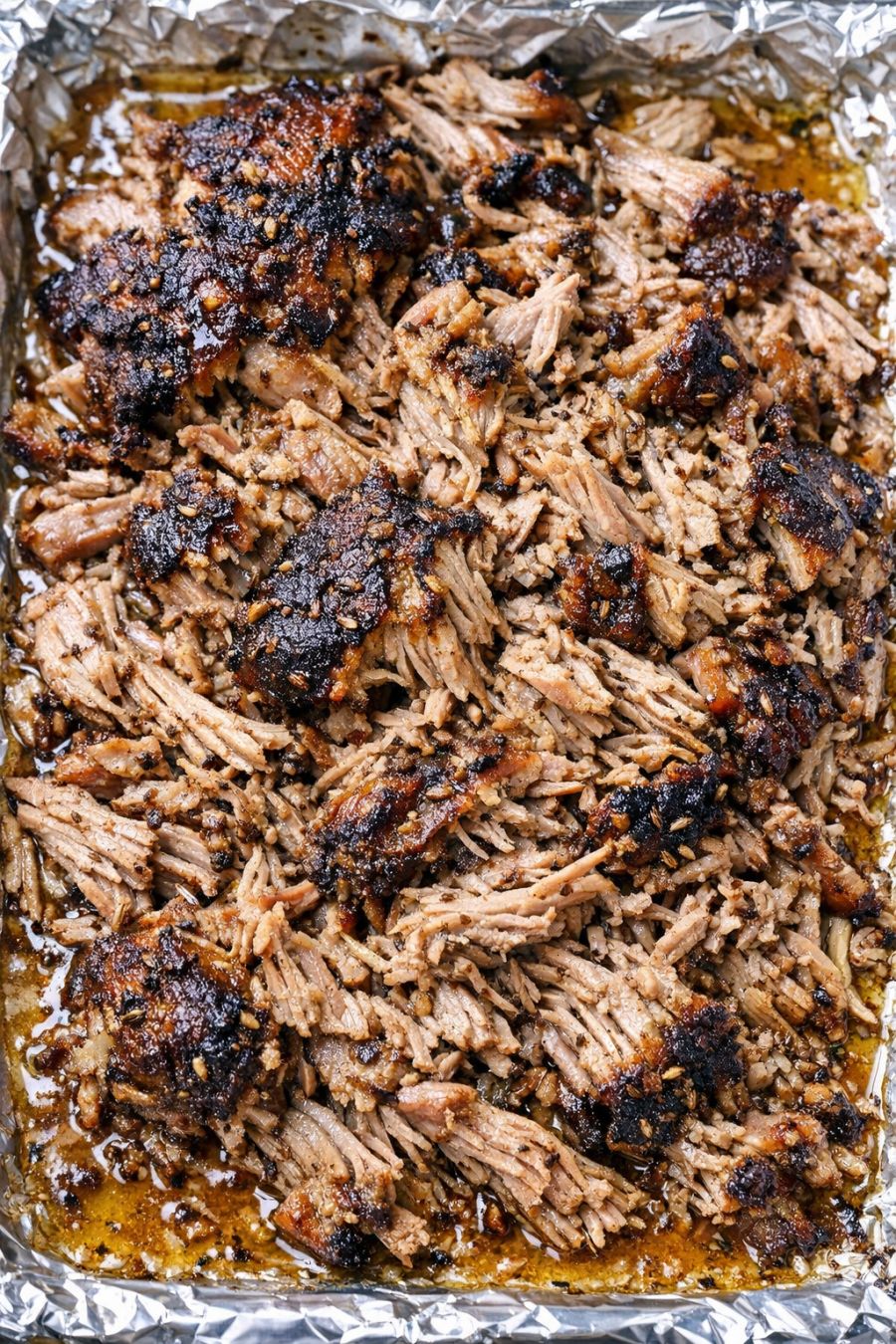
Roast the pork in the preheated oven for 15–20 minutes, or until the exterior is deeply browned, caramelized, and crisp in spots. The caraway seeds should look toasty and the surface should have a dark, roasted appearance.
Remove the baking sheet from the oven and let the pork rest for about 10 minutes. Then use two forks or tongs to gently pull the meat into large, juicy shreds right on the baking sheet, turning it in the caramelized bits and pan drippings so everything is coated.
Pour or spoon some of the remaining golden drippings from the slow cooker over the shredded pork on the baking sheet, just until it looks moist and glistening but not soupy. Taste and add a pinch of extra salt only if needed.
Serve the pork hot, straight from the baking sheet or transferred to a warm platter, making sure to scoop up some of the toasted caraway seeds and drippings with each portion.
Variations & Tips
For a slightly smokier profile without adding extra ingredients, give the pork a quick sear in a very hot cast-iron skillet before placing it in the slow cooker; the browning intensifies the roasted flavor. If you prefer a milder caraway presence, lightly crush the seeds with a mortar and pestle before rubbing them on the meat—this releases flavor more evenly so you can use a bit less, or simply cut the amount to 1 1/2 tablespoons. For a crisper crust, move the baking sheet closer to the broiler for the last 2–3 minutes of oven time, watching closely so the sugar in the rub doesn’t burn. Leftovers reheat beautifully; store the pork with some of its drippings and warm it gently, covered, in a low oven or on the stovetop so it stays tender. If you want to stretch the meat further for a crowd, serve it over buttered egg noodles or mashed potatoes and thin a bit of the drippings with water to drizzle as a simple jus.
