
My uncle Earl first showed me this savory little trick one blustery March years ago, when the snowbanks were still high but everyone was already talking about St. Patrick’s Day and bracket picks. He swore you only needed three things to get ridiculously tender pork chops: good bone-in chops, a sturdy brown ale, and a packet of onion soup mix. That was it. No fuss, no fancy pantry, just the kind of farm-kitchen know‑how folks in the rural Midwest have leaned on for generations. The slow cooker does the work, the ale cooks down into a rich, dark gravy, and the meat turns so soft it pulls right off the bone. It’s the kind of cozy, crowd-pleasing supper that feels just right for March celebrations or any cold-weather Sunday at home.
These slow cooker brown ale pork chops are lovely ladled straight from the crock over a mound of buttery mashed potatoes, egg noodles, or simple buttered rice to soak up every drop of the savory amber juices. Add a pan of roasted carrots or green beans, or a crisp coleslaw if you like a little crunch alongside all that tenderness. A slice of crusty bread or warm dinner rolls helps mop up the rich brown ale reduction, and if you’re celebrating, pour the same style of brown ale you used in the pot for a simple, satisfying pairing.
Slow Cooker 3-Ingredient Brown Ale Pork Chops
Servings: 4
Ingredients
4 thick-cut bone-in pork chops (about 2 to 2 1/2 pounds total)
1 (1.5-ounce) packet dry onion soup mix
1 (12-ounce) bottle brown ale beer
Directions
Pat the pork chops dry with paper towels. This helps them cook up nicely and keeps extra moisture out of the slow cooker.
Lay the thick-cut bone-in pork chops in a single layer in the bottom of a 4- to 6-quart slow cooker. It’s fine if they overlap just a bit, but try to keep most of the meat in contact with the bottom so it sits well in the juices.
Sprinkle the dry onion soup mix evenly over the tops of the pork chops, letting some fall down around the sides so it seasons the cooking liquid, too.
Slowly pour the brown ale over the pork chops, aiming for the edges so you don’t wash all the soup mix off the top. The liquid should come at least halfway up the sides of the chops; they’ll release a bit more juice as they cook.
Cover the slow cooker with the lid and cook on LOW for 6 to 8 hours, or on HIGH for 3 to 4 hours, until the pork chops are very tender and the meat is pulling away from the bone. Every slow cooker runs a little differently, so start checking toward the earlier time.
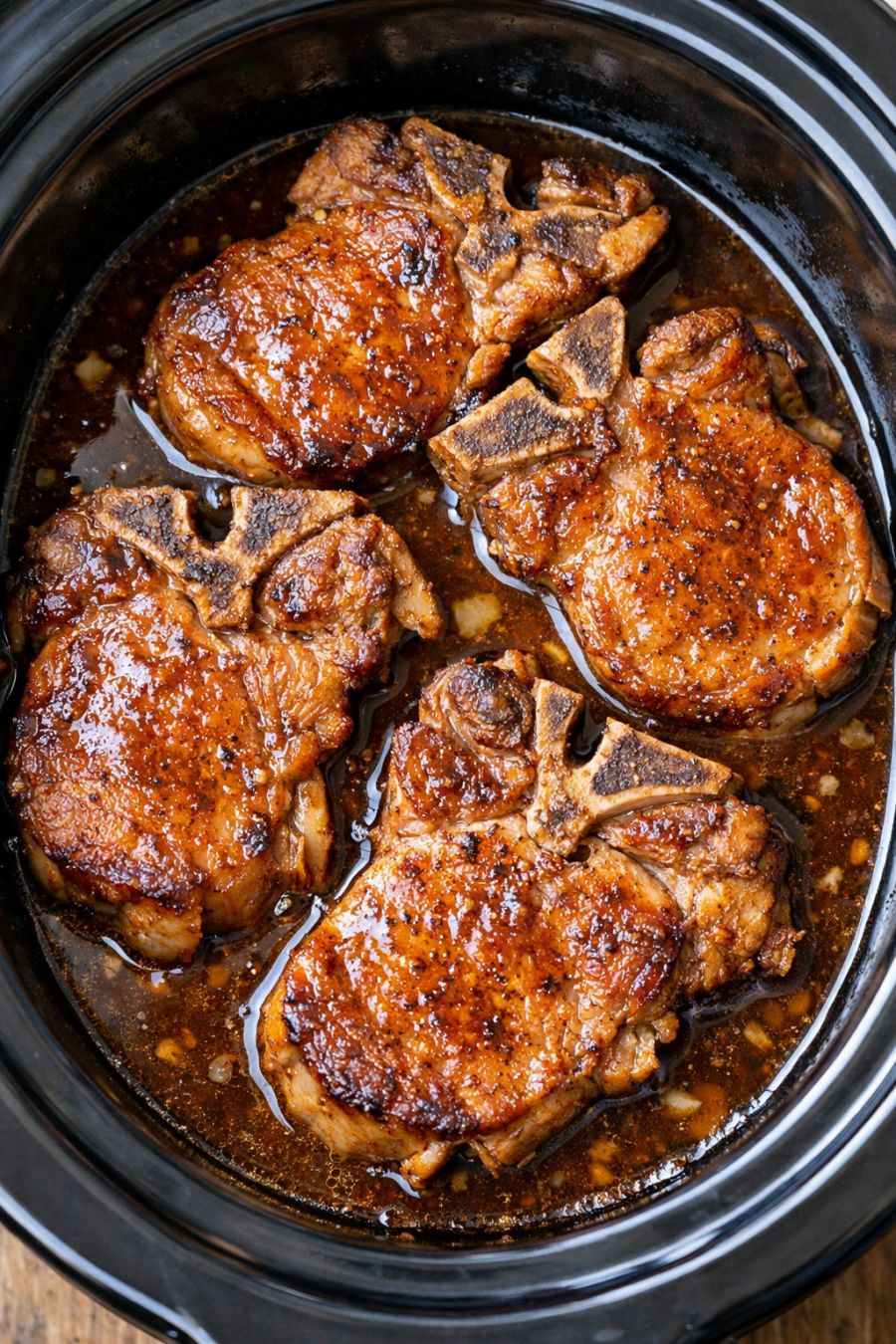
Once the chops are tender, carefully lift them out with a wide spatula or tongs, as they will be very soft. Spoon some of the rich dark brown ale and onion juices from the slow cooker over the top so they glisten.
If you’d like a slightly thicker sauce, ladle some of the hot cooking juices into a small saucepan and simmer on the stove for 5 to 10 minutes until slightly reduced, then pour back over the pork chops in the slow cooker or at the table.
Serve the pork chops hot, nestled in the savory amber juices from the slow cooker, with plenty of the brown ale reduction spooned over each portion.
Variations & Tips
If you prefer a milder flavor, choose a lighter, smoother brown ale rather than something heavily hopped; it will give you a gentle malt sweetness without any bitterness. For a deeper, roastier taste, a nut brown or even a mild porter can step in for the brown ale and still keep to the three-ingredient spirit. If you’re avoiding alcohol, use a non-alcoholic brown-style beer or a mix of beef broth and a splash of apple juice to mimic that malty depth. You can also adjust the saltiness by using only half the packet of onion soup mix the first time and tasting the juices near the end of cooking. For extra richness, once the chops are done, whisk a spoonful of cold butter into the hot cooking liquid in the slow cooker until glossy. Leftovers reheat beautifully; shred the tender pork into the sauce and pile it on toasted buns for an easy next-day sandwich. For smaller households, halve the recipe but keep the cooking time about the same, checking a little earlier, since slow cookers do best when at least half full.
