
This slow cooker 4-ingredient Amish vinegar pulled pork is the kind of old-fashioned meal our fathers and grandfathers quietly depended on after a long day in the fields. It comes from the plain, practical cooking of Amish farm kitchens, where a bottle of cider vinegar, a scoop of brown sugar, and a little onion are all you need to turn a humble pork shoulder into something tender, tangy, and deeply flavorful. My own father swore by this style of vinegar meat—no fancy sauces, just a clean, bright tang that soaks into every strand of pork. If you’re looking for a simple, hands-off recipe that tastes like it’s been passed down through the generations, this is it.
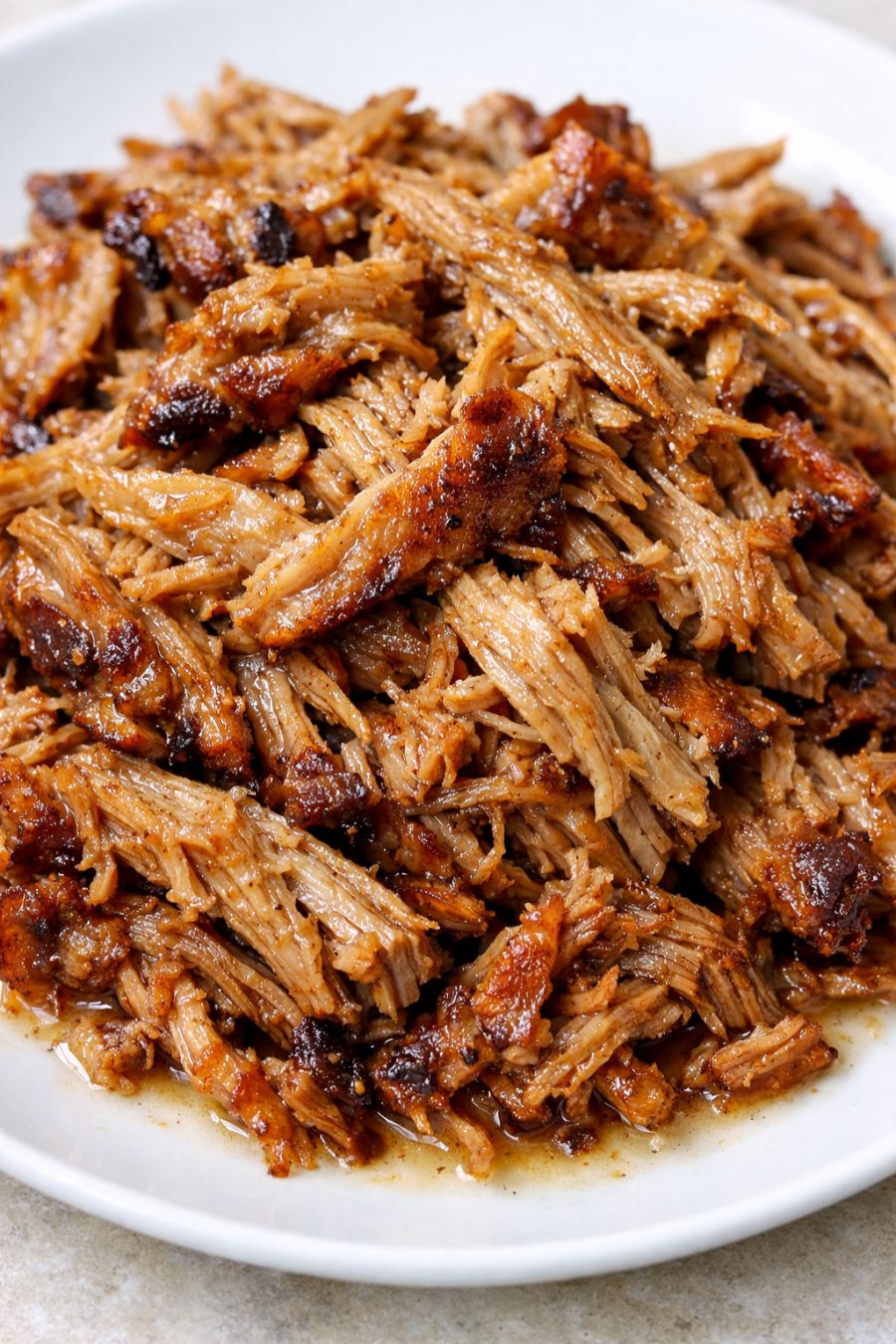
Serve this tangy pulled pork piled high on a plain white plate or on soft sandwich buns, letting the juices soak in. It’s especially good with simple sides: buttered boiled potatoes, coleslaw, baked beans, or a pan of cornbread to catch that clear vinegar glaze. A dish of sweet applesauce or pickled beets on the table keeps with the old Midwestern farmhouse style, and a pot of green beans or steamed carrots rounds out the meal without stealing the spotlight from the pork.
Slow Cooker Amish Vinegar Pulled Pork
Servings: 8
Ingredients
4 to 5 pounds boneless pork shoulder (pork butt), trimmed of excess hard fat
1 1/2 cups apple cider vinegar
1/2 cup packed light or dark brown sugar
1 large yellow onion, thinly sliced
Directions
Lay the sliced onion in an even layer on the bottom of a large slow cooker. This makes a simple bed to keep the pork off the very bottom and adds sweet flavor as it cooks.
Place the pork shoulder on top of the onions. If the piece is very thick, you can cut it into 2 or 3 large chunks so it fits better and cooks more evenly.
In a bowl or large measuring cup, whisk together the apple cider vinegar and brown sugar until the sugar is mostly dissolved. This is your simple Amish-style tangy cooking liquid—no extra seasonings needed.
Pour the vinegar and brown sugar mixture evenly over the pork and onions in the slow cooker. The pork does not need to be fully submerged; it will release its own juices as it cooks.
Cover the slow cooker with the lid and cook on LOW for 8 to 10 hours, or on HIGH for 4 to 5 hours, until the pork is very tender and pulls apart easily with a fork.
Once the pork is tender, carefully lift the meat out of the slow cooker and place it on a large cutting board or shallow dish. Let it rest for about 10 minutes so it’s easier to handle.
While the pork rests, use a ladle to skim off and discard some of the fat from the surface of the cooking liquid in the slow cooker. Leave the onions and the clear, tangy vinegar juices in the pot.
Using two forks, shred the pork into bite-sized strands, pulling off and discarding any large pieces of fat. You want a mix of soft, juicy pieces and a few slightly firmer bits for texture.
Return the shredded pork to the slow cooker with the onions and skimmed cooking liquid. Gently toss to coat all the meat in that thin, tangy cider vinegar glaze.
Turn the slow cooker to WARM and let the pork sit in the juices for 15 to 20 minutes so the flavors can soak into every strand. Stir once or twice. The meat should look deeply browned, glossy, and moist, with a light, clear vinegar sheen.
For slightly crispy edges like old farmhouse kitchens used to get, spread some of the shredded pork in a single layer on a baking sheet and broil it in the oven for 3 to 5 minutes, just until the tips brown and crisp. Return it to the slow cooker juices or serve right away.
Taste the pork just before serving. If you like a sharper tang, spoon a tablespoon or two of the hot cooking liquid over the meat on your plate. Serve warm, letting the simple vinegar glaze shine.
Variations & Tips
If you like a touch more savoriness, you can rub the pork shoulder lightly with 1 to 2 teaspoons of kosher salt and 1 teaspoon of black pepper before placing it in the slow cooker, though the old Amish-style version often relies on just the vinegar, sugar, and onion. For a slightly sweeter, more barbecue-like feel without adding extra ingredients, simply brown the pork in a heavy skillet before placing it in the slow cooker; those browned bits deepen the flavor and help create darker, crispier edges when you broil it at the end. If your family prefers less tang, replace 1/2 cup of the apple cider vinegar with water, or use a milder cider vinegar if you can find it. Leftovers keep very well and can be gently rewarmed in a skillet, letting the juices cook down until they cling to the meat; this also encourages more browned, crispy bits, which many old-timers consider the best part. You can serve the pork plain on a plate for a traditional meat-and-potatoes supper, or tuck it into soft buns for sandwiches—both ways stay true to the spirit of this simple, four-ingredient, old-fashioned meal.
