
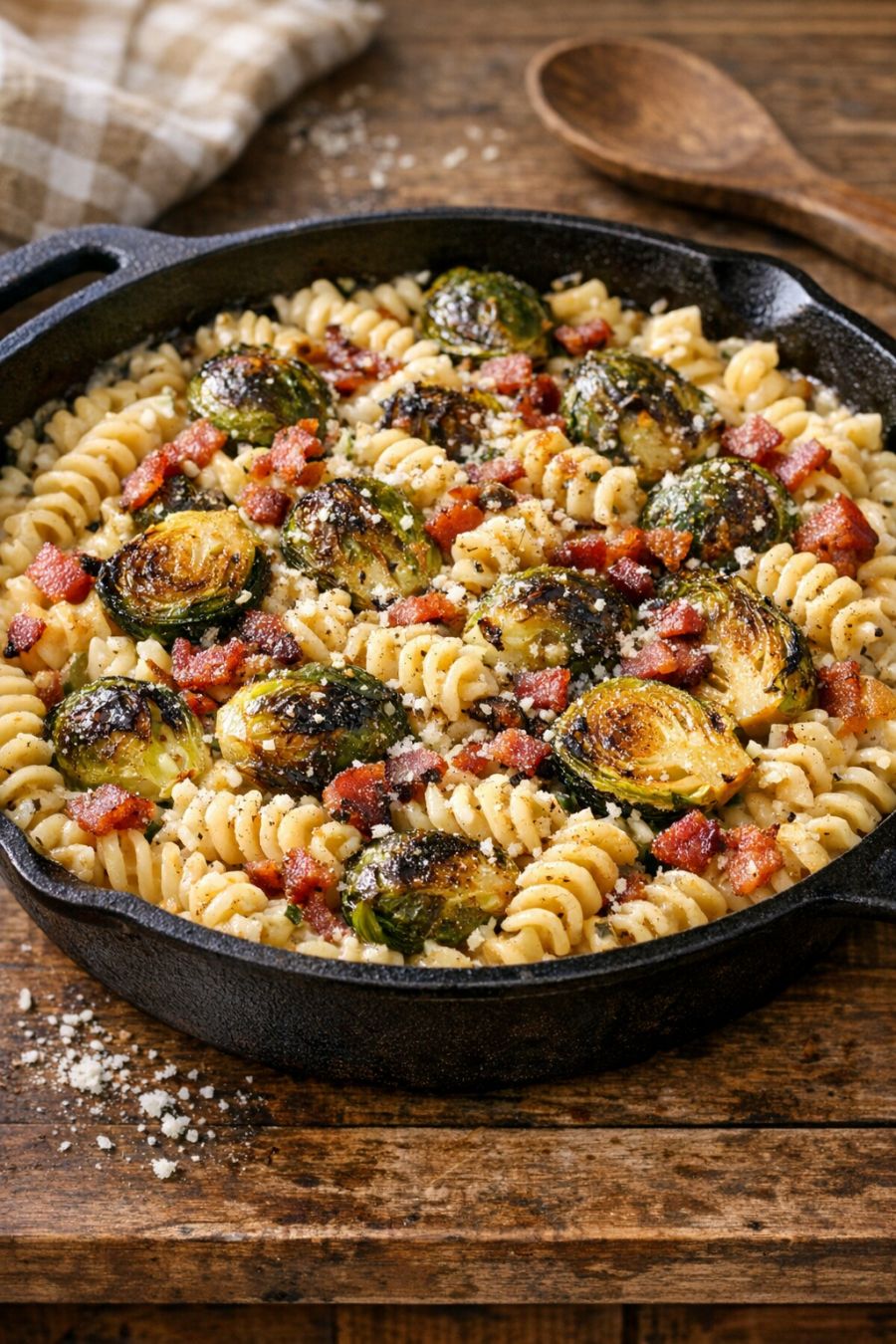
This is the kind of supper I make on nights when the sun is dropping behind the cornfields and I don’t feel like fussing, just feeding. It leans on the plain, sturdy pantry habits I grew up with in rural Amish country: a cast iron pan, dry pasta, fresh vegetables, and a few simple staples. You place raw rotini in the skillet, toss it with three humble helpers—broth, cream, and a bit of butter—then tuck halved raw Brussels sprouts on top. The oven does the rest. It’s not fancy, but it’s honest, filling food, the sort of thing you can throw together almost without thinking after years of cooking for a busy household.
I like to bring this Brussels sprout pasta to the table straight in the cast iron pan, set on a thick potholder. It’s hearty enough to stand alone, but a simple side of sliced garden tomatoes or a small green salad brightens the plate. Warm dinner rolls or a heel of crusty bread are nice for soaking up the creamy broth at the bottom of the pan. If you enjoy a bit of protein, serve it alongside baked ham, roasted chicken, or even leftover meatloaf. A glass of cold milk or iced tea fits the farmhouse feel of this easy meal.
Oven-Baked Amish Brussels Sprout Rotini
Servings: 4
Ingredients
8 ounces dry rotini pasta
12 ounces fresh Brussels sprouts, trimmed and halved
2 cups chicken broth (or vegetable broth)
1 cup heavy cream
3 tablespoons unsalted butter, cut into small pieces
1 teaspoon salt, or to taste
1/2 teaspoon black pepper, or to taste
Directions
Preheat your oven to 400°F (200°C). Place a 10–12 inch cast iron baking pan or skillet on the counter so it’s ready to fill.
Pour the dry rotini pasta into the cast iron pan and spread it into an even layer so the noodles cover the bottom.
In a measuring cup or bowl, whisk together the chicken broth, heavy cream, salt, and black pepper until well combined. These three simple ingredients—broth, cream, and butter—will give the pasta its sauce and flavor.
Pour the broth and cream mixture evenly over the dry rotini in the pan, making sure most of the pasta is moistened. Gently nudge any dry pieces down so they can catch some liquid.
Dot the top of the pasta and liquid with the pieces of butter, spacing them out so they’ll melt and spread as the dish bakes.
Trim the Brussels sprouts, removing any tough outer leaves, and slice them in half from top to core. With clean hands, place the halved raw Brussels sprouts cut-side down in a snug layer over the rotini, just as if you were tucking them into bed. It’s fine if some pasta peeks through.
Cover the pan tightly with foil to keep in the moisture, then slide it onto the middle rack of the preheated oven.
Bake covered for 25–30 minutes, until the pasta is mostly tender and the Brussels sprouts are starting to soften.
Carefully remove the foil (watch for steam), then return the pan to the oven and bake uncovered for another 10–15 minutes. The liquid should reduce into a light, creamy sauce, the pasta should be fully cooked, and the Brussels sprouts should have some golden edges.
Remove the pan from the oven and let the pasta rest for 5–10 minutes. The sauce will thicken slightly as it cools. Taste and adjust seasoning with a bit more salt and pepper if needed, then spoon straight from the cast iron pan to serve.
Variations & Tips
For a little extra richness, sprinkle 1/2 to 1 cup of shredded cheese—such as mild cheddar, Colby, or Swiss—over the top during the last 10 minutes of baking and let it melt and brown lightly. If you’d like some protein without changing the simple spirit of the dish, scatter 1 cup of diced cooked ham, smoked sausage, or leftover roast chicken over the pasta before adding the Brussels sprouts. To keep it strictly vegetarian, use vegetable broth and a pinch of smoked paprika for a hint of depth. You can also swap part of the Brussels sprouts for sliced mushrooms or thinly sliced onion if that’s what you have on hand. If your oven runs hot or the sprouts brown too quickly, lay the foil back over them loosely for the last few minutes. And if the pasta seems a bit too firm when you check it, add a splash more broth, cover again, and bake 5–10 minutes longer until it reaches the tenderness you like.
