
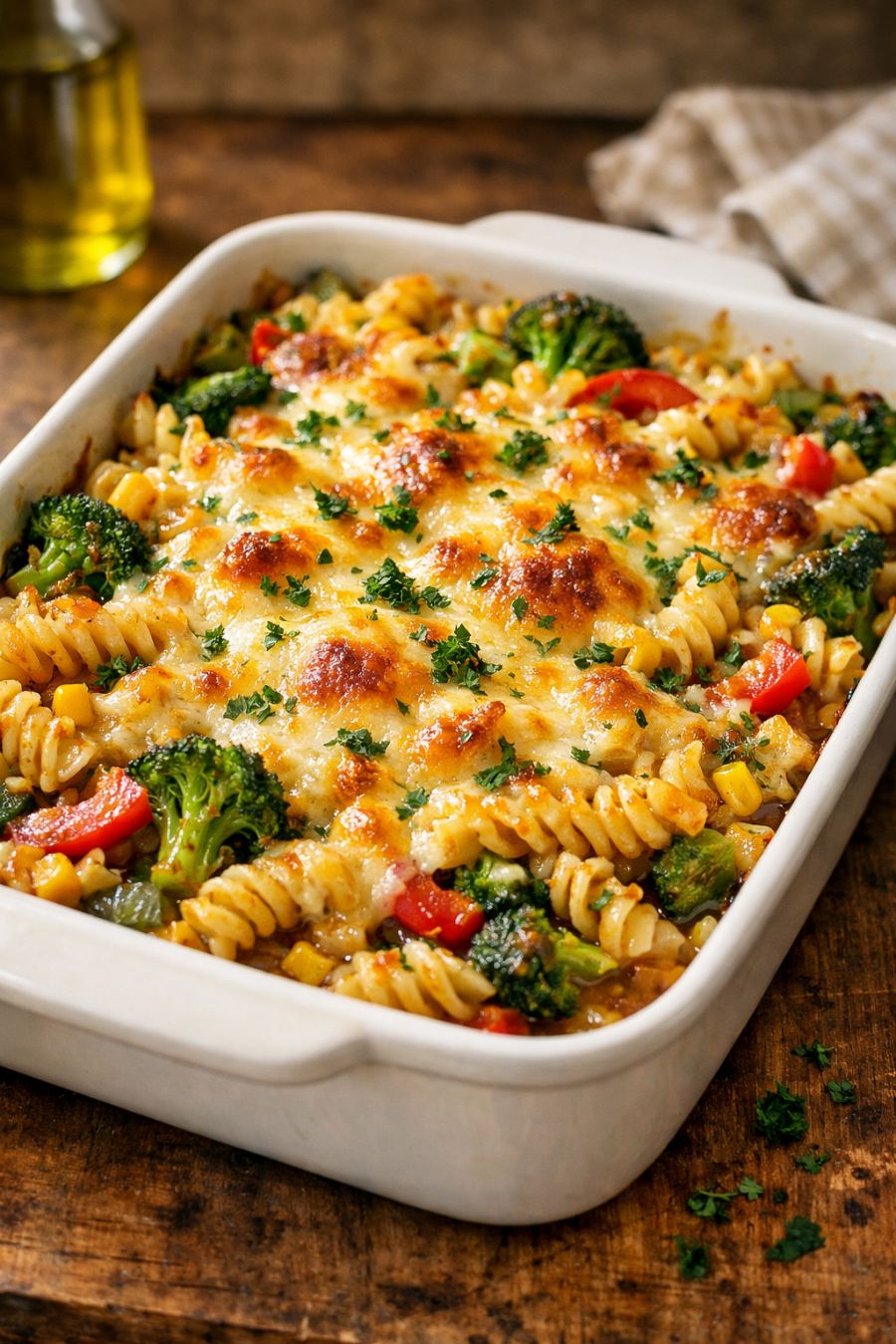
This little oven-baked Amish-style garden vegetable pasta is the kind of supper you pull together on a tired evening when the garden (or the pantry) still needs tending. Around here in the rural Midwest, church cookbooks are full of these “pour-and-bake” casseroles—simple, practical, and forgiving. You scatter dry rotini into a roasting pan, pour canned vegetable broth and just three more everyday ingredients right over the top, and let the oven do the rest. It’s humble, meatless, and thrifty, but it tastes like the sort of dish folks quietly go back for seconds of at a potluck table.
Serve this pasta straight from the roasting pan with a big spoon and a dish towel wrapped around the handles. It’s lovely alongside a crisp green salad with a tangy vinaigrette, or a plate of sliced fresh tomatoes with salt and pepper in late summer. Warm dinner rolls or a loaf of crusty bread are perfect for soaking up the broth that gathers at the bottom. If you like, add a small bowl of cottage cheese or sliced apples on the table, the way many Midwestern farm kitchens do, to round out the meal without much extra work.
Oven-Baked Amish Garden Vegetable Pasta
Servings: 4
Ingredients
12 oz uncooked rotini pasta
3 cups canned vegetable broth (about two 14.5 oz cans)
2 cups frozen mixed garden vegetables (carrots, peas, corn, green beans), still frozen
1 1/2 cups shredded mild cheese (Colby, Colby Jack, or mild cheddar)
2 tbsp salted butter, cut into small pieces
Directions
Preheat your oven to 375°F (190°C). Set out a 9x13-inch metal or glass roasting pan or casserole dish with sides at least 2 inches high.
Spread the uncooked rotini pasta evenly over the bottom of the roasting pan, making sure it’s in a fairly even layer so it cooks uniformly.
Scatter the frozen mixed garden vegetables over the dry pasta, spreading them out so you get a bit of everything in each bite.
Sprinkle the shredded cheese evenly over the vegetables and pasta. Don’t pack it down; just let it fall in a loose layer.
Dot the top with the small pieces of butter, spacing them across the surface so they melt down into different spots as the pasta bakes.
Slowly pour the canned vegetable broth evenly over everything in the roasting pan, making sure to wet all the dry pasta. Gently shake the pan or nudge the pasta with the back of a spoon so most of it is submerged in the liquid.
Cover the roasting pan tightly with foil, crimping the edges so the steam stays inside. Place the pan on the center rack of the preheated oven.
Bake, covered, for 30 minutes. Carefully remove the foil—watch for steam—then give the pasta a gentle stir to bring some of the liquid from the bottom up to the top.
Return the pan to the oven, uncovered, and bake for another 10–15 minutes, or until the pasta is tender, most of the broth is absorbed, and the top has a few golden, bubbly spots of cheese.
Remove from the oven and let the pasta rest for about 5 minutes so it thickens slightly. Stir once more to mix the vegetables and cheese through, then taste and add a pinch of salt and pepper if needed before serving warm.
Variations & Tips
For a creamier version, stir in 1/2 cup of sour cream or plain Greek yogurt right after baking, while the pasta is still hot, then let it rest a few minutes before serving. If your household likes a bit more heartiness, you can scatter 1 to 1 1/2 cups of cooked, crumbled sausage or diced leftover ham over the pasta along with the vegetables before baking. To lean into the “garden” side of things, toss in a handful of halved cherry tomatoes or some sliced zucchini in place of part of the frozen vegetables. A sprinkle of dried herbs—such as 1 teaspoon Italian seasoning or a mix of dried basil and parsley—can be added over the top before you pour on the broth for a more aromatic dish. If you prefer a cheesier, browned top, add an extra 1/2 cup of cheese during the last 5 minutes of baking. For a make-ahead approach, assemble the dry pasta, vegetables, cheese, and butter in the pan earlier in the day and refrigerate; when you’re ready to bake, pour the broth over and add 5–10 extra minutes of baking time to account for the chill.
