
Every spring, when the snow finally melted but the garden hadn’t yet caught up, my great aunt Ruth leaned on this simple skillet supper. Cabbage kept well in the cellar, bacon came from the smokehouse, and there was always a knob of butter and a splash of vinegar in the pantry. With just four ingredients, she could turn lean times into a savory, smoky dinner that smelled like pure comfort and stretched to feed whoever showed up at the table. This low-carb cabbage bacon skillet is my pared-down version of her old standby—humble, filling, and cooked in one pan, just the way she did it.
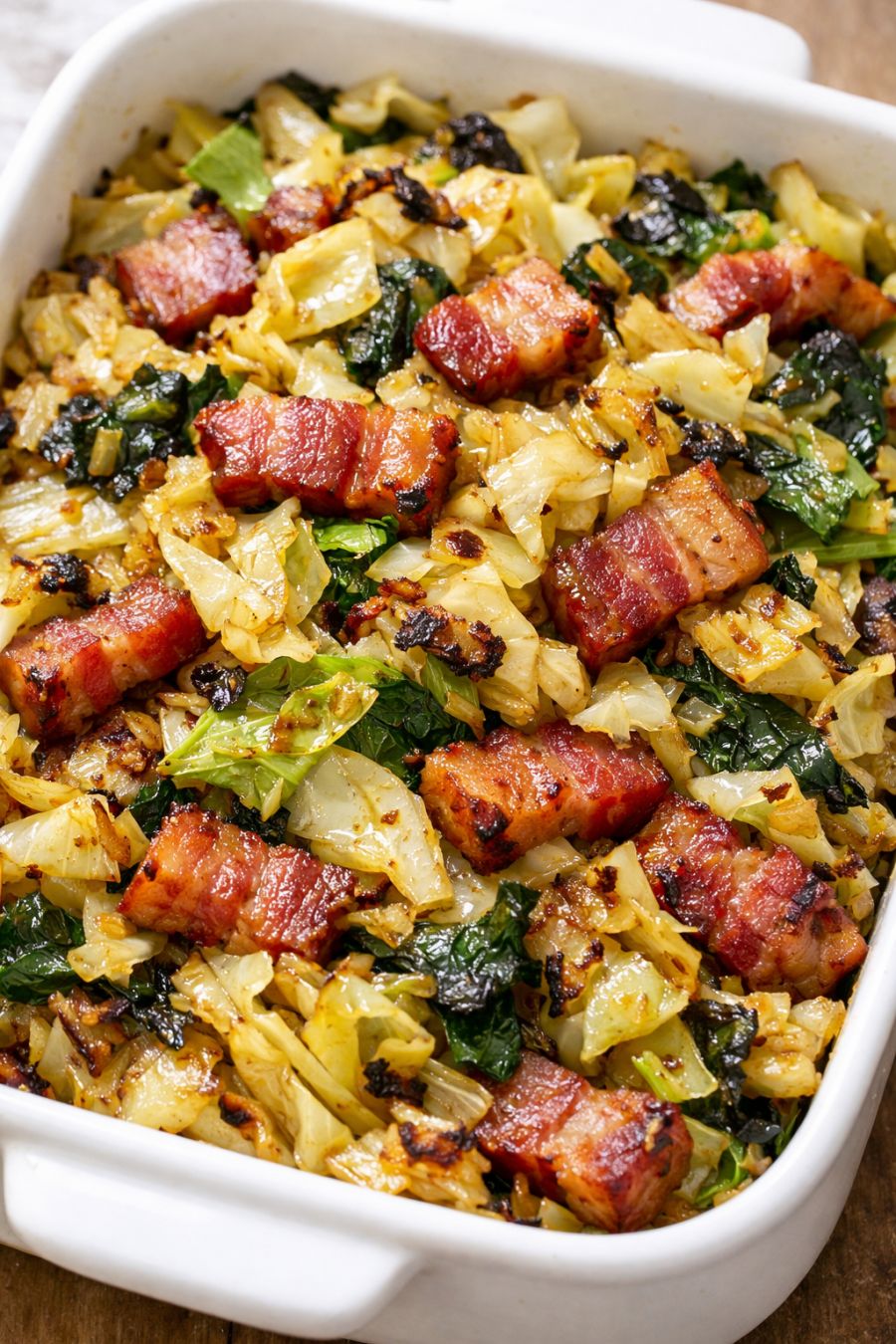
Serve this cabbage bacon skillet straight from the pan or transferred to a warm ceramic casserole dish, where the glistening bacon fat keeps everything tender. It’s hearty enough to stand on its own, but it’s lovely with sliced fresh tomatoes in summer or a simple cucumber salad when you want something cool and crisp alongside. If you’re not strictly low carb, a small scoop of mashed cauliflower or a piece of buttered rye toast makes a fine companion, and a mug of hot tea or black coffee fits the farmhouse feel of this thrifty, comforting meal.
4-Ingredient Cabbage Bacon Skillet
Servings: 3–4
Ingredients
8 ounces thick-cut bacon, cut into 1-inch pieces
1 medium head green cabbage (about 2 pounds), cored and thinly sliced or shredded
2 tablespoons unsalted butter
2 tablespoons apple cider vinegar
Directions
Cut the bacon into 1-inch pieces. Core the cabbage and slice it thinly into shreds, about 1/4 inch wide. Set both aside.
Place a large, heavy skillet over medium heat. Add the bacon pieces in a single layer. Cook, stirring occasionally, until the bacon is browned and the fat has rendered, 8–10 minutes. Adjust the heat as needed so the bacon browns without burning.
When the bacon is crisp around the edges but still tender in the center, use a slotted spoon to transfer it to a plate, leaving the hot bacon fat in the skillet.
Add the butter to the skillet with the bacon fat. Let it melt and foam over medium heat, scraping up any browned bits from the bottom of the pan with a wooden spoon.
Pile the shredded cabbage into the skillet. It will look like too much at first, but it will cook down. Toss the cabbage in the hot fat to coat as evenly as you can.
Cook the cabbage over medium to medium-high heat, stirring every couple of minutes. Let it sit between stirs so some edges can char and turn golden brown. This should take about 10–15 minutes, depending on how browned and tender you like it.
When the cabbage is mostly tender with some darker, caramelized spots and wilted, golden-brown edges, return the cooked bacon to the skillet. Toss well so the bacon is evenly distributed.
Drizzle the apple cider vinegar over the cabbage and bacon. Stir and cook for another 1–2 minutes, just until the vinegar’s sharpness softens and everything is glistening and hot. Taste and, if you like, add a pinch of salt or a grind of black pepper, though the bacon usually seasons it well enough.
Spoon the cabbage and bacon into a warm ceramic casserole dish, letting the savory fat follow. Serve hot, while the edges are still a little charred and the cabbage is silky and tender.
Variations & Tips
If your bacon is very lean or you prefer a richer dish, add an extra tablespoon of butter when you cook the cabbage so it glistens more and browns deeply. For a smokier flavor reminiscent of old smokehouse bacon, use a naturally smoked thick-cut bacon or, if you keep it on hand, add a drop or two of liquid smoke along with the vinegar (still keeping total ingredients to four by counting only bacon, cabbage, butter, and vinegar as the core). You can also play with texture: slice half the cabbage into thin ribbons and cut the rest into small chunks so some bites are silky and some are a bit firmer. If you’re cooking for someone who likes a little heat, pass red pepper flakes at the table instead of stirring them in, so the base recipe stays simple and family-friendly. Leftovers reheat well in a skillet over medium heat—add a small pat of butter and let the cabbage pick up fresh golden-brown spots. For a heartier plate while staying low carb, top a warm serving with a fried or soft-cooked egg; the runny yolk mingling with the bacon fat and cabbage tastes like a farmhouse breakfast-for-dinner.
