
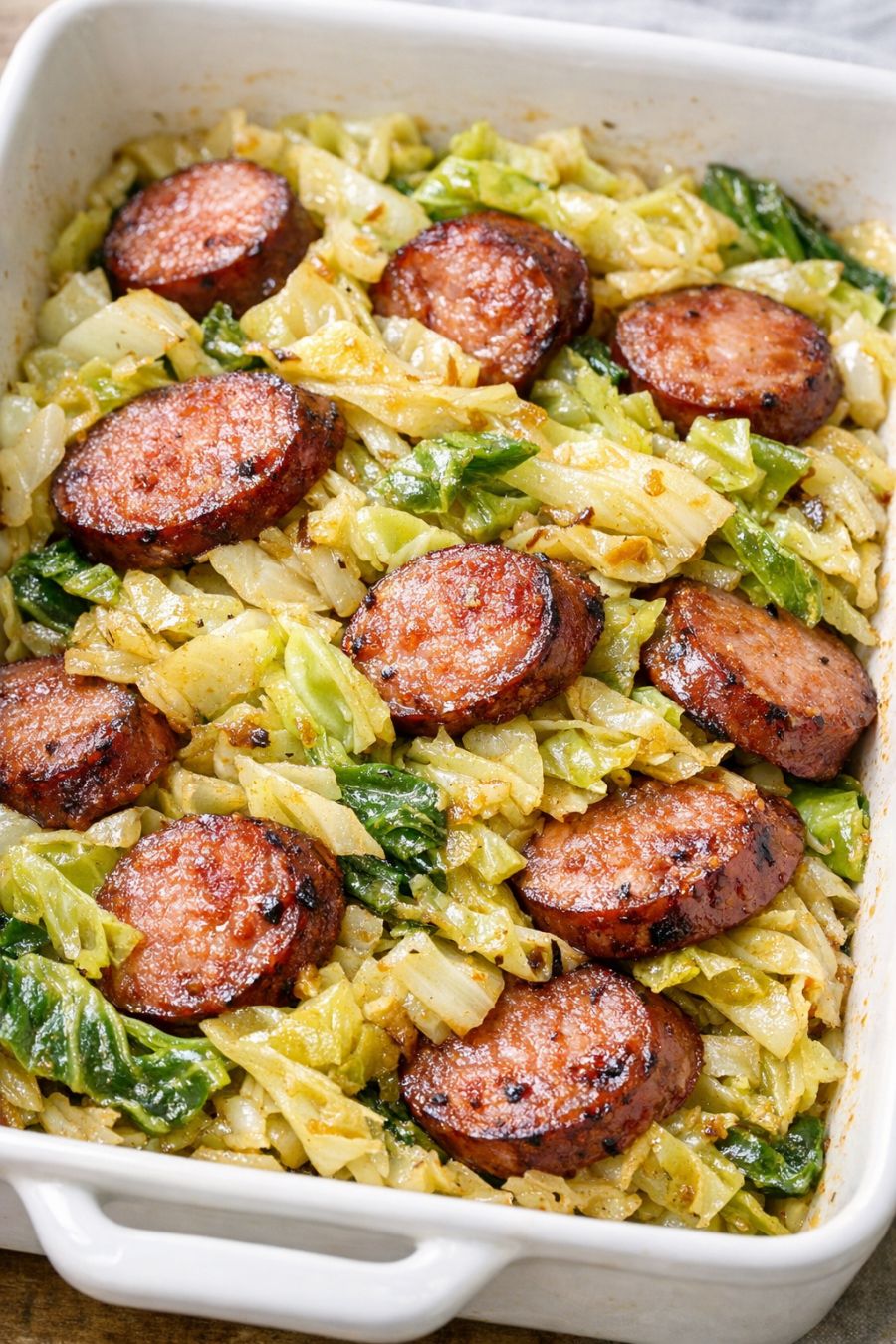
Every spring, when the snow finally melted and the fields were still too wet to work, money always seemed a little tight around here. That’s when my neighbor, Ruth, would pull out her old enamel skillet and make this simple sausage and cabbage supper. Just four humble ingredients, but the whole house smelled like comfort. The cabbage cooks down soft and sweet, the sausage edges go a little crispy, and all those juices turn into a savory glaze that soaks into every bite. It’s low carb, filling, and the kind of melt-in-your-mouth, stick-to-your-ribs meal that disappears fast from the table.
Serve this sausage cabbage skillet straight from the pan or a warm casserole dish, with a spoon to catch every bit of the savory juices. It’s lovely alongside a simple green salad with a sharp vinaigrette to cut through the richness, or a bowl of sliced tomatoes and onions with a sprinkle of salt and pepper. If you’re not strictly low carb, a small scoop of mashed cauliflower or a wedge of crusty bread works nicely to mop up the drippings. A jar of mustard or a splash of hot sauce on the table lets everyone season their plate just the way they like it.
4-Ingredient Sausage Cabbage Skillet
Servings: 4
Ingredients
1 1/2 pounds green cabbage, cored and thinly sliced into strips
1 pound smoked sausage (kielbasa or similar), sliced into 1/4-inch rounds
3 tablespoons bacon grease or butter
1 teaspoon kosher salt, plus more to taste
Directions
Slice the cabbage into thin strips, about 1/2 inch wide, and set aside. Slice the smoked sausage into 1/4-inch rounds.
Place a large, heavy skillet over medium heat and add the bacon grease or butter. Let it melt and heat until it shimmers.
Add the sliced sausage to the hot skillet in an even layer. Cook, stirring occasionally, for 5–7 minutes, until the sausage is browned in spots and you see some crispy, golden edges. This browning is what gives the dish its deep, savory flavor.
When the sausage is nicely browned, use a slotted spoon to push most of it to the outer edge of the pan, leaving the flavorful fat in the center.
Add the sliced cabbage to the center of the skillet. Sprinkle the salt evenly over the cabbage.
Toss the cabbage gently in the hot fat, mixing it with some of the sausage. At first the skillet will look very full, but the cabbage will cook down. Cook for 5 minutes, stirring now and then, until the cabbage starts to wilt and shrink.
Once the cabbage has softened a bit, stir everything together so the sausage and cabbage are evenly mixed. Spread the mixture out in an even layer in the skillet.
Continue cooking over medium heat for 10–15 minutes, stirring every few minutes. Let the cabbage sit undisturbed between stirs so the edges can get those golden brown, slightly crispy bits. The cabbage should end up tender, glossy, and lightly browned in spots, with some wilted, shiny leaves and a few caramelized edges.
Taste and adjust the seasoning with a little more salt if needed. If you like a softer cabbage, let it cook another 3–5 minutes, stirring occasionally.
Spoon the sausage and cabbage into a warm ceramic casserole dish, scraping in all the savory, greasy juices from the pan. Serve hot while it’s still sizzling and fragrant.
Variations & Tips
If you like a little kick, stir in 1/2 teaspoon of black pepper and a pinch of red pepper flakes along with the salt. For a touch of tang, splash 1–2 teaspoons of apple cider vinegar over the cabbage during the last few minutes of cooking; it brightens the whole dish without adding carbs. You can also swap the bacon grease for butter, ghee, or a neutral oil if that’s what you have on hand, though the bacon grease gives the most old-fashioned flavor. Any smoked sausage works well here—kielbasa, andouille, or a good smoked beef sausage—just keep the total amount about the same so the cabbage still has room to brown. To bulk it up while staying low carb, toss in a handful of sliced mushrooms or a few chopped green onions during the last 5 minutes of cooking. Leftovers reheat beautifully in a skillet over low heat; let them sit a bit so the cabbage picks up new golden edges and tastes almost better the next day.
