
When I was a young farm wife with a house full of hungry cousins at Thanksgiving, my aunt Clara showed me this little stovetop trick when every inch of oven space was spoken for. She’d stand at the burner with just a pot, three humble ingredients, and somehow turn out the creamiest, most comforting macaroni and cheese you can imagine. No baking, no roux, no fuss—just tender elbow noodles cloaked in a rich yellow cheese sauce that feels like a warm hug on a cold Midwestern night. This is the kind of recipe you make when you’re short on time, dishes, and energy, but still want something that tastes like you fussed over it all afternoon.
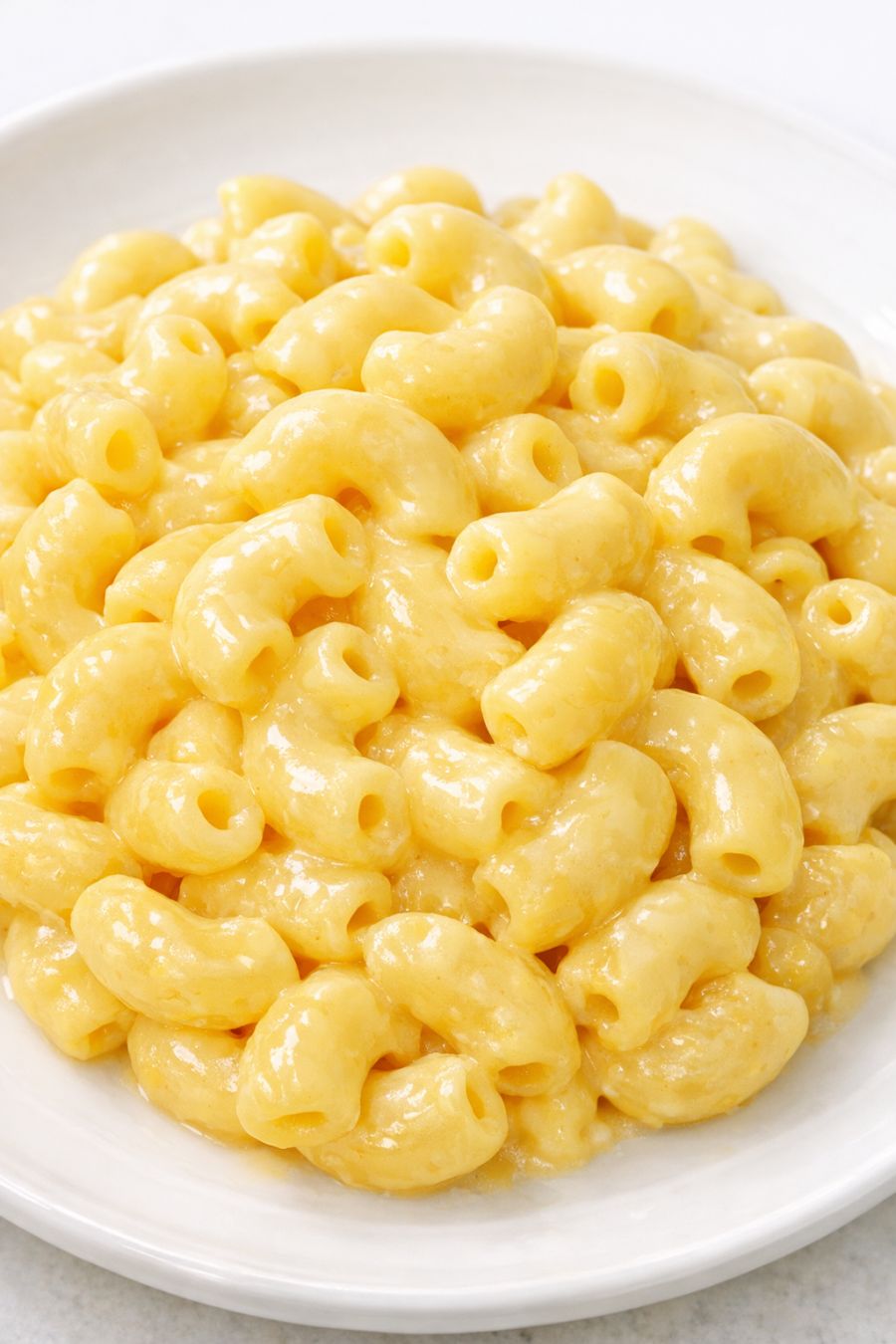
Serve this stovetop macaroni and cheese piled high on a white plate or in a wide bowl, with a simple green salad or a spoonful of peas or green beans to cut the richness just a bit. It’s wonderful next to meatloaf, baked ham, or a skillet of pork chops, and it makes a cozy bed under sliced smoked sausage or leftover roast chicken. For a true Midwestern-style supper, add some buttered bread or dinner rolls on the side and a jar of pickles on the table, then let everyone dig in while the macaroni is still hot and silky.
3-Ingredient Stovetop Macaroni and Cheese
Servings: 4
Ingredients
2 cups elbow macaroni (about 8 ounces dry)
4 cups whole milk
2 cups shredded sharp cheddar cheese, loosely packed
Directions
Pour the whole milk into a medium, heavy-bottomed pot and set it over medium heat. Warm it gently until you see small bubbles forming around the edges and a bit of steam rising, but do not let it come to a hard boil. Stir now and then so the milk doesn’t scorch on the bottom.
Stir the dry elbow macaroni into the warm milk. Keep the heat at medium or just a touch lower so the milk stays at a gentle simmer. Cook the pasta uncovered, stirring often and scraping along the bottom of the pot, until the macaroni is tender and the milk has thickened, 10–15 minutes. The noodles will absorb much of the milk and the liquid will look creamy and starchy.
When the macaroni is just tender to your liking and there is still a little saucy milk in the pot, turn the heat down to low. If it looks very dry, you can splash in a spoonful or two of extra milk to loosen it; if it looks too soupy, let it simmer another minute, stirring, until slightly thickened.
Sprinkle in the shredded sharp cheddar cheese a handful at a time, stirring slowly after each addition until it melts into the hot pasta and milk. The sauce will turn a soft, creamy yellow and cling to the elbows. Keep the heat low and be patient; rushing with high heat can make the cheese grainy.
Once all the cheese is melted and the macaroni is coated in a smooth, glossy sauce, remove the pot from the burner. Let it sit for 1–2 minutes to thicken up just a bit more. Give it a final stir, then spoon onto warm plates and serve right away while it’s rich, comforting, and perfectly creamy.
Variations & Tips
If you grew up in a house like mine, you know we rarely leave a recipe completely alone. You can swap part of the sharp cheddar for another melting cheese you like—Colby or Monterey Jack will make a milder, extra-creamy pot, while a bit of smoked cheddar gives it a campfire flavor. For a sturdier sauce, use macaroni with ridges or shells; they grab onto the cheese beautifully. If you prefer a looser, almost spoonable mac and cheese, stir in a splash more warm milk at the end until it looks just right to you. To stretch this dish for a crowd, serve the macaroni over steamed broccoli or stir in a handful of cooked peas or diced ham (if you don’t mind sneaking in a fourth ingredient). Leftovers reheat best with a spoonful of milk stirred in over low heat on the stovetop. And if your oven ever does free up, you can spread this finished stovetop macaroni into a buttered dish, scatter a little extra cheese over the top, and slip it under the broiler for a minute or two, just until the edges are browned and bubbling—my aunt’s favorite way to dress it up for company.
