
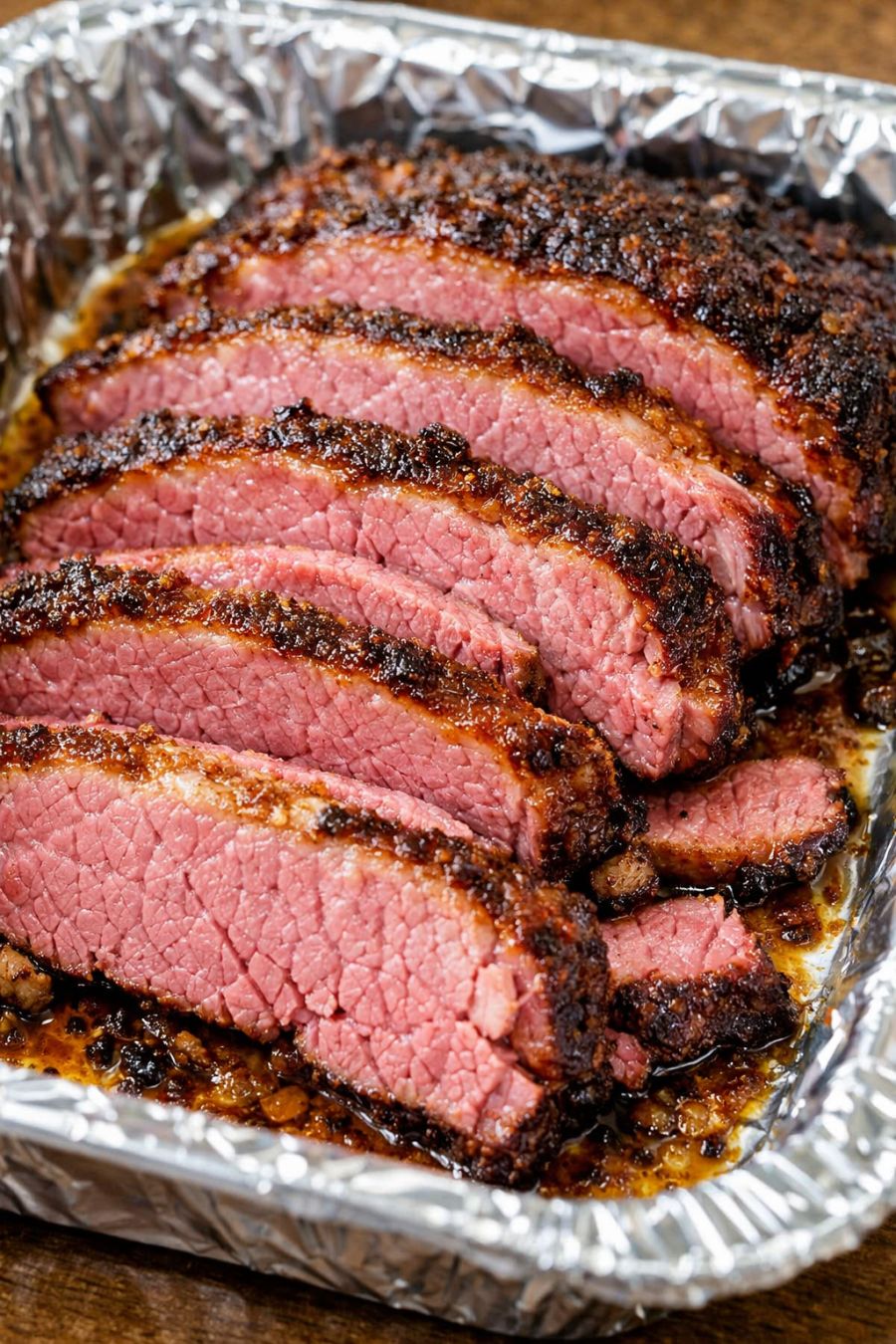
Every March, just as the snowbanks start to sink and the fields turn to mud, my husband starts asking, “You’re making that corned beef again this year, right?” He means this exact oven-baked brisket. It’s the kind that slices up rosy pink, with a dark, caramelized crust on top and meat so tender you can nudge it apart with a fork. This is a very Midwestern sort of recipe—plain, practical, and built on pantry staples. No fussing with a big pot on the stove, no long list of ingredients. Just four simple things, wrapped up snug in foil and left alone in a low oven until the house smells like every St. Patrick’s Day supper I can remember.
I like to serve this meltingly tender corned beef with buttered boiled potatoes or mashed potatoes, a side of cabbage (either simply steamed or sautéed in a little butter), and some bright carrots for color. A spoonful of the pan juices over the meat and potatoes never hurts. Rye bread or a crusty farmhouse loaf is wonderful for sopping up the juices, and any leftovers make excellent sandwiches the next day with a swipe of mustard. If you enjoy a little something extra, a sharp dill pickle or tangy coleslaw balances the richness nicely.
Oven Baked 4-Ingredient Corned Beef Brisket
Servings: 6
Ingredients
1 (3–4 pound) corned beef brisket with spice packet, flat cut preferred
1/4 cup packed brown sugar
2 tablespoons Dijon mustard
1 cup water
Directions
Preheat your oven to 300°F (150°C). Line a roasting pan or a 9x13-inch baking dish with heavy-duty aluminum foil, leaving enough overhang on all sides so you can wrap the brisket up into a snug packet.
Open the corned beef package over the sink to catch the brine. Rinse the brisket briefly under cool running water to remove excess salt from the surface, then pat it dry with paper towels. Place the brisket fat-side up in the center of the foil-lined pan. Sprinkle the contents of the spice packet evenly over the top and sides of the meat.
In a small bowl, stir together the brown sugar and Dijon mustard until you have a thick paste. Spread this mixture evenly over the top of the brisket, pressing it gently so it clings; this will form that caramelized brown crust as it bakes.
Carefully pour the water into the bottom of the foil-lined pan around (not over) the brisket so you don’t wash off the sugar-mustard coating. Bring the foil up and over the meat, sealing it tightly to form a packet. If needed, add an extra piece of foil on top to make sure no steam escapes.
Place the pan on the middle rack of the preheated oven and bake for 3 to 3 1/2 hours, or until the brisket is very tender when pierced with a fork. For a 3-pound brisket, start checking around 2 3/4 hours; for a larger one, it may need closer to 3 1/2 hours. The meat should give easily and almost fall apart when you press a fork into it.
When the brisket is fork-tender, carefully open the foil (watch out for hot steam) and fold it back so the top of the meat is exposed but the juices stay in the pan. Increase the oven temperature to 375°F (190°C) and return the pan to the oven, uncovered, for 15–20 minutes, or until the top develops a deep brown, caramelized crust.
Remove the pan from the oven and let the brisket rest, loosely tented with foil, for 15–20 minutes. This rest helps the meat stay moist and slice neatly. Transfer the brisket to a cutting board, reserving the juices in the pan.
Slice the corned beef against the grain into thin slices. Arrange the slices back into the foil-lined pan, nestling them slightly into the pan juices to keep them moist. Spoon a little of the warm juice over the top just before serving so each slice is tender and glistening, with that rosy pink interior and caramelized brown crust on the edges.
Variations & Tips
If you prefer a sweeter glaze, you can swap the Dijon mustard for a mild yellow mustard or even half mustard and half ketchup, keeping the total amount the same so you still have just four ingredients. For a bit of tang, replace half of the water with beer (a light lager) or apple juice, which adds a gentle flavor without complicating the recipe. If your brisket is on the lean side, leave a little extra fat on top so it stays moist during the long bake; very fatty pieces can have some fat trimmed away before cooking. To make slicing easier, cook the brisket a day ahead, chill it in its juices, slice it cold, then rewarm the slices in the foil packet with the juices until hot and tender. Leftovers freeze well when tucked into their juices—reheat slowly, covered, so the meat stays fork-tender and doesn’t dry out. For serving, you can also shred the meat instead of slicing if it’s extremely soft; it’s wonderful piled onto toasted rolls with a smear of mustard for an easy next-day supper.
