
This is the kind of no-fuss, stick-to-your-ribs pasta I reach for on nights when my mind goes blank and the clock says I should have started supper an hour ago. It reminds me of the church potlucks back in our small Midwestern town, where casseroles were a love language and a glass baking dish was as important as the family Bible. Here, a whole block of feta nestles right into a bed of raw dry cavatappi, with just tomatoes, garlic, and olive oil to keep it company. The oven does the work, and you end up with a creamy, tangy pasta that feels like it’s been bubbling away on the back of the stove all afternoon, even though you barely lifted a finger.
I like to serve this feta tomato pasta with a simple green salad—just lettuce, a few sliced onions, and whatever crisp vegetables are around, dressed lightly with vinegar and oil. A slice of warm garlic bread or a crusty dinner roll is perfect for mopping up the sauce that clings to the bottom of the dish. If you’re feeding a hungry crowd, add a plate of roasted or steamed vegetables on the side, like green beans or broccoli, to round out the meal. A glass of iced tea or a small pour of red wine makes it feel like Sunday supper, even on a Tuesday.
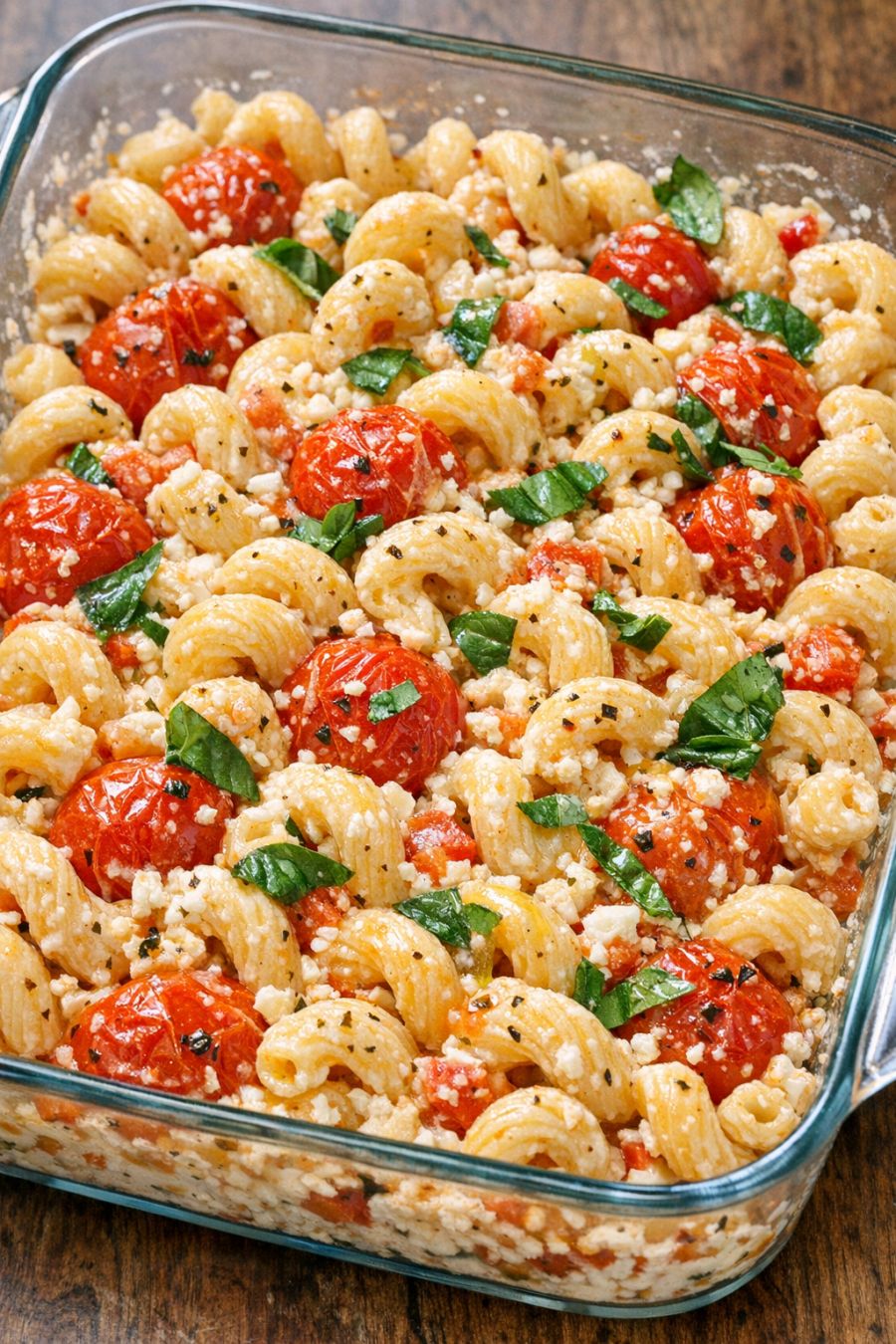
Oven-Baked 5-Ingredient Feta Tomato Cavatappi
Servings: 4
Ingredients
8 ounces dry cavatappi pasta
8 ounces feta cheese, whole block
2 cups cherry or grape tomatoes, whole
3 tablespoons olive oil
3 cloves garlic, minced
1/2 teaspoon salt, or to taste (optional)
1/4 teaspoon black pepper, or to taste (optional)
1/4 to 1/2 cup hot water, as needed for baking (optional, see directions)
Directions
Preheat your oven to 400°F (200°C). Set a medium-sized glass casserole dish (about 2 to 2 1/2 quarts) on the counter.
Pour the dry cavatappi pasta into the glass casserole dish and spread it into an even layer, leaving a little space in the center.
Nestle the whole block of feta cheese right in the middle of the dry pasta, pressing it down slightly so it sits snugly amidst the cavatappi. This should look just like that close-up process shot: hands placing the feta block into the bed of raw pasta in the glass dish.
Scatter the cherry or grape tomatoes all around the feta and over the pasta, tucking them into the spaces so they’re fairly evenly distributed.
Drizzle the olive oil over the feta, tomatoes, and pasta. Sprinkle the minced garlic over the top, trying to get a bit on the cheese and the tomatoes. Season lightly with salt and black pepper, remembering that feta is naturally salty.
Pour 1/4 cup of hot water around the edges of the dish, avoiding pouring directly on top of the feta block. This helps the dry pasta start to soften in the oven. You can add a bit more later if needed.
Cover the glass casserole dish tightly with foil. This traps the steam so the dry cavatappi can cook through while the feta softens and the tomatoes burst.
Bake, covered, for 25 minutes. Carefully remove the foil, watching out for hot steam.
Check the pasta by stirring gently around the edges. If the pasta still feels quite firm and looks dry, add another splash of hot water (a tablespoon or two at a time) and stir lightly without breaking up the feta too much.
Return the dish to the oven, uncovered, and bake for another 10 to 15 minutes, or until the tomatoes have burst, the feta is very soft and starting to brown on top, and the pasta is tender. If the top looks too dry at any point, you can stir gently and add a spoonful more hot water.
Remove the casserole from the oven and let it sit for 5 minutes. Then, using a large spoon, break up the feta block and stir everything together right in the glass dish. The melted feta, tomato juices, olive oil, and garlic will form a creamy sauce that coats the cavatappi.
Taste and adjust the seasoning with a little more salt and black pepper if needed. Serve the pasta hot straight from the glass casserole dish, making sure each portion gets plenty of tomatoes and creamy feta sauce.
Variations & Tips
For a touch of green and a nod to summer gardens, stir in a big handful of fresh spinach or chopped kale right after you pull the dish from the oven; the heat will wilt the greens without overcooking them. If you grew up, like I did, with herb beds by the back door, sprinkle in some fresh basil, oregano, or parsley at the end for extra fragrance. To make it heartier for farm-sized appetites, add cooked chicken, crumbled cooked sausage, or leftover roast vegetables when you stir the feta into the pasta. You can also swap cherry tomatoes for canned diced tomatoes (well-drained) when fresh aren’t in season, though the little bursts of roasted cherry tomatoes do remind me of late-August vines. For a bit of heat, add a pinch of red pepper flakes along with the garlic. If you’re cooking for someone who’s watching their salt, choose a reduced-sodium feta and be gentle with added salt. And if you prefer a looser, saucier pasta, simply stir in an extra splash of hot water or a bit of warm milk when you mix everything together at the end, until it’s as creamy as you like.
