
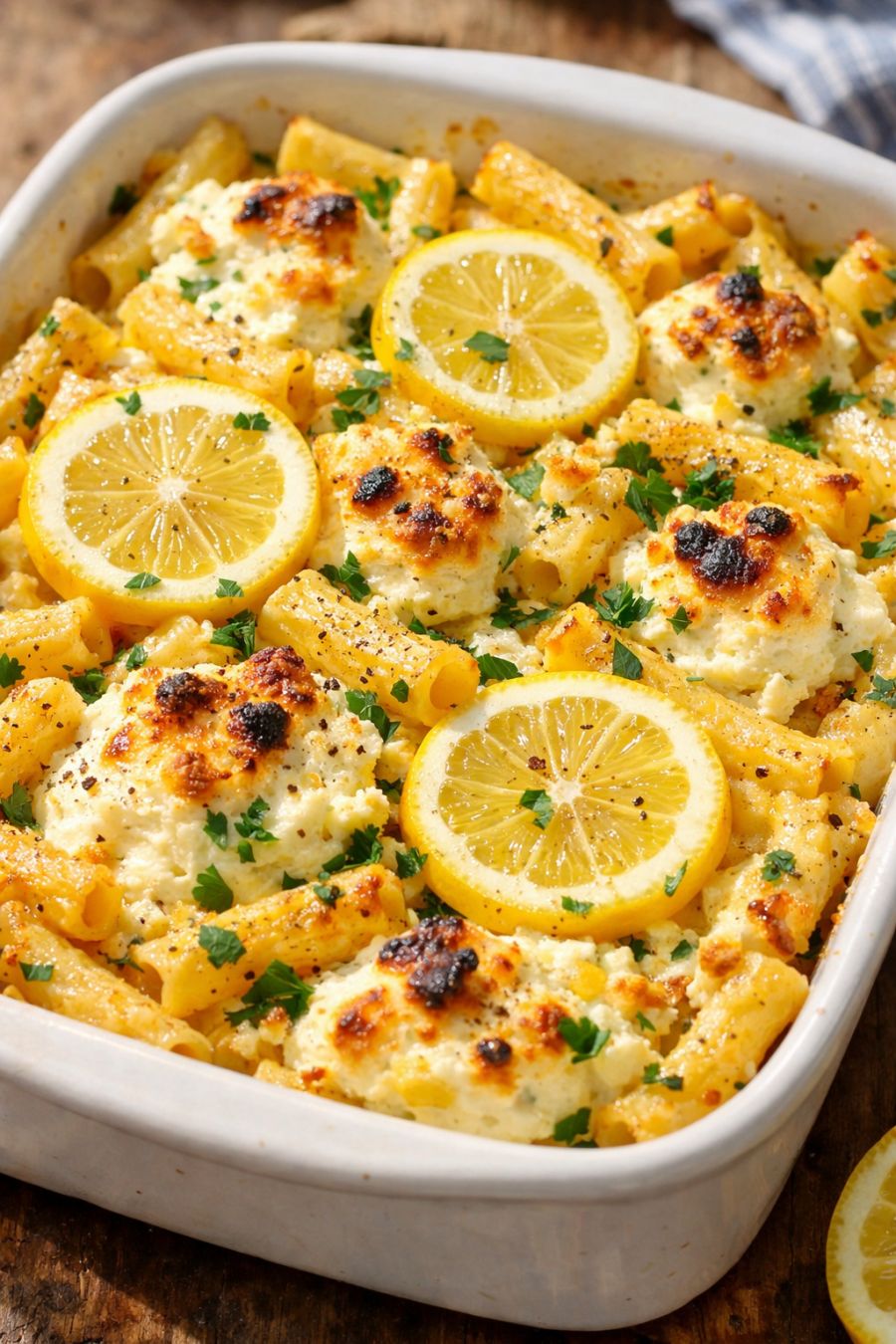
This is my kind of weeknight alchemy: dry ziti goes straight into a ceramic baking dish, gets showered with lemony water, tucked under generous dollops of fresh ricotta, and finished with just two more pantry-friendly ingredients. Everything bakes together into a silky, spring-forward pasta with almost no hands-on time. The idea borrows from classic Italian baked pastas, but instead of a heavy red sauce, we lean into bright lemon and creamy ricotta for something lighter and more seasonal—perfect for those first warm evenings when you still want to turn on the oven but crave fresher flavors.
I like to serve this lemon ricotta spring pasta with a big green salad—think arugula or mixed baby lettuces tossed with olive oil, lemon juice, and plenty of black pepper. A simple plate of steamed or roasted asparagus or green beans also plays nicely with the lemon notes. Warm crusty bread or a baguette is great for swiping through the creamy sauce that collects at the bottom of the pan, and if you enjoy wine, a crisp Pinot Grigio or Sauvignon Blanc keeps the whole meal light and bright.
Oven-Baked Lemon Ricotta Spring Ziti
Servings: 4
Ingredients
12 ounces uncooked raw ziti pasta
1 3/4 cups whole-milk fresh ricotta cheese
2 1/2 cups water
1 large lemon, zested and juiced (about 1 tablespoon zest and 3 tablespoons juice)
1 cup frozen peas, still frozen
1 teaspoon kosher salt, plus more to taste
1/2 teaspoon freshly ground black pepper, plus more for serving
2 tablespoons extra-virgin olive oil (for drizzling, optional but recommended)
Directions
Preheat your oven to 400°F (200°C). Place a medium, deep ceramic baking pan (about 9x13 inches or similar volume) on the counter; no need to grease it.
Add the uncooked raw ziti pasta to the ceramic baking pan and spread it into an even layer so the tubes are roughly level. This helps the liquid distribute evenly as it bakes.
In a large measuring cup or bowl, whisk together the water, lemon zest, lemon juice, kosher salt, and black pepper until the salt has mostly dissolved. This lemony seasoned water will become the pasta’s cooking liquid and light sauce.
Pour the lemon water evenly over the dry ziti, gently shaking the pan so the liquid settles down into the pasta. Scatter the frozen peas over the top, letting some fall down between the pieces of pasta.
Using a spoon, dollop the fresh ricotta cheese all over the surface of the uncooked ziti and peas, creating small mounds rather than spreading it flat. Aim for roughly 12 to 16 dollops so each scoop of the finished pasta gets some ricotta.
If using, drizzle the top lightly with the extra-virgin olive oil. This adds a bit of richness and helps the ricotta brown slightly at the edges.
Cover the ceramic baking pan tightly with foil, tenting it a bit so it doesn’t press down into the ricotta. Transfer to the preheated oven and bake for 30 minutes, allowing the pasta to absorb the lemony liquid and begin to soften.
After 30 minutes, carefully remove the foil (watch for steam), give the pasta a gentle stir around the edges while keeping most ricotta dollops intact, and check the liquid level. The pasta should be mostly submerged in a loose, creamy-looking sauce; if it seems dry, add a splash (2 to 4 tablespoons) of hot water around the edges.
Return the pan to the oven, uncovered, and bake for another 10 to 15 minutes, until the ziti is just tender when you bite into a piece and the ricotta dollops are warmed through with lightly golden spots on top.
Remove from the oven and let the pasta rest for 5 to 10 minutes. The sauce will thicken slightly as it cools. Taste and adjust with a pinch more salt or a squeeze of lemon if you like extra brightness.
Serve the baked lemon ricotta spring ziti straight from the ceramic baking pan, making sure to scoop down to the bottom so you capture pasta, peas, and a generous spoonful of those creamy ricotta dollops in each portion. Finish with a twist of black pepper and a drizzle of olive oil, if desired.
Variations & Tips
For extra spring character, you can swap some or all of the peas for chopped asparagus or sugar snap peas; just cut them into bite-sized pieces and keep the baking time the same. If you’d like more protein, stir in 1 to 1 1/2 cups of cooked, shredded chicken or flaked canned tuna when you remove the foil, then continue baking as directed. A shower of grated Parmesan or Pecorino Romano over the top in the last 10 minutes of baking will give you a saltier, more robust flavor without changing the basic 5-ingredient idea—just treat the cheese as an optional embellishment. To make this more herb-forward, sprinkle 2 to 3 tablespoons of chopped fresh herbs (basil, parsley, or chives) over the dish right after it comes out of the oven so they stay bright and fresh. If you prefer a looser, saucier pasta, add an extra 1/4 to 1/2 cup of water before baking; for a tighter, more casserole-like texture, let it rest closer to 15 minutes before serving. Finally, if you only have a smaller or deeper ceramic pan, keep an eye on doneness and add a few minutes of baking time as needed, since deeper layers of pasta can take a bit longer to soften.
