
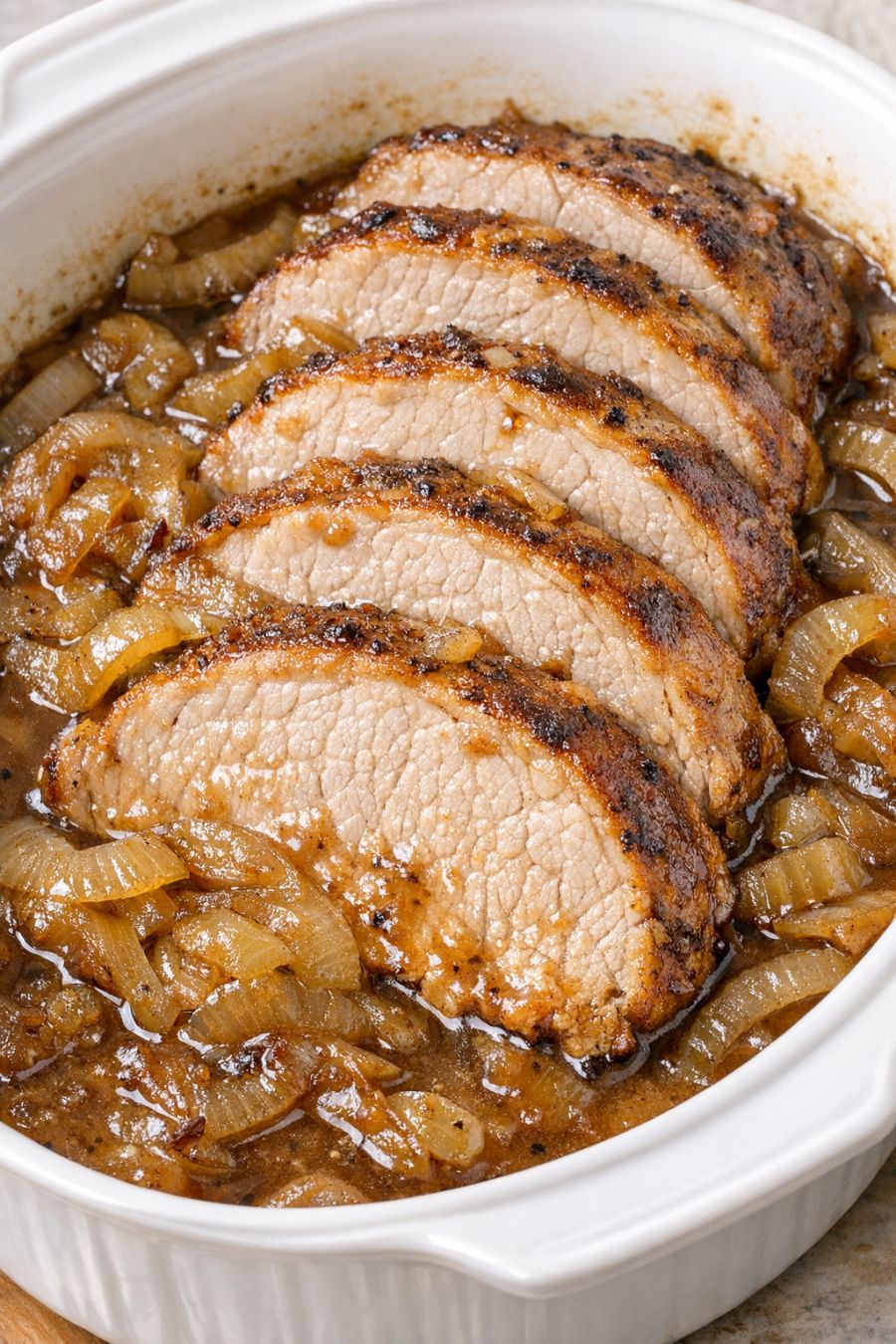
This oven baked 3-ingredient poor man’s pork roast is the kind of dish that quietly shows up on the table week after week because it’s affordable, comforting, and almost impossible to mess up. The version I’m sharing is inspired by the kind of Sunday roasts many Midwestern families leaned on during lean years: a simple pork shoulder, a pile of onions, and a pantry-staple soup that turns into a rich brown gravy. Everything bakes together low and slow in one casserole dish until the meat is fork-tender, the onions are caramelized, and the juices mingle into a deeply savory pan sauce that tastes like you fussed much more than you did.
Serve this pork roast sliced in its onion-rich brown gravy, straight from the casserole dish. It’s wonderful over mashed potatoes, buttered egg noodles, or simple white rice to catch every bit of the sauce. On the side, think about something bright or crunchy to balance the richness: steamed green beans, a vinegar-dressed coleslaw, or a simple green salad. Leftovers make excellent open-faced sandwiches on toasted bread, spooned with plenty of the caramelized onions and gravy over the top.
Oven Baked 3-Ingredient Poor Man’s Pork Roast
Servings: 6-8
Ingredients
3 to 4 pounds boneless pork shoulder (also labeled pork butt)
3 large yellow onions, peeled and thinly sliced
2 (10.5-ounce) cans condensed cream of mushroom soup
Directions
Preheat your oven to 300°F (150°C). Choose a white oval casserole dish or similar baking dish that’s just large enough to hold the pork roast snugly, with a bit of room around the sides for the onions and juices.
Layer the sliced onions evenly over the bottom of the casserole dish. This onion bed will keep the pork off the direct heat of the dish and will slowly caramelize as it cooks, flavoring the gravy.
Place the pork shoulder on top of the onions. If there is a fat cap, position it facing up so it can baste the meat as it roasts. No extra oil is needed; the pork has enough fat to keep everything moist.
Spoon the condensed cream of mushroom soup directly over the top of the pork roast, using the back of the spoon to spread it so the entire top and as much of the sides as possible are coated. Any extra soup can be dotted over the onions around the edges.
Cover the casserole dish tightly with a lid or a double layer of foil to trap moisture. This covered, low-and-slow approach is what makes the pork incredibly tender and creates that rich brown pan gravy.
Transfer the covered dish to the preheated oven and bake for 3 to 3 1/2 hours, or until the pork is very tender when pierced with a fork. Thicker roasts may need closer to 4 hours; the meat should shred easily and the onions should be soft and deeply golden.
Remove the dish from the oven and carefully uncover it, watching for hot steam. If you’d like more browning on the top of the pork and a slightly thicker, more caramelized gravy, return the dish to the oven uncovered for an additional 20 to 30 minutes at 325°F (165°C), until the edges of the meat and onions are golden brown.
Transfer the pork roast to a cutting board and let it rest for about 10 minutes so the juices settle. Meanwhile, stir the onions and pan juices together in the casserole dish; they should form a rich, spoonable brown gravy. If you prefer a smoother sauce, you can mash the onions slightly with a fork right in the dish.
Slice the rested pork against the grain into thick slices and nestle them back into the casserole dish, spooning the caramelized onions and gravy over the top. Serve the roast family-style straight from the white casserole, making sure each portion gets plenty of the onions and sauce.
Variations & Tips
If you prefer a slightly lighter flavor, you can swap one can of cream of mushroom soup for cream of chicken while still keeping the recipe to three ingredients. For a deeper, more savory note, use a pork shoulder with the bone in; it may take a bit longer to cook but rewards you with extra flavor in the gravy. If your family likes a bit more texture, slice one of the onions thicker into wedges so some pieces stay more intact while others melt into the sauce. To stretch the meal further during tight weeks, tuck a few whole, peeled carrots or halved potatoes around the pork on top of the onions—this technically adds more ingredients, but it turns the roast into a full one-pan dinner. Leftovers reheat well in a covered dish with a splash of water to loosen the gravy, and the meat can be shredded instead of sliced and piled onto sandwich rolls with the onions and sauce for another easy meal.
