
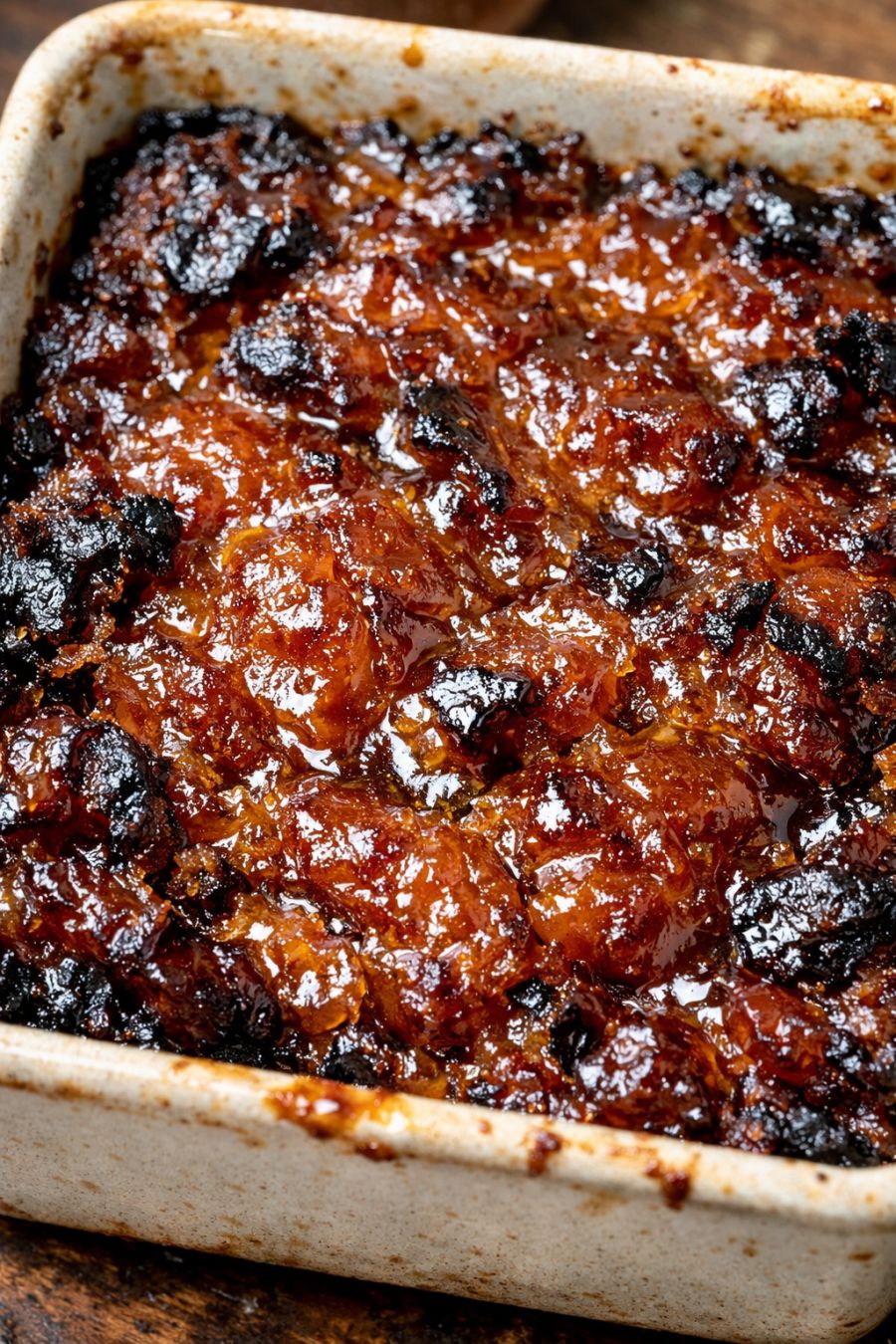
This 3-ingredient oven chocolate bake is the sort of thing I pull together on quiet Easter Sundays or any weekend when I want dessert taken care of hours before dinner. It bakes into a dense, glossy, almost fudge-like slab with caramelized, crackly edges that look mysterious in the pan but taste deeply of dark chocolate. The method borrows from classic flourless chocolate cakes and old-fashioned Midwestern dump cakes: minimal ingredients, one bowl, and the patience to let the oven and time do the work.
Serve this warm or at room temperature in small squares, as it’s quite rich. I like it with a dollop of lightly sweetened whipped cream or a scoop of vanilla, coffee, or salted caramel ice cream to contrast the dark, bittersweet chocolate. Fresh berries—especially raspberries or sliced strawberries—add a bright, tart note that keeps each bite from feeling too heavy. For Easter or other holidays, pair it with strong coffee, espresso, or a glass of port or red wine to echo the intensity of the chocolate.
3-Ingredient Dark Chocolate Oven Bake
Servings: 8
Ingredients
12 oz (340 g) dark chocolate chips or chopped dark chocolate (60–70% cacao)
1 cup (240 ml) heavy cream
3 large eggs, at room temperature
Directions
Preheat the oven to 325°F (165°C). Lightly butter or spray an 8-inch square ceramic baking dish, then line the bottom with a strip of parchment long enough to overhang two sides for easier lifting, if you like.
Warm the heavy cream: In a small saucepan over low heat, warm the cream just until you see small bubbles forming around the edges and steam rising. Do not let it boil vigorously, or it can scorch.
Melt the chocolate with the cream: Place the dark chocolate in a medium heatproof bowl. Pour the hot cream over the chocolate and let it sit undisturbed for 2–3 minutes to soften. Whisk slowly until the mixture becomes completely smooth, glossy, and thick, forming a rich dark batter.
Cool the chocolate mixture slightly: Let the chocolate-cream mixture sit for about 5 minutes, stirring once or twice, until it feels warm but not hot to the touch. This helps keep the eggs from scrambling when you add them.
Whisk the eggs: In a separate bowl, whisk the eggs until they are well blended and slightly frothy. This step helps create a bit of lift in what is otherwise a very dense batter.
Combine eggs with chocolate: Slowly pour the whisked eggs into the warm chocolate mixture in 2–3 additions, whisking constantly and thoroughly after each addition. The batter should be smooth, thick, and shiny.
Transfer to the baking dish: Pour the batter into the prepared ceramic dish and smooth the top with a spatula. Tap the dish gently on the counter once or twice to release any large air bubbles.
Bake until set with glossy, cracked edges: Bake on the middle rack for 28–35 minutes, or until the edges are puffed, slightly cracked, and darker, with a caramelized look, and the center is just set but still a bit soft when you gently jiggle the pan. The surface will look dense and glossy rather than cakey.
Cool and let the texture develop: Remove the dish from the oven and place it on a rack. Let it cool to room temperature, at least 1 hour. For the best dense, truffle-like texture, cover the cooled dish and refrigerate for 2–3 hours (or up to a full day) before serving. This makes it ideal to prepare well ahead of a weekend meal or Easter gathering.
Serve: Cut into small squares directly from the ceramic dish, using a thin knife run under hot water and wiped dry between cuts for the cleanest edges. Serve chilled or let the squares sit out for 10–15 minutes for a softer, silkier bite.
Variations & Tips
To lean into the bitterness and complexity of the chocolate, choose a bar or chips in the 70% range; if you prefer a softer, sweeter bake, drop down to 60% cacao. A pinch of kosher salt (technically a fourth ingredient) sprinkled over the top before baking will sharpen the flavors and highlight the caramelized edges. For a subtle flavor twist that still respects the 3-ingredient spirit, swap 1–2 oz of the chocolate for flavored dark chocolate (orange, espresso, or chili) to gently change the character of the bake. You can also play with shape and texture: bake the batter in a smaller, deeper ceramic dish for an extra-fudgy center with more pronounced cracked edges, or in a slightly larger dish for thinner, chewier pieces. To make this more portable for gatherings, chill thoroughly, cut into small squares, and lift them out with a thin spatula onto a platter lined with parchment; the dense texture holds well at room temperature for several hours. Leftovers keep nicely in the refrigerator for up to 4 days and can be enjoyed cold for a firmer bite or briefly warmed in a low oven for a softer, spoonable dessert.
