
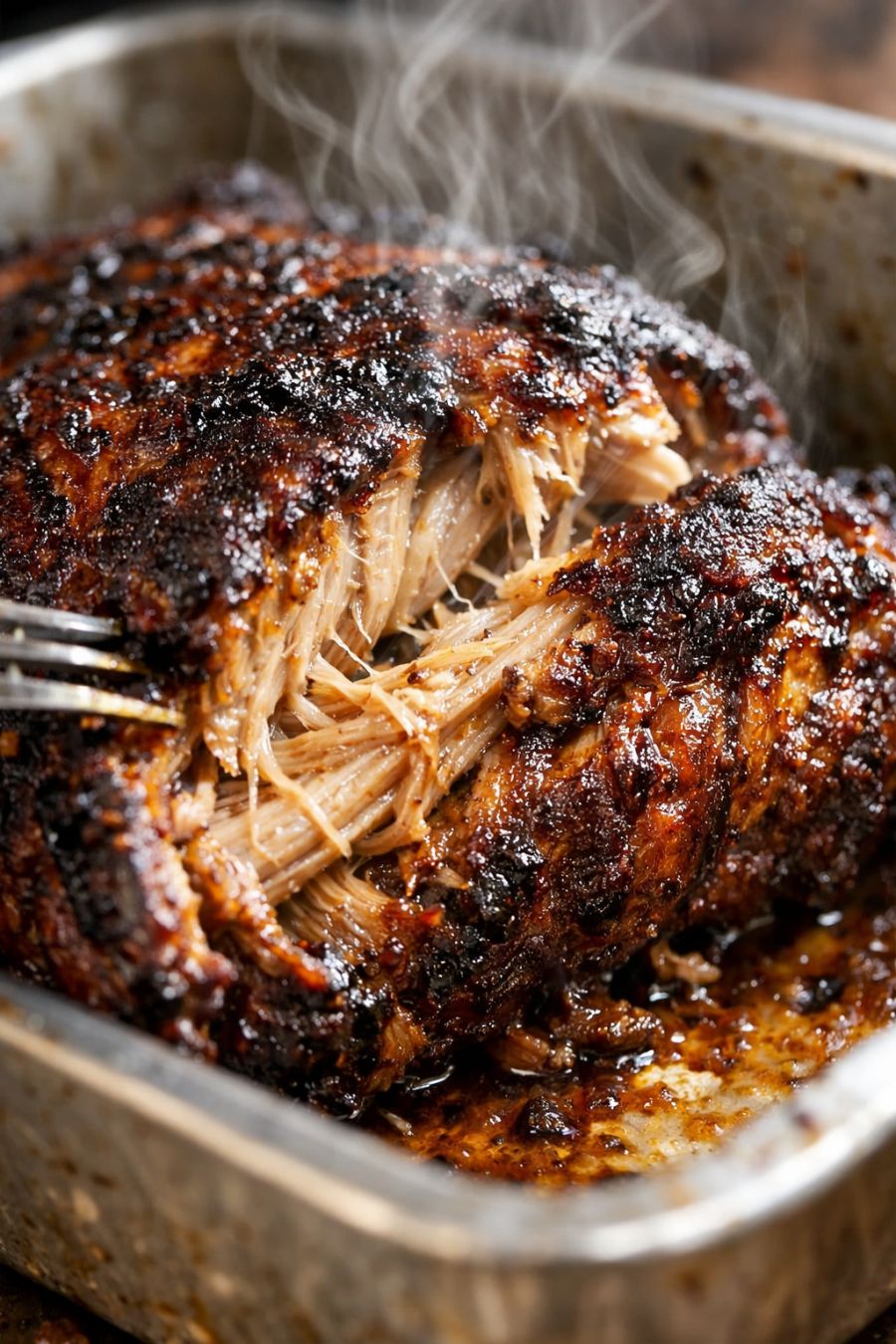
This 3-ingredient oven pork loin is my go-to when I want a beautiful spring centerpiece that basically takes care of itself. You rub the pork in the morning, slide it into the oven well before dinner, and let low, slow heat work its magic. By the time everyone’s hungry, you’ve got a glistening roast with a deep caramelized crust and juicy, pull-apart slices. It’s inspired by the simple, no-fuss roasts my mom used to make on Sundays—nothing fancy, just good ingredients, time, and a cozy kitchen.
Serve this pork loin sliced thick with the pan juices spooned over the top. It’s lovely with roasted baby potatoes or mashed potatoes, a bright green vegetable like steamed green beans or roasted asparagus, and a simple salad with a tangy vinaigrette to balance the richness. Warm dinner rolls or crusty bread are great for soaking up the caramelized drippings. For a spring table, I like to add a bowl of fresh fruit or a light lemon dessert to keep the meal feeling fresh and not too heavy.
3-Ingredient Oven Pork Loin
Servings: 6
Ingredients
3 to 3 1/2 lb boneless pork loin roast, fat cap left on
2 tbsp kosher salt (or 1 1/2 tbsp table salt)
3 tbsp packed light brown sugar
Directions
Pat the pork loin completely dry with paper towels. If there is a thick fat cap, score it lightly in a crosshatch pattern with a sharp knife, being careful not to cut into the meat. This helps the fat render and the crust caramelize.
In a small bowl, mix the kosher salt and brown sugar together with your fingers, breaking up any clumps. You want an even, sandy mixture that will stick nicely to the pork.
Place the pork loin in a metal roasting pan, fat side up. Rub the salt and brown sugar mixture all over the pork, pressing it into the surface and into the scored fat. Make sure every side is well coated so you get a full, flavorful crust.
Cover the pan loosely with plastic wrap or foil and refrigerate for at least 2 hours and up to 8 hours. This hands-off time lets the seasoning soak in and makes the pork juicy and flavorful. If you’re planning a stress-free dinner, do this step earlier in the day so it’s ready to go before guests arrive.
When you’re ready to cook, remove the pork from the fridge and let it sit at room temperature for about 20 to 30 minutes while you preheat the oven. Heat the oven to 275°F (135°C). This gentle temperature helps the pork cook evenly and stay tender.
Uncover the roasting pan. Make sure the pork is still fat side up in the center of the pan so the melting fat can baste the meat. Do not add water; you want the bottom of the pan dry so the drippings can caramelize as it roasts.
Roast the pork loin at 275°F (135°C) for 1 1/2 to 2 1/2 hours, depending on thickness, until the internal temperature in the center of the roast reaches 135°F (57°C) to 140°F (60°C). Start checking after about 1 1/4 hours. The surface should be deep golden brown, with some darker caramelized spots where the sugar and fat meet the pan.
Once the pork reaches 135°F to 140°F, increase the oven temperature to 425°F (220°C) and continue roasting for 10 to 15 minutes, just until the crust is a rich, dark caramel color and the edges are sizzling. Watch closely so the sugar doesn’t burn; you want it deeply browned and glistening, not black.
Remove the roasting pan from the oven and transfer the pork loin to a cutting board. Tent loosely with foil and let it rest for 15 to 20 minutes. The temperature will rise a bit more, and the juices will redistribute so the slices stay moist instead of running all over the board.
While the pork rests, set the roasting pan over a low burner if your pan is stovetop-safe, or simply tilt the pan carefully. Spoon off any excess fat from the top of the drippings. Stir a splash of hot water into the browned bits in the pan, scraping with a spoon to make a simple, savory-sweet jus to drizzle over the sliced pork.
Slice the rested pork loin across the grain into 1/2-inch slices for serving, or use two forks to gently pull it apart into chunky pieces if it’s very tender. Arrange on a warm platter, pour some of the pan juices over the top so it glistens, and serve the remaining juices on the side.
Variations & Tips
For families with picky eaters, you can dial the brown sugar down to 2 tbsp if someone doesn’t love a hint of sweetness, or bump it up to 4 tbsp for kids who like a sweeter, more barbecue-style crust. If you prefer a more savory edge without adding ingredients, rub a little of the salt directly into the meat first, then pat the sugar mostly over the fat cap so the sweetness stays on the crust. For a slightly smokier flavor without extra ingredients, use a darker metal pan and place the pork on a lower rack; the drippings will caramelize more deeply, giving a toasty, almost grilled taste. If your roast is smaller (around 2 lb), start checking for doneness at about 1 hour; for a larger 4 lb roast, expect closer to 2 1/2 to 3 hours before the high-heat finish. Leftovers are wonderful: slice thinly for sandwiches with a little mustard or mayo, or chop and rewarm gently with a splash of water in a covered skillet so it stays moist. If you need to truly have dinner handled hours ahead, roast the pork fully, let it rest, then slice and return the slices to the pan, nestling them into the juices. Cover tightly with foil and keep warm in a low oven (around 200°F/95°C) for up to an hour before serving—just add a spoonful of water if the pan looks dry.
